
You haven’t truly tasted northern Mexico until you’ve stood next to an open fire in Nuevo León, watching a whole cabrito slowly turn on a spit while the scent of garlic, herbs, and mesquite smoke takes over the air. As someone who once called Monterrey home, I can tell you: Cabrito al Pastor isn’t just a meal—it’s a ceremony. It’s what Sundays are made for, what unites families, and what every grillmaster in the north dreams of perfecting.
This iconic dish—fire-roasted cabrito—is a bold representation of the state’s rugged terrain, ranching heritage, and obsession with fire-kissed flavor. It’s primal and precise all at once. And while the best cabrito is often found under the northern sun, there’s no reason you can’t bring the magic home with a few smart shortcuts.
So grab a cold cerveza and clear some room in your fridge—Nuevo León’s most legendary roast is about to hit your kitchen.
At a Glance
What it is: A traditional northern Mexican goat dish, usually young goat, seasoned simply and slow-roasted over live fire until tender, smoky, and crisp around the edges.
Where it’s from: Nuevo León, especially Monterrey, where cabrito is one of the region’s most iconic celebratory dishes.
What makes it special: Cabrito al pastor is all about simplicity, fire, and patience. Unlike tacos al pastor, this version is not a chile-marinated pork dish. The flavor comes from young goat, salt, smoke, and slow roasting.
What Cabrito Means to Nuevo León (and Why Monterrey Does It Best)
If carne asada is the weekend anthem of northern Mexico, cabrito al pastor is its national anthem—played slower, roasted longer, and sung with smoky devotion. In Nuevo León, especially in Monterrey, cabrito is more than just a dish: it’s a cultural ritual. Like carne asada in Coahuila, cabrito is a grill-born tradition built on family, fire, and pride. Birthdays, baptisms, weddings, Sunday gatherings—if there’s a family celebration happening, you can bet someone’s firing up a pit for cabrito.
The tradition goes back centuries, rooted in the region’s Jewish and Arab colonial influence, where spit-roasting young goats over open flames was both practical and celebratory. The arid terrain and ranching lifestyle of Nuevo León made goat meat a natural fit, and over time, cabrito evolved into a local art form.
When I lived in Monterrey, I remember entire restaurants built around it. You’d walk into a place and see a row of cabritos turning in sync behind glass—nothing but glowing coals, glistening skin, and patience. There’s a kind of reverence to it, a sense that you’re eating something earned.
But don’t confuse cabrito al pastor with tacos al pastor—they’re not related.
“Al pastor” here refers to the pastor-style spit-roasting, not the pineapple-topped pork of Mexico City. This is a no-marinade, salt-only, low-and-slow kind of experience. The purity of the meat, the quality of the fire, and the cook’s control of timing—that’s where the magic lies.
Some cooks will baste it in butter or beer. Others stay strictly traditional with just goat, flame, and faith. Either way, what you get is meat that’s tender, crisp-edged, and infused with the smoke of northern pride.
Cabrito al Pastor vs Tacos al Pastor
Cabrito al pastor and tacos al pastor sound similar, but they are completely different dishes.
Cabrito al pastor is a northern Mexican specialty from Nuevo León made with young goat roasted slowly over live fire. It is usually seasoned simply, often with just salt, so the flavor of the meat and smoke can stand on its own.
Tacos al pastor, on the other hand, are usually made with pork marinated in chiles, spices, achiote, and often pineapple. They are most closely tied to Mexico City-style taquerías and are cooked on a vertical trompo.
So when people talk about cabrito al pastor in Monterrey, they are not talking about pineapple pork tacos. They are talking about fire-roasted goat, northern ranching culture, and one of Nuevo León’s most famous dishes.
Home-Style Cabrito al Pastor (Without the Spit)
Let’s be real: most of us don’t have a rotating spit in the backyard. But that doesn’t mean you can’t get damn close to the real thing. Here’s a simplified, home-friendly version that honors the spirit of Monterrey’s cabrito tradition—plus a smoky salsa tatemada that brings everything together.
Ingredients Overview
- Cabrito (young goat) — The star of the dish, known for its tenderness and clean, rich flavor compared to older goat.
- Salt — Traditional cabrito keeps it simple, letting the meat and fire do the work.
- Butter or oil (optional) — Helps baste the meat and build that crispy, golden exterior.
This post contains affiliate links. As an Amazon Associate, I earn from qualifying purchases at no extra cost to you.
Cabrito al Pastor: Roasting Tradition and Northern Pride in Nuevo León
Ingredients
- For the Cabrito:
- 3 –4 lbs young goat meat bone-in leg or shoulder works best
- 2 tbsp kosher salt
- 1 tbsp cracked black pepper
- 3 tbsp olive oil or melted pork lard
- Optional: 1 cup light Mexican beer for basting
- For the Salsa Tatemada:
- 4 roma tomatoes
- 3 tomatillos
- 2 cloves garlic skin on
- 2 –3 dried chile de árbol to taste
- 1 small white onion halved
- Salt to taste
Instructions
- Roast the Goat:
- Preheat your oven to 325°F (163°C). If using a grill, prep it for indirect heat.
- Rub the goat meat generously with salt and pepper, then coat with oil or lard.
- Place on a rack in a roasting pan. Roast uncovered for about 2.5 to 3 hours, basting every 30 minutes with pan drippings or beer.
- For that perfect crisp exterior, broil or sear the skin under high heat for the final 5–10 minutes.
- Make the Salsa Tatemada:
- In a dry skillet or directly over flame, char the tomatoes, tomatillos, garlic, onion, and dried chiles until blackened in spots.
- Peel garlic, then blend all ingredients with salt to taste. Leave it chunky for rustic texture.
- Serve It Up:
- Let the cabrito rest for 10 minutes before carving. Slice and serve with warm tortillas, a drizzle of salsa tatemada, and maybe some pickled red onions or a cold beer on the side.
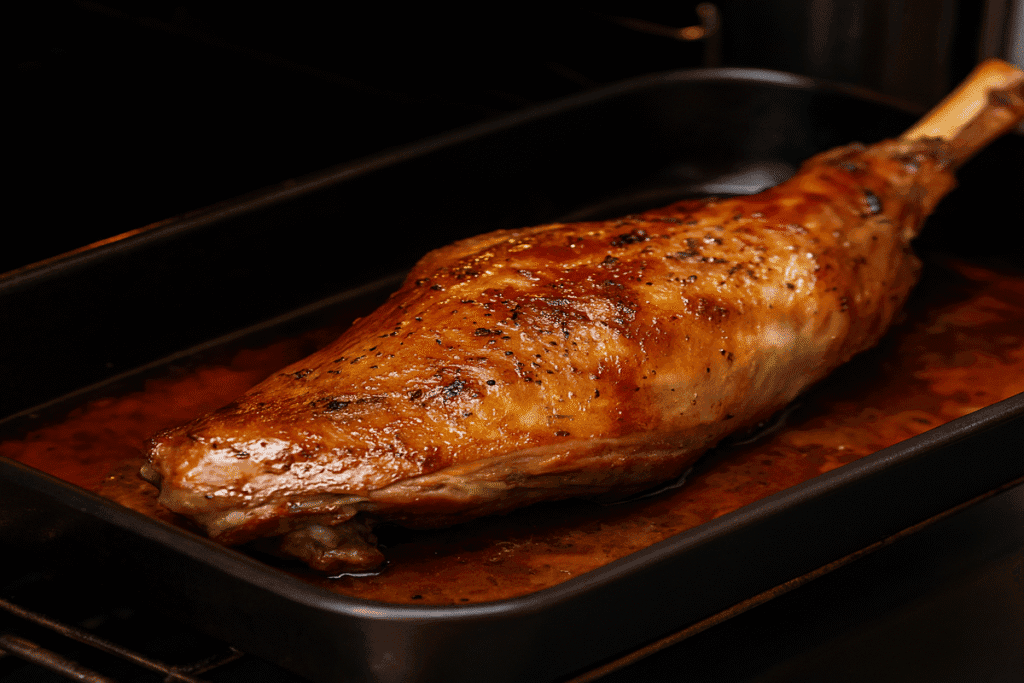
Cabrito roasting low and slow until the meat turns tender and the outside develops deep, golden color
Storage + Reheating
- Store leftover cabrito in an airtight container for up to 4 days.
- Reheat in a skillet or oven to bring back crispy edges.
- Avoid microwaving if possible — it softens the texture.
My Go-To Tools for Mexican Cooking
These are the tools I actually use to build real Mexican flavor at home — nothing fancy, just pieces that get used.
- Cast Iron Tortilla Press — Makes perfect tortillas every time
- Cast Iron Skillet (Comal Alternative) — Heats tortillas evenly and builds real flavor
- Tortilla Warmer — Keeps tortillas hot, soft, and ready to serve
- Non-Stick Comal — Lightweight and perfect for everyday use
- Ninja Professional Blender (1000W) — Smooth, consistent salsas every time
- Granite Molcajete — Traditional texture and deeper flavor
- Wooden Rolling Pin — Great for tortillas, gorditas, and more
More From The Half Jalapeño
Taco Series Hub — follow the Taco Train through Mexico’s most iconic tacos, from slow-cooked birria to crispy street-style favorites.
Birria Tacos — rich shredded beef tacos dipped in deep red consommé and crisped on the comal until smoky and messy.
Barbacoa from Estado de México — slow-cooked meat packed with earthy chile flavor and weekend tradition.
Caldillo Durangueño — Durango’s bold beef-and-chile stew built for cold nights and hungry tables.
Frijoles Charros — smoky northern Mexican cowboy beans loaded with bacon, chiles, and deep savory flavor.
Salsa Tatemada — fire-roasted salsa with charred tomatoes and smoky chile flavor that pairs perfectly with grilled meats.
Authentic Mexican Breakfast Recipes — a growing collection of hearty breakfasts, desayunos, and morning comfort foods from across Mexico.
Pro Tips
- Low and slow is everything — rushing cabrito ruins the texture
- Let the meat rest before slicing to keep it juicy
- Use high heat at the end for crispy edges
- Don’t over-season — simplicity is part of the tradition
FAQ
What is cabrito al pastor?
Cabrito al pastor is a traditional northern Mexican goat dish most closely associated with Nuevo León and Monterrey. The goat is seasoned simply, then slow-roasted over live fire until tender with crispy edges and smoky flavor.
What does cabrito taste like?
Cabrito has a rich, slightly earthy flavor that’s often compared to lamb but milder when prepared young and fresh. The fire-roasting gives it a deep smoky character.
Is cabrito the same as birria?
No. Birria is usually braised in a chile-based broth, while cabrito al pastor is traditionally roasted over open flame with minimal seasoning so the flavor of the meat stands out.
Why is cabrito famous in Nuevo León?
Cabrito became a defining dish of Nuevo León because of the region’s ranching culture and northern fire-cooking traditions. It’s especially tied to Monterrey and celebratory family meals.
What do you serve with cabrito?
Cabrito is commonly served with flour tortillas, frijoles charros, grilled cebollitas, salsa, and roasted chiles.
Can I make cabrito without a grill?
Yes. While traditional cabrito is roasted over fire, you can still make an excellent version in the oven using high heat near the end of cooking to develop color and crisp edges.

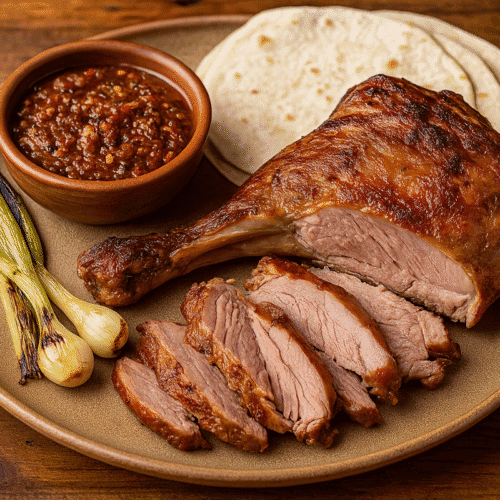
Cabrito al pastor served with warm tortillas, grilled cebollitas, and smoky salsa tatemada for a true northern-style plate
The Final Bite
You don’t have to live in Monterrey to appreciate the soul of cabrito. But once you’ve cooked it yourself—even just a single leg in the oven—you start to get it. You feel the slowness, the patience, the pride. It’s not about the flame. It’s about what the flame means.
So, whether you’re feeding a crowd or just craving something bold and primal, this is your sign to go goat.
Buen provecho,
Join the Comal Crew
Ready for more? Join the Comal Crew and get Hot Off the Comal every Tuesday at 9 a.m. — new recipes, deep-dive stories, kitchen tips, and the flavor-first Mexican cooking you won’t find anywhere else.