You don’t just make salsa tatemada—you burn it on purpose.
This is the salsa that starts with flames licking at tomatoes, chiles popping and blistering, garlic softening inside its skin while the outside goes dark. It’s loud. It’s messy. It smells like something real is happening.
And that smell? That’s the signal.
If you’ve ever stood next to a comal and watched something go just a little further than you expected—right on that edge where you think did I mess this up?—then you already understand tatemada. That edge is where the flavor lives.
At a Glance
What it is: A rustic Mexican salsa made by charring ingredients directly over flame until blistered and smoky
Where it’s from: Found across Mexico, especially in central regions where open-fire cooking is traditional
What makes it special: The deep, almost primal flavor from blackened chiles and vegetables—this is smoke you can taste
The Kind of Salsa You Smell Before You Taste
This isn’t a bright, fresh salsa. It’s deeper. Smokier. A little aggressive in the best way.
It’s the kind of salsa that clings to grilled meat, cuts through fat, and makes tacos feel like they came off a street corner instead of your kitchen.
You smell it before it even hits the table—that mix of roasted tomato, toasted chile, and something just slightly charred that tells you this is going to hit different.
A Personal Note From My Kitchen
I didn’t learn this salsa from a recipe—I learned it from watching heat do its thing.
Growing up, I remember being in my Mom’s kitchen while something sat on the stove just a little longer than expected. Not burned—transformed. There’s a difference, and you don’t really understand it until you see it happen over and over again.
Now when I cook with my Mom, there’s this moment where neither of us says anything. We just watch. The tomatoes start to blister. The chiles darken. The garlic softens inside its skin.
And instead of rushing to flip everything, we let it sit.
That’s the shift. That’s where this salsa lives.
What “Tatemada” Actually Means
“Tatemar” means to char, blister, or roast directly over flame.
Not gently. Not evenly. Not pretty.
You’re not roasting for softness—you’re chasing flavor. You want:
- Blackened skins
- Collapsing tomatoes
- Chiles with blistered, smoky edges
That char isn’t a mistake. It’s the whole point.
The Tradition Behind the Smoke
Across Mexico, cooking over direct heat isn’t just a method—it’s a foundation.
Before modern kitchens, there was fire, a comal, and time. Ingredients weren’t treated delicately—they were exposed to heat, smoke, and transformation.
Salsas like this are built for that environment.
If you’ve ever had tacos from a stand where the meat is coming straight off the grill, chances are the salsa next to it has some level of tatemado going on. That smoky depth is what balances rich meats like carne asada, al pastor, or even simple grilled onions.
It’s not about the salsa standing alone—it’s about how it completes the bite.
Ingredients (Simple, but Powerful)
- 4 ripe Roma tomatoes
- 2–3 dried chiles de árbol (adjust for heat)
- 1–2 cloves garlic (skin on)
- ¼ white onion
- Salt to taste
- Optional: splash of water or oil to loosen
That’s it. No fillers. No distractions.
Ingredients Overview (Read This Before You Start)
This salsa is all about transformation through heat, so each ingredient plays a role:
- Tomatoes → Your base. When charred, they turn slightly sweet, slightly acidic, and deeply savory.
- Chiles de árbol → Sharp, direct heat. Toasting them brings out a smoky bitterness that balances the tomatoes.
- Garlic (skin-on) → Roasts gently inside, turning soft and mellow instead of harsh.
- Onion → Adds depth and a subtle sweetness once blistered.
- Salt → Pulls everything together and enhances that smoky edge.
If you swap anything, you change the character—so keep it simple.
Understanding the Technique (Where This Levels Up)
There’s a spectrum when it comes to salsa:
- Cruda (raw) → Bright, sharp, fresh
- Asada (roasted) → Balanced, slightly smoky
- Tatemada (charred) → Deep, smoky, slightly aggressive
Tatemada lives at the far end.
Heat Source Breakdown:
- Open flame → Most authentic, strongest smoky flavor
- Comal / cast iron → Controlled, still rich and deep
- Oven roasting → Works, but lacks that fire-driven edge
The Key Rule:
If it feels like you might be going too far… you’re probably right where you need to be.
Variations (Same Method, Different Personality)
- Guajillo Tatemada → Milder heat, deeper red color, slightly sweeter
- Chipotle Version → Extra smoky, richer, heavier profile
- Tomatillo Tatemada → Brighter, tangier, still grounded in char
Same technique, different results.
Pro Tips (Don’t Skip These)
- Don’t overcrowd the comal—everything needs direct contact with heat
- Let ingredients sit—flipping too early kills the char
- Ventilation matters—this gets smoky
- Uneven char is good—that’s flavor
- Blend lightly—over-blending flattens everything
How It Should Taste
Smoky first.
Then heat.
Then that deep roasted tomato flavor comes in behind it.
It’s not bright. It’s not delicate.
It lingers.
This post contains affiliate links. As an Amazon Associate, I earn from qualifying purchases at no extra cost to you.
Salsa Tatemada
Ingredients
- 4 Roma tomatoes
- 2 –3 dried chiles de árbol
- 1 –2 cloves garlic skin on
- ¼ white onion
- Salt to taste
- Optional: splash of water or oil for consistency
Instructions
- Heat a comal or cast iron skillet over medium-high heat.
- Place tomatoes, onion, garlic (skin-on), and chiles directly on the hot surface.
- Char all ingredients until blistered and blackened in spots, turning occasionally.
- Remove from heat and let cool slightly.
- Peel garlic skins.
- Add all ingredients to a blender or molcajete with salt.
- Blend or grind until slightly chunky (not fully smooth).
- Add a splash of water or oil if needed for consistency.
- Taste and adjust salt. Serve.
Notes
- Don’t be afraid of dark char—this is where the flavor comes from.
- For less heat, reduce chiles de árbol or swap with guajillo.
- Best texture is slightly chunky, not fully blended smooth.
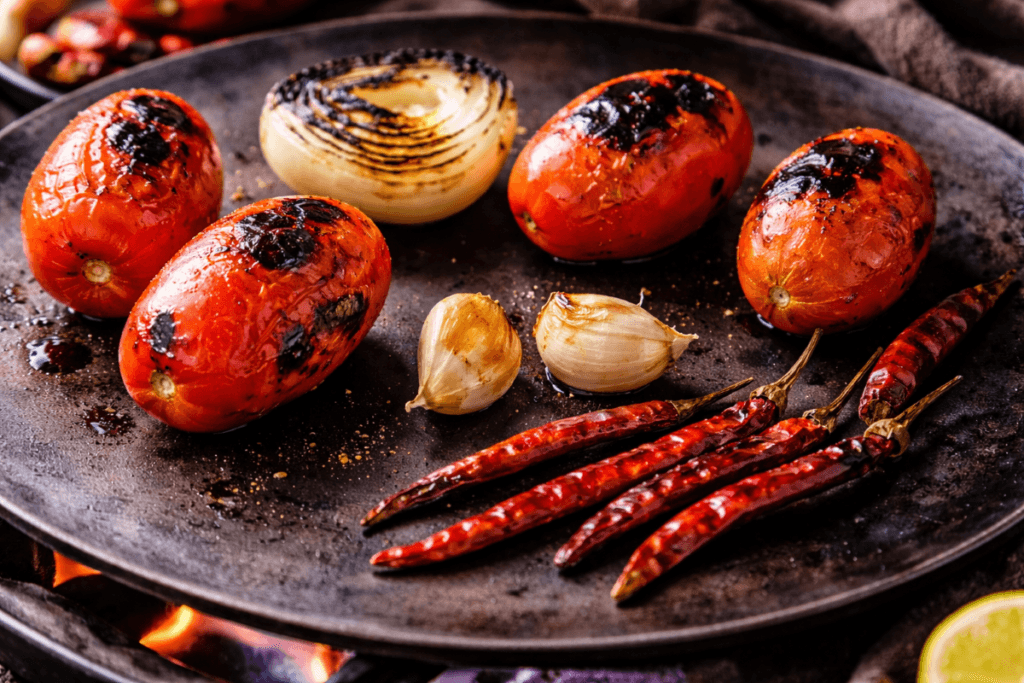
Charring the ingredients on a hot comal builds the deep smoky flavor that defines salsa tatemada
My Go-To Tools for Mexican Cooking
If you want taquería-style flavor at home, the right tools make a huge difference. These are the ones I reach for constantly — the kind that get stained with salsa, smell like toasted chiles, and actually earn their place in the kitchen instead of sitting pretty on a shelf.
Cast Iron Tortilla Press – makes perfect tortillas every time
👉 https://amzn.to/4vdeuPI
Cast Iron Skillet (Comal Alternative) – heats tortillas evenly
👉 https://amzn.to/3KMrGZI
Tortilla Warmer – keeps tortillas hot and soft
👉 https://amzn.to/4aHpT2v
Non-Stick Comal – lightweight, easy to clean, great for everyday use
👉 https://amzn.to/3Oigaaa
Ninja Professional Blender (1,000W) – salsas, aguas frescas, marinades
👉 https://amzn.to/48PRpIH
Granite Molcajete – crush chiles, make salsas the traditional way
👉 https://amzn.to/48yctod
Wooden Rolling Pin – perfect for tortillas, gorditas, empanadas
👉 https://amzn.to/44YSvR5
Lodge 6-Quart Dutch Oven – birria, pozole, moles, beans, stews
👉 https://amzn.to/3KsF4Ch
Storage & Reheating
- Store in an airtight container in the fridge for up to 4–5 days
- Flavor deepens after a day
- Serve at room temp or slightly chilled
FAQ
Is it supposed to look a little burnt?
Yes. If it doesn’t have dark charred spots, you didn’t go far enough.
Can I make it less spicy?
Use fewer chiles de árbol or swap for guajillo.
Can I roast instead of charring?
You can, but you’ll lose that signature smoky depth.
Why is my salsa bitter?
A little bitterness is normal, but too much means the chiles burned too far.
More From The Half Jalapeño
If you’re building out your salsa lineup, here are a few more that bring completely different flavors to the table:
- Salsa Verde Cruda – bright, raw, and punchy with fresh tomatillos
- Salsa Verde Asada – roasted, slightly smoky, and balanced
- Guacamole Taquero Salsa – creamy, taquería-style green salsa that goes on everything
- Molcajeteada Roja – bold, stone-ground salsa with deep roasted flavor
- Chicharrones Preparados – not a salsa, but the perfect crunchy, loaded street snack to pair with this
Want the full lineup? Visit the Salsa Hub to explore every Mexican salsa recipe in the series.
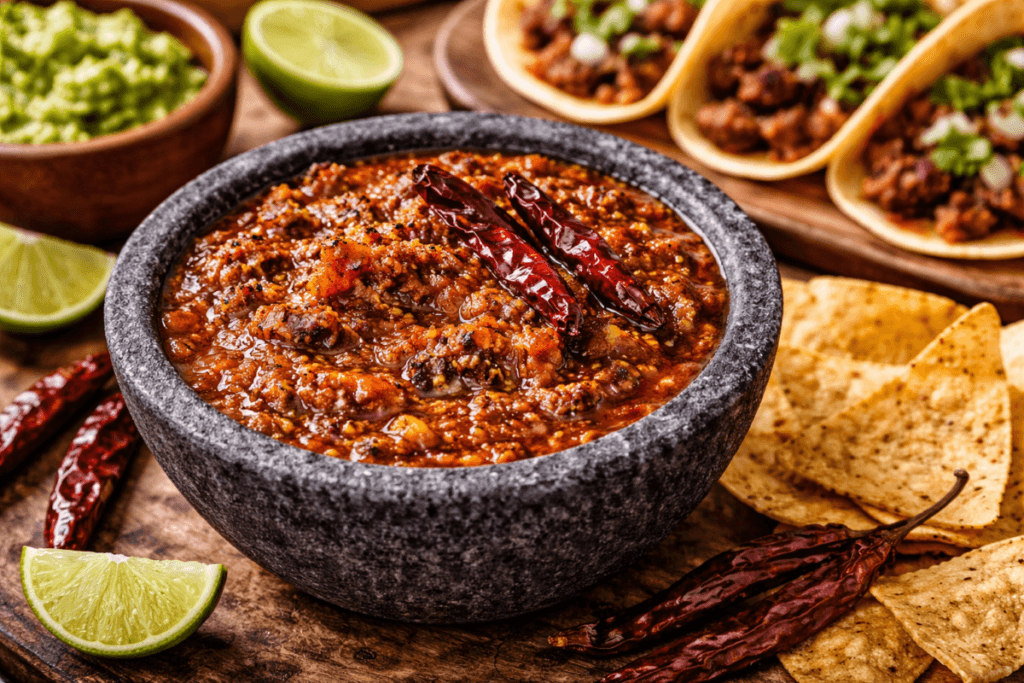
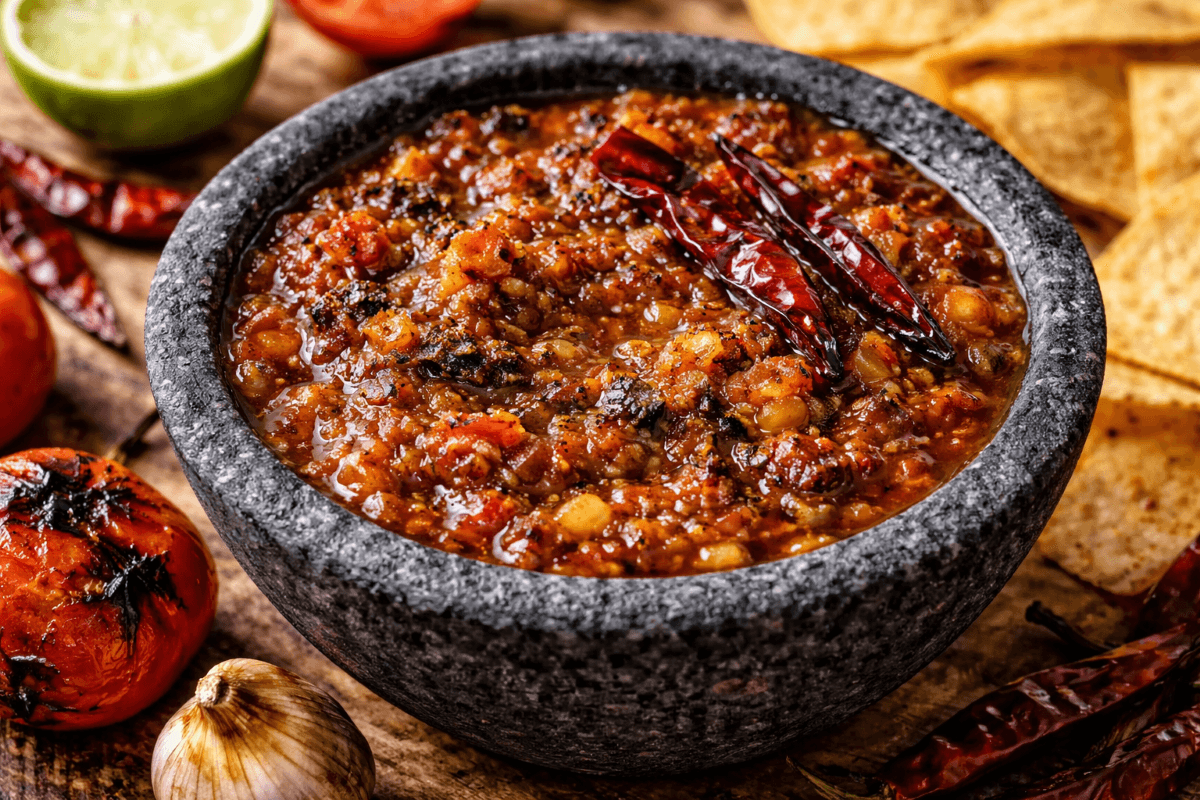
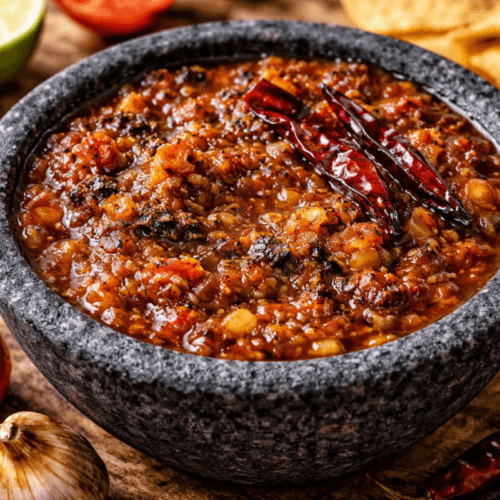
Salsa tatemada served with tacos and chips—the perfect smoky, fire-roasted salsa for any spread
The Final Bite
Salsa tatemada isn’t trying to be pretty.
It’s fire, smoke, and instinct. It’s letting things go just a little further than feels safe and trusting that on the other side of that edge is something better.
That’s where the flavor is.
Buen provecho,
Join the Comal Crew
Ready for more? Join the Comal Crew and get Hot Off the Comal every Tuesday at 9 a.m. — new recipes, deep-dive stories, kitchen tips, and the flavor-first Mexican cooking you won’t find anywhere else.