

Some sauces announce themselves. Salsa verde asada doesn’t need to.
It earns its place quietly—built from roasted tomatillos, softened chiles, and just enough heat to sharpen everything it touches. This is the salsa that wakes up tacos, cuts through rich meats, and somehow makes even the simplest plate feel complete.
Roasting is the point here. It deepens the tang of the tomatillos, mellows the bite of raw onion, and adds a subtle smokiness that turns a bright green salsa into something layered and grounded. Salsa verde asada isn’t flashy. It’s dependable. And once it’s on the table, it rarely leaves.
At a Glance
What it is:
A fire-roasted green salsa built from charred tomatillos, chiles, garlic, and onion, blended into a smoky, tangy sauce with real depth.
Where it’s from:
A taquería staple across central and northern Mexico, where roasted salsas are prized for their bold, layered flavor.
What makes it special:
Charring the ingredients doesn’t just cook them — it transforms them, turning bright, acidic tomatillos into a rich, smoky salsa that hits with heat, tang, and depth in every bite.
What Is Salsa Verde Asada?
Salsa verde asada is a roasted green salsa made primarily from tomatillos, green chiles, onion, garlic, and cilantro. Unlike raw salsa verde, everything here gets cooked first—usually charred on a comal, skillet, or under a broiler—before being blended.
That roasting step changes everything. The sharp acidity of the tomatillos softens. The chiles develop depth. The final salsa is still bright and fresh, but with a savory backbone that makes it incredibly versatile.
You’ll find versions of salsa verde asada across central and western Mexico, especially anywhere grilled meats, tacos, or breakfast plates are involved. It’s not a special-occasion salsa. It’s an everyday one.
The Story Behind It
Roasted salsas are part of daily cooking in Mexico for a reason: they make simple ingredients taste like more. Tomatillos, chiles, onion, and garlic are common, affordable, and full of flavor—but heat is what unlocks their deeper character.
Long before modern kitchens had blenders, these ingredients were roasted over flame, mashed by hand, salted, tasted, adjusted, and served immediately. That habit still shows up in home kitchens and taquerías alike: roast first, blend second, taste always.
Salsa verde asada reflects that tradition. It’s practical, flexible, and built for real food—tacos, eggs, grilled meats, and whatever else needs a punch of smoky brightness.
Ingredients Overview
Before you start, here’s what each ingredient does and how much wiggle room you have:
Tomatillos
The foundation. They bring tang and body. Roasting them until blistered softens their acidity and adds a subtle sweetness. Always peel off the papery husks and rinse away the sticky residue.
Green chiles (serrano or jalapeño)
Serranos bring sharper heat; jalapeños are milder and slightly sweeter. Mix them if you want. Remove seeds to lower heat without changing flavor too much.
White onion
Roasted onion adds sweetness and depth. Raw onion can taste harsh here—roasting keeps it round and savory.
Garlic
One or two cloves is enough. Roast in the skin to mellow the bite so it doesn’t dominate.
Cilantro
Added after roasting for freshness. Optional, but it adds lift and makes the salsa feel brighter.
Salt
Non-negotiable. Add gradually and taste after blending.
Optional additions:
- A splash of water if your blender needs help
- A squeeze of lime if you want extra brightness (not required)
- A pinch of cumin for a slightly earthier finish (use lightly)
This post contains affiliate links. As an Amazon Associate, I earn from qualifying purchases at no extra cost to you.
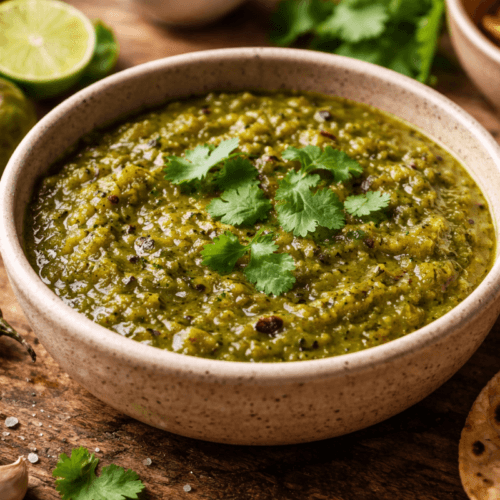
Salsa Verde Asada (Roasted Tomatillo Salsa)
Ingredients
- 1 lb tomatillos husked and rinsed
- 2 –3 serrano chiles or jalapeños
- ¼ white onion
- 2 garlic cloves unpeeled
- ½ cup fresh cilantro optional
- ½ tsp kosher salt then more to taste
- 1 –3 tbsp water only if needed for blending
Instructions
- Heat a dry skillet or comal over medium-high heat.
- Add tomatillos, chiles, onion, and garlic. Roast, turning occasionally, until softened and blistered all over. The tomatillos should be soft and slightly collapsed; the chiles should have dark spots.
- Remove from heat. Peel the garlic cloves.
- Add tomatillos, chiles, onion, and peeled garlic to a blender (or molcajete). Add salt and cilantro if using.
- Blend just until combined—don’t puree it completely smooth unless that’s your preference. Add a tablespoon of water only if your blender needs help moving.
- Taste and adjust salt. If you want it brighter, add a small squeeze of lime.
Notes
- If the salsa tastes bitter, the tomatillos may be over-charred. Aim for blistered and soft, not scorched.
- For milder heat: use jalapeños and remove seeds.
- For deeper smokiness: roast a little longer and blend less.
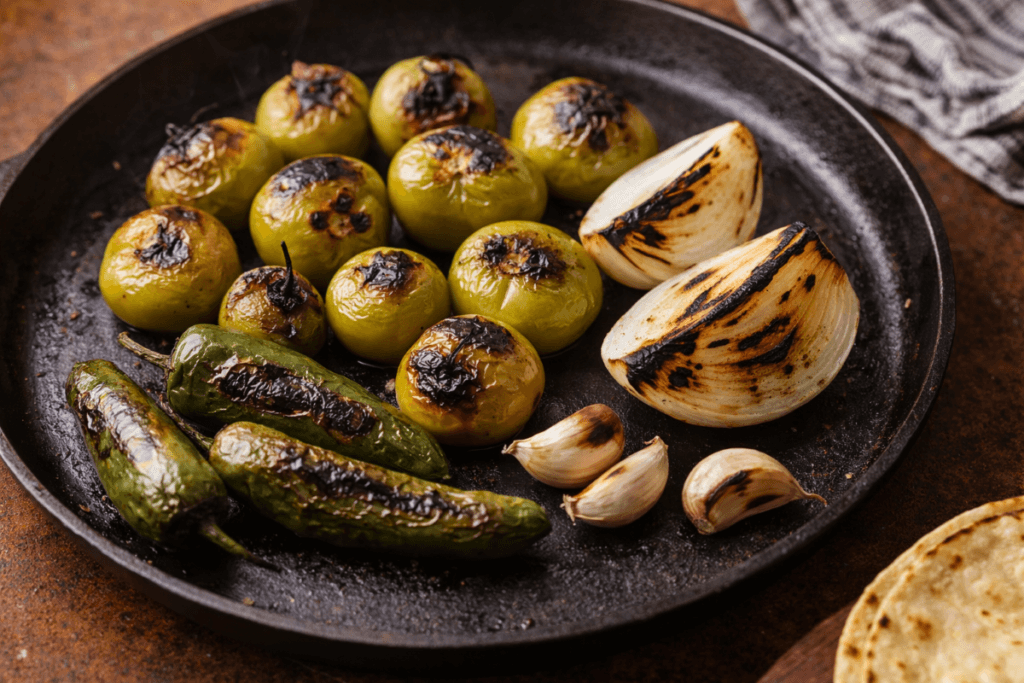
Tomatillos, jalapeños, onion, and garlic roasting hard in a cast iron skillet — the smoky base that gives salsa verde asada its depth and bite
Storage & Reheating
- Refrigerator: Store in an airtight container for up to 5 days.
- Freezer: Freeze in small containers for up to 3 months. Thaw overnight in the fridge.
- Reheating: Salsa verde asada can be served cold, room temp, or gently warmed. If warming, do it on low heat and stir—don’t boil.
Flavor tip: it often tastes even better the next day after everything settles.
My Go-To Tools for Mexican Cooking
If you want taquería-style flavor at home, the right tools make a huge difference. These are the ones I reach for constantly — the kind that get stained with salsa, smell like toasted chiles, and actually earn their place in the kitchen instead of sitting pretty on a shelf.
Cast Iron Tortilla Press – makes perfect tortillas every time
👉 https://amzn.to/4vdeuPI
Cast Iron Skillet (Comal Alternative) – heats tortillas evenly
👉 https://amzn.to/3KMrGZI
Tortilla Warmer – keeps tortillas hot and soft
👉 https://amzn.to/4aHpT2v
Non-Stick Comal – lightweight, easy to clean, great for everyday use
👉 https://amzn.to/3Oigaaa
Ninja Professional Blender (1,000W) – salsas, aguas frescas, marinades
👉 https://amzn.to/48PRpIH
Granite Molcajete – crush chiles, make salsas the traditional way
👉 https://amzn.to/48yctod
Wooden Rolling Pin – perfect for tortillas, gorditas, empanadas
👉 https://amzn.to/44YSvR5
Lodge 6-Quart Dutch Oven – birria, pozole, moles, beans, stews
👉 https://amzn.to/3KsF4Ch
FAQ
Is salsa verde asada spicy?
It depends on your chiles. Serranos are hotter than jalapeños. Removing seeds reduces heat.
Can I make this without cilantro?
Yes. It will still work. The salsa will taste more smoky and savory, just less bright.
Why dry-roast instead of using oil?
Dry heat gives you better char and cleaner roasted flavor. Oil can prevent blistering and dull the roast.
Why is my salsa watery?
Tomatillos release moisture when roasted. Blend less, or simmer the salsa for a few minutes to thicken.
More from The Half Jalapeño
If you’re building out a salsa lineup or just want a few solid staples in rotation, these pair naturally with salsa verde asada:
- Salsa Roja Taquera – A smoky, punchy red salsa built for tacos, squeeze bottles, and repeat bites.
- Huevos Ahogados – Poached eggs simmered in a bold tomato sauce, perfect with a spoonful of green salsa on top.
- Café de Olla – A warm, cinnamon-spiced Mexican coffee that rounds out any breakfast spread.
Want the full lineup? Visit the Salsa Hub to explore every Mexican salsa recipe in the series.
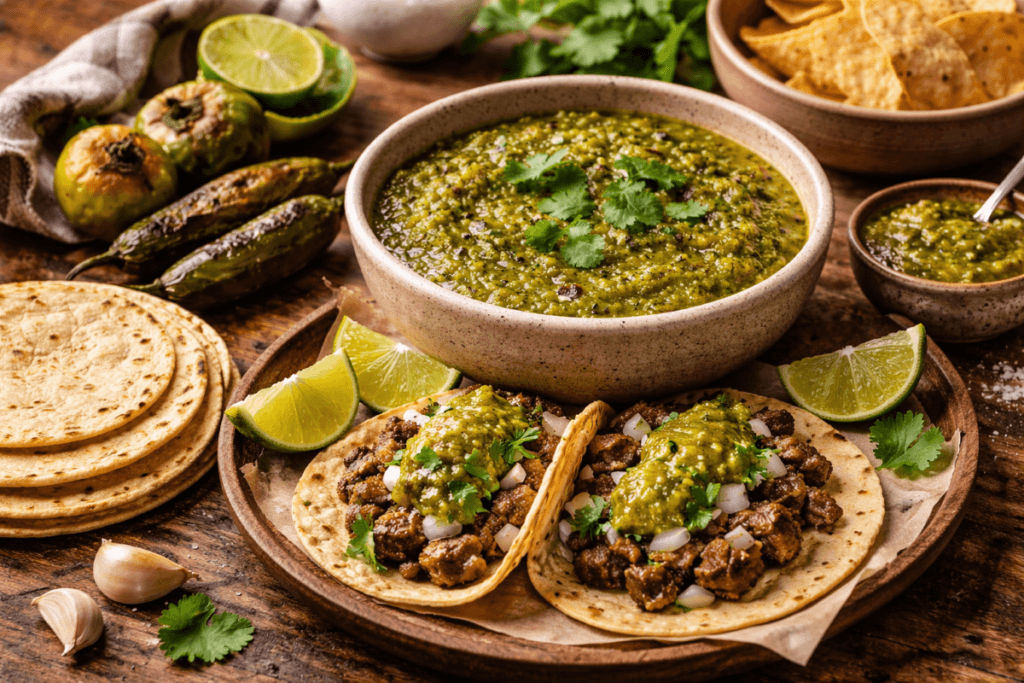
Salsa verde asada in its natural habitat—roasted tomatillos blended smooth and spooned over tacos, ready to brighten everything it touches
The Final Bite
Salsa verde asada doesn’t try to impress. It just shows up roasted, balanced, and ready to work.
Once you make it, you’ll start using it the way taquerías do—without thinking about it, because it makes everything taste like the food knows what it’s doing.
Buen provecho,
Join the Comal Crew
Ready for more? Join the Comal Crew and get Hot Off the Comal every Tuesday at 9 a.m. — new recipes, deep-dive stories, kitchen tips, and the flavor-first Mexican cooking you won’t find anywhere else.