
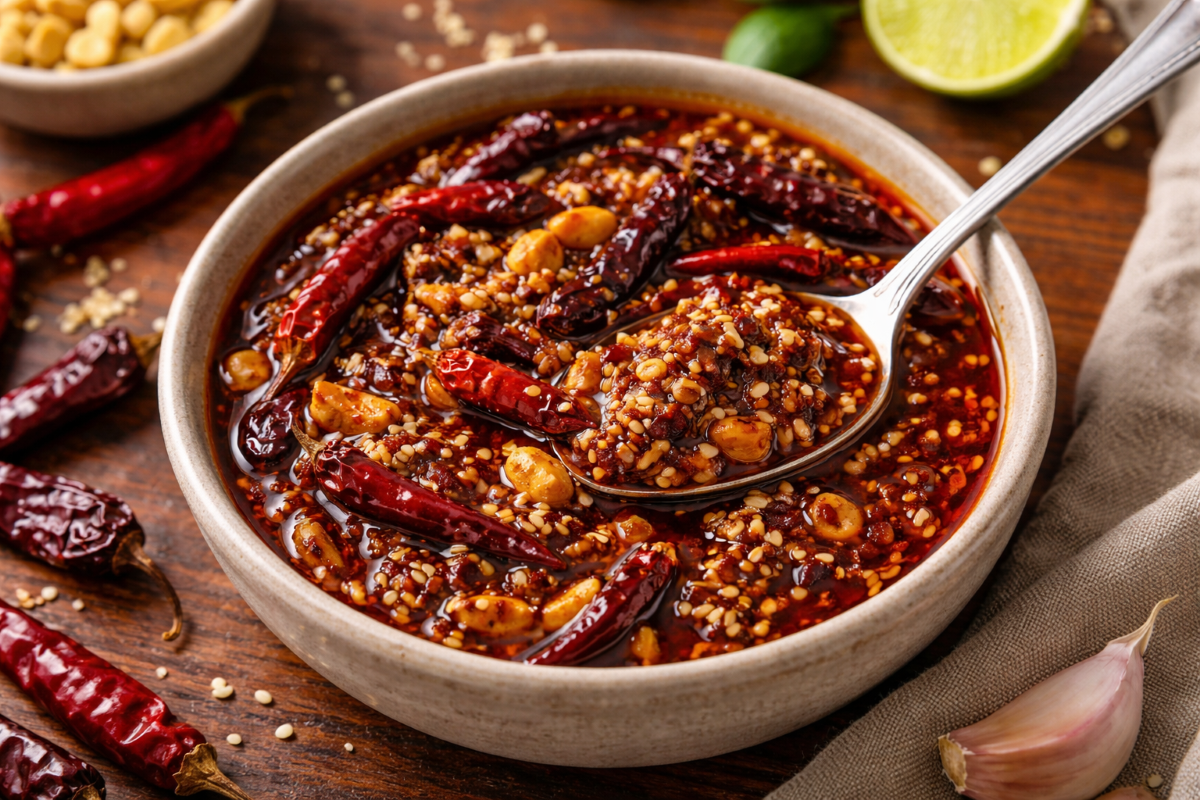
Some salsas wake a dish up. Salsa macha grabs it by the shoulders.
This is not the kind of salsa you splash on and forget about. It lingers. It crackles. It leaves behind smoke, chile heat, toasted nuttiness, and just enough crunch to make every bite feel bigger than it should. Spoon it over tacos, eggs, grilled meat, beans, roasted vegetables, or even a plain tortilla, and suddenly lunch starts acting like it has something to prove.
That is the magic of salsa macha. It is bold without being sloppy, spicy without being one-dimensional, and rich without feeling heavy when the balance is right. It brings heat, yes, but it also brings texture, depth, and that little edge of obsession that makes you keep opening the fridge just to “have one more taste.”
At a Glance
What it is: A bold Mexican chile oil salsa made with dried chiles, garlic, oil, peanuts, and sesame seeds.
Where it’s from: Salsa macha is most closely associated with Veracruz and is known for its oil-based, deeply toasted flavor.
What makes it special: Instead of fresh tomatoes or raw chiles, it gets its personality from toasted dried chiles, warm oil, garlic, and crunchy mix-ins that make every spoonful smoky, nutty, and fiery.
Why Salsa Macha Hits Different
Fresh salsa has its place. So does roasted salsa. But salsa macha plays a different game entirely.
It does not rely on tomatoes for body or brightness. It does not need cilantro to feel alive. It builds its flavor from dried chiles toasted in oil, garlic cooked until fragrant, and nuts and seeds that turn every spoonful into a little pile of heat and crunch. It is part salsa, part condiment, part secret weapon.
That is why salsa macha has such a grip on people. It can sit next to breakfast, lunch, dinner, or a late-night snack and somehow feel right every time. It belongs on tacos, obviously, but it also works on fried eggs, grilled shrimp, avocado toast, roasted sweet potatoes, and plain rice that needs a reason to exist.
It is one of those rare condiments that makes simple food taste intentional.
A Little Backstory
Salsa macha is often linked to Veracruz, where bold, pantry-driven flavors have long had a home on the table. Like many traditional foods, it shows up in different forms from kitchen to kitchen. Some versions lean harder on peanuts. Some go heavier on sesame. Some are all about smoky dried chiles, while others push the heat until your forehead knows exactly what is happening.
That variation is part of the charm. Salsa macha is not a rigid formula. It is a style of salsa with strong bones: dried chiles, oil, garlic, salt, and some kind of crunch. From there, cooks make it their own.
And that feels right for a salsa like this. It is not polished or delicate. It is direct. It is practical. It is built from ingredients that keep well and hit hard.
Why You’ll Love This Recipe
This version keeps the soul of salsa macha intact while making it easy for a home cook to pull off without drama.
The chile de árbol brings the sharp heat. Morita adds smoke and darker depth. The peanuts give it body. Sesame seeds bring that toasted edge that makes the whole thing taste complete. Garlic rounds it out. The oil ties everything together.
Most importantly, we are not turning it into a smooth puree. Salsa macha should have texture. It should cling to a spoon. It should leave little crunchy bits behind on your taco or egg or piece of grilled chicken. That texture is part of what makes it addictive.
This is the kind of recipe that earns permanent fridge space.
Ingredients Overview
Here is what each ingredient is doing before we fire anything up.
Chile de árbol: This is where most of the heat comes from. It is sharp, direct, and not shy. A little goes a long way, but salsa macha is supposed to have some attitude.
Morita chiles: These bring a smoky, deeper chile flavor that rounds out the batch. If árbol is the spark, morita is the slow burn.
Garlic: Thinly sliced garlic softens in the oil and adds savoriness without turning the salsa muddy.
Peanuts: These give salsa macha its heart. They add richness, crunch, and a slightly roasted flavor that makes the chile oil feel full instead of thin.
Sesame seeds: Small but important. They add nuttiness, a little toast, and that classic layered finish.
Neutral oil: Use something clean-tasting like avocado, vegetable, or grapeseed oil. You want the chiles and toasted ingredients leading the flavor, not the oil.
Salt: This brings everything into focus. Without enough salt, the whole batch tastes flatter than it should.
Mexican oregano, optional: A small pinch adds a dry herbal note that works nicely with the smoke.
Vinegar, optional: Just a touch at the end can brighten the salsa slightly if you want a cleaner finish.
Salsa Macha Recipe
Prep Time
10 minutes
Cook Time
10 minutes
Total Time
20 minutes
Yield
About 1 1/4 cups
Ingredients
- 12 dried chiles de árbol, stems removed
- 6 dried morita chiles, stems removed
- 6 garlic cloves, thinly sliced
- 1/2 cup peanuts
- 2 tablespoons sesame seeds
- 1 cup neutral oil
- 1 teaspoon kosher salt, plus more to taste
- 1 teaspoon Mexican oregano, optional
- 1 to 2 teaspoons apple cider vinegar, optional
Instructions
- Prep the chiles.
Wipe the dried chiles clean with a dry towel. Remove the stems. Shake out some of the seeds if you want to soften the heat a little, but do not strip them bare. - Warm the oil.
Pour the oil into a small saucepan and set it over medium-low heat. You want steady heat, not aggressive heat. Burned salsa macha tastes bitter fast. - Toast the peanuts.
Add the peanuts and cook, stirring often, until lightly golden and fragrant. Remove them with a slotted spoon and set aside. - Cook the garlic.
Add the sliced garlic to the same oil and cook until pale golden. Do not let it go dark brown. Remove and set aside. - Toast the sesame seeds.
Add the sesame seeds and stir constantly for about 30 seconds, just until they smell toasty. Remove right away. - Toast the chiles.
Add the árbol and morita chiles to the oil for just a few seconds per side. They should darken slightly and smell fragrant. If they blacken, they are done in the wrong way. - Cool slightly.
Take the saucepan off the heat and let the oil cool for a few minutes. - Blend the salsa.
Add the toasted chiles, peanuts, garlic, sesame seeds, salt, and oregano if using to a food processor or blender. Pour in the warm oil. Pulse until the mixture is coarse and spoonable. Do not blend it smooth. - Adjust the flavor.
Taste and add more salt if needed. Stir in a teaspoon or two of vinegar if you want a little brightness. - Store it.
Spoon the salsa into a clean glass jar. Let it cool completely before sealing.
This post contains affiliate links. As an Amazon Associate, I earn from qualifying purchases at no extra cost to you.
Salsa Macha
Ingredients
- 12 dried chiles de árbol stems removed
- 6 dried morita chiles stems removed
- 6 garlic cloves thinly sliced
- ½ cup peanuts
- 2 tablespoons sesame seeds
- 1 cup neutral oil
- 1 teaspoon kosher salt plus more to taste
- 1 teaspoon Mexican oregano optional
- 1 to 2 teaspoons apple cider vinegar optional
Instructions
- Wipe the dried chiles clean and remove the stems.
- Warm the oil in a small saucepan over medium-low heat.
- Toast the peanuts until lightly golden, then remove.
- Cook the garlic until pale golden, then remove.
- Toast the sesame seeds briefly, then remove.
- Toast the dried chiles in the oil for a few seconds per side until fragrant.
- Remove from the heat and let the oil cool slightly.
- Add the chiles, peanuts, garlic, sesame seeds, salt, and oregano to a blender or food processor.
- Pour in the warm oil and pulse until coarse and spoonable.
- Taste, adjust salt, stir in vinegar if using, and store in a clean jar.
Notes
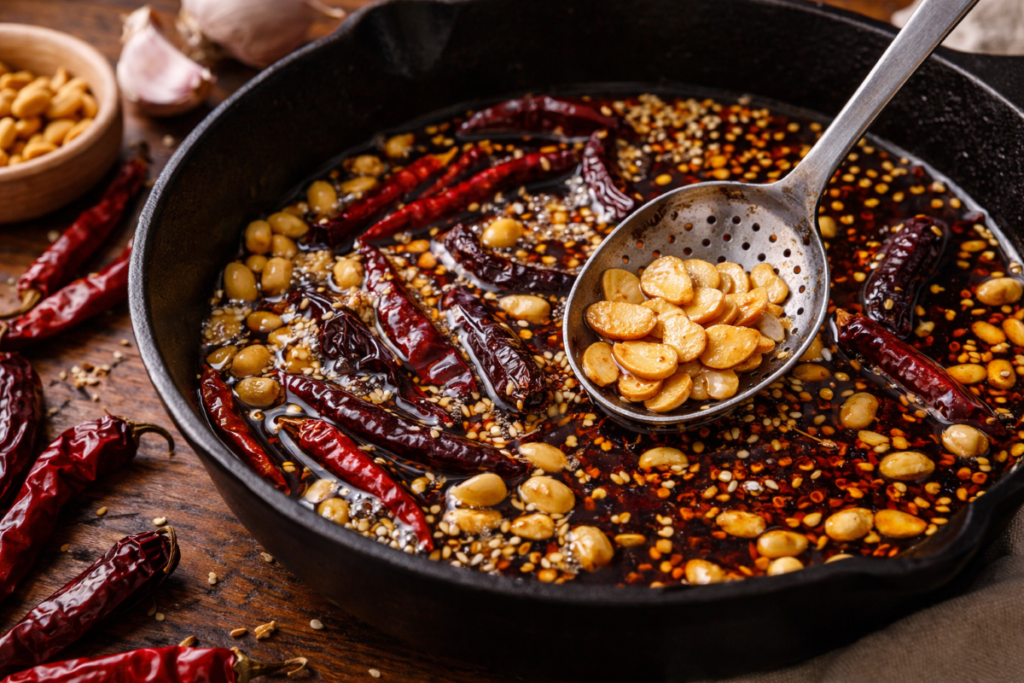
Toasting the garlic, chiles, peanuts, and sesame in oil is what gives salsa macha its deep flavor, crunch, and signature heat
Why This Recipe Works
The balance is what makes this one click.
The árbol chiles bring heat, but the moritas keep that heat from tasting flat. The peanuts and sesame seeds create texture and richness, so the salsa feels substantial instead of thin or oily. Garlic adds savory depth without stealing the show. And pulsing the mixture instead of pureeing it keeps the salsa in the zone where it belongs: crunchy, spoonable, and full of little toasted bits that hit differently on food.
This is also a forgiving recipe once you understand the one rule that matters most: do not burn anything. Burn the garlic and it gets bitter. Burn the sesame and it tastes harsh. Burn the chiles and the whole jar takes on that scorched note you cannot hide.
Gentle heat. Full attention. Big reward.
Heat Level
This version has real heat.
Not cartoon heat. Not challenge video heat. Just the kind of heat that lets you know salsa macha means business. If you love spicy food, this is a very happy place to be. If you want to dial it down, reduce the number of chiles de árbol and replace some of them with guajillo for a milder, rounder profile.
If you want it hotter, keep the seeds in and do not apologize.
How to Use Salsa Macha
This is where things get fun.
Spoon it over tacos, quesadillas, tostadas, eggs, grilled steak, roasted chicken, black beans, avocado slices, roasted potatoes, elote, or simple rice. It also works shockingly well on things that are not traditionally part of the conversation, like pizza, noodles, or a grilled cheese that needs a better attitude.
One of my favorite ways to use it is over fried eggs with warm tortillas on the side. Another is on a crispy potato taco where the crunch of the salsa plays off the crunch of the shell and suddenly nobody at the table is talking.
That is the kind of condiment this is.
Storage + Reheating
Store salsa macha in a clean airtight glass jar in the refrigerator for up to 2 to 3 weeks.
Because it is oil-based, it may thicken in the fridge. That is normal. Let it sit at room temperature for 15 to 20 minutes and stir before using.
You do not need to reheat it, but it loosens beautifully when spooned over hot food.
Always use a clean spoon when dipping into the jar. Do not invite fridge chaos into your salsa.
Easy Variations
Once you have made the base version, there is room to play.
Swap some of the peanuts for pepitas if you want a greener, slightly earthier flavor. Add a few almonds for a richer crunch. Use more morita if you want the salsa smokier. Use more árbol if you want to push the heat. Add a small pinch of oregano if you like that dry herbal note. Stir in a touch of vinegar if you want the finish brighter.
The point is not to turn it into something unrecognizable. The point is to make it yours while keeping the heart of it intact.
Common Mistakes to Avoid
Using high heat
That is how ingredients go from toasted to bitter in a blink.
Blending it smooth
Salsa macha should have texture. If it pours like hot sauce, you went too far.
Under-salting the batch
Oil, nuts, and dried chiles need enough salt to come alive.
Burning the garlic
Golden is good. Brown is risky. Dark is a funeral.
Thinking it only belongs on tacos
That is selling it short.
My Go-To Tools for Mexican Cooking
If you want taquería-style flavor at home, the right tools make a huge difference. These are the ones I reach for constantly — the kind that get stained with salsa, smell like toasted chiles, and actually earn their place in the kitchen instead of sitting pretty on a shelf.
- Cast Iron Tortilla Press — great for homemade tortillas if you are building a full taco night around this salsa.
- Cast Iron Skillet (Comal Alternative) — useful for warming tortillas, toasting ingredients, or serving alongside grilled dishes.
- Tortilla Warmer — keeps tortillas soft and warm while the salsa macha hits the table.
- Non-Stick Comal — handy for light toasting and everyday Mexican cooking.
- Ninja Professional Blender (1000W) — powerful enough to pulse salsa macha to the right coarse texture without turning it into puree.
- Granite Molcajete — perfect if you want a more rustic texture and old-school presentation.
- Wooden Rolling Pin — useful for crushing dried chiles or peanuts if you want a chunkier finish without over-blending.
More from The Half Jalapeño
If salsa macha is your kind of move, here are a few more bold salsas and flavor-packed staples to keep in rotation:
- Salsa Roja Taquera — smoky, spicy, and built for tacos, burritos, and late-night cravings.
- Salsa Ranchera — a roasted table salsa with deeper flavor and just the right amount of heat.
- Salsa Tatemada — charred, bold, and loaded with fire-roasted flavor.
- Guacamole Taquero Salsa — creamy, punchy, and perfect when you want heat with a smoother finish.
- Pico de Gallo — fresh, bright, and the easiest way to add a clean pop of flavor to any plate.
- Salsas & Sauces Hub — explore the full lineup of homemade salsas, taco toppers, and flavor builders.
FAQ
What is salsa macha?
Salsa macha is a Mexican chile oil salsa made with dried chiles, garlic, oil, and crunchy ingredients like peanuts or sesame seeds.
Is salsa macha very spicy?
It usually has a solid kick, especially when made with chile de árbol, but the heat level can be adjusted by changing the chile mix.
Does salsa macha need peanuts?
Not always, but peanuts are a common and delicious choice because they add body, richness, and crunch.
How long does homemade salsa macha last?
Stored in a clean airtight jar in the refrigerator, it should keep for about 2 to 3 weeks.
Is salsa macha the same as chili crisp?
Not exactly. They share some similarities, but salsa macha has its own Mexican flavor profile built around dried Mexican chiles, garlic, and toasted nuts or seeds.
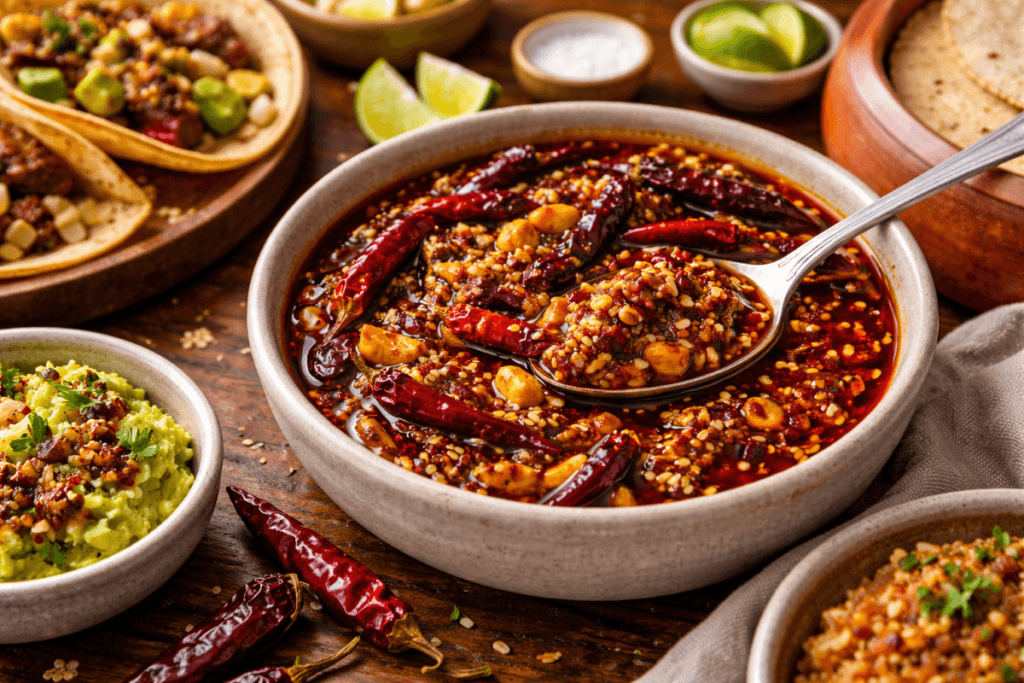
Smoky, crunchy, and packed with heat, salsa macha turns tacos, rice, guacamole, and warm tortillas into a full flavor-loaded spread
The Final Bite
Salsa macha is one of those recipes that feels bigger than the ingredient list.
It starts with pantry staples and a little patience, then turns into something that makes ordinary food taste like you planned ahead. Smoky, crunchy, fiery, and rich, it earns its place on the table fast. And once you have a jar in the fridge, good luck going back to a life where eggs, tacos, beans, and roasted vegetables do not get the salsa macha treatment.
That is the danger of this one. It does not just show up. It takes over.
Buen provecho,
Join the Comal Crew
Ready for more? Join the Comal Crew and get Hot Off the Comal every Tuesday at 9 a.m. — new recipes, deep-dive stories, kitchen tips, and the flavor-first Mexican cooking you won’t find anywhere else.