
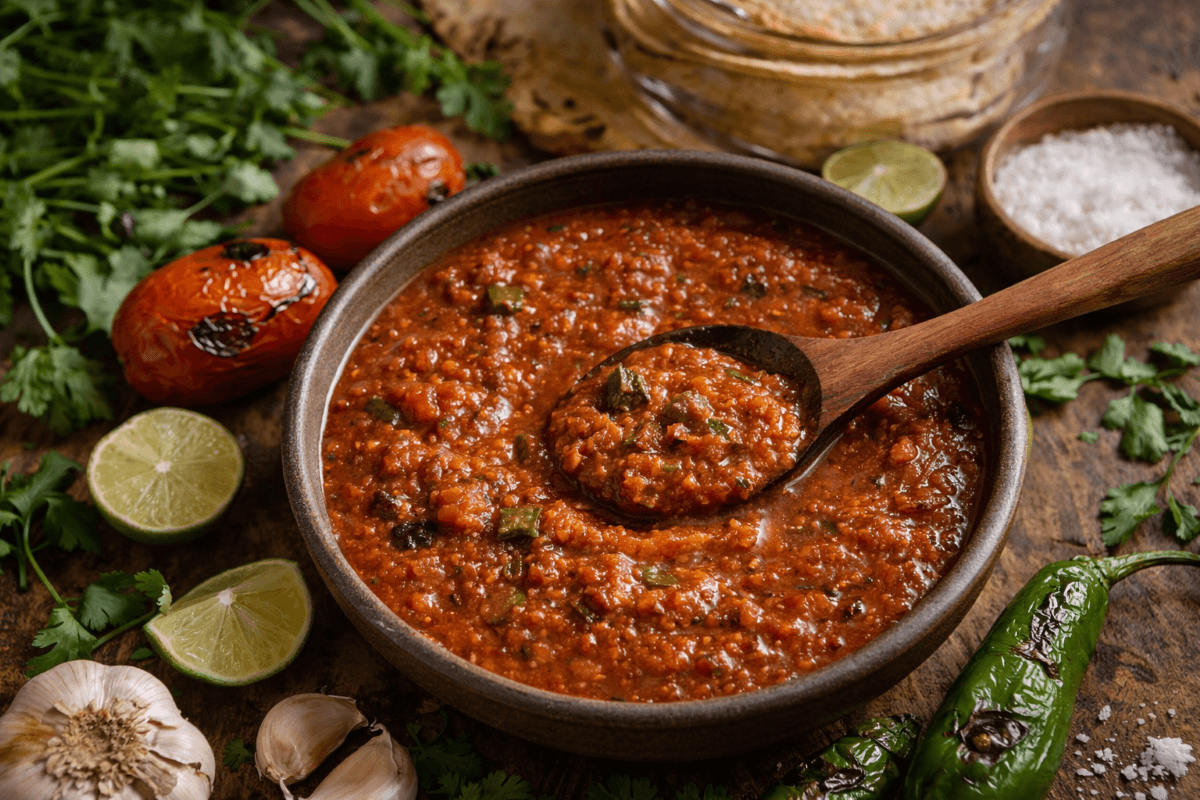
The Story Behind Salsa Ranchera
Some salsas are built to grab your attention.
Salsa Ranchera is built to feed people.
The word “ranchera” literally means from the ranch — the countryside kitchens where practical cooking rules the day. This is the kind of salsa that shows up in homes, roadside fondas, and humble breakfast spots across Mexico.
It isn’t flashy.
It doesn’t rely on extreme heat or trendy ingredients.
Instead, it delivers something better: warm, roasted flavor that makes everything on the plate taste deeper and more satisfying.
If you’ve ever eaten Huevos Rancheros, you’ve already tasted it. That classic breakfast depends on a warm spoonful of roasted tomato salsa poured over eggs and tortillas to bring the entire plate together.
But breakfast is only the beginning.
This salsa also works beautifully with dishes like Chilaquiles Verdes, where roasted tomato flavor cuts through crispy tortilla chips and eggs, or even something simple like Molletes, where beans, cheese, and salsa create one of the most comforting breakfasts in Mexican cooking.
And once tacos hit the table, Salsa Ranchera finds its way there too. A spoonful over grilled meat tacos — especially something like Carne Asada Tacos — adds just enough roasted depth and chile heat to wake everything up.
The secret behind the flavor is simple.
Roasting.
Tomatoes blister and sweeten.
Chiles soften and release their aroma.
Garlic caramelizes.
Onion deepens.
Everything gets blended together and simmered briefly, turning those roasted vegetables into a warm salsa that tastes bigger than the sum of its parts.
It’s rustic.
It’s comforting.
And once you start keeping a jar of it in the fridge, it quietly becomes part of your everyday cooking.
At a Glance
What it is
A roasted tomato salsa simmered into a warm sauce commonly served with huevos rancheros, tacos, beans, and grilled meats.
Where it’s from
Country-style cooking across Mexico, especially rural kitchens where hearty meals feed the table.
What makes it special
Unlike fresh salsas, Salsa Ranchera is simmered after blending, giving it a thicker texture and deeper roasted flavor.
What Is Salsa Ranchera?
Salsa Ranchera is a traditional Mexican roasted tomato salsa that’s blended and then simmered into a warm sauce. It typically includes tomatoes, chiles, onion, and garlic that are roasted until blistered before being blended together.
The result is a salsa that’s deeper and more savory than fresh salsas like Pico de Gallo. Because it’s cooked after blending, it has a thicker consistency that works especially well poured over dishes like eggs, tacos, beans, and grilled meats.
Why Salsa Ranchera Works
Fresh salsas bring brightness.
Salsa Ranchera brings depth.
Roasting the vegetables concentrates their flavor and softens the sharp edges of raw ingredients. Tomatoes become slightly sweet, chiles mellow, and garlic develops a warm savory note that anchors the entire salsa.
Simmering the salsa after blending thickens it slightly and allows the flavors to settle together.
That’s why it works so well with hearty dishes like eggs, tacos, beans, and grilled meats.
Instead of sitting on top of the food like a garnish, Salsa Ranchera becomes part of the dish.
Ingredients Overview
Before we cook, here’s what each ingredient contributes.
Roma Tomatoes
Roma tomatoes are ideal because they’re meatier and less watery than standard tomatoes. Roasting them concentrates their natural sweetness.
Jalapeño or Serrano Chiles
These bring the heat.
Serranos create a sharper kick, while jalapeños keep the salsa milder.
White Onion
Roasted onion balances the acidity of the tomatoes and adds savory depth.
Garlic
Garlic caramelizes during roasting, giving the salsa warmth and complexity.
Neutral Oil or Lard
A small amount of fat helps the salsa simmer and deepen in flavor.
Salt
Salt sharpens and balances the roasted ingredients.
Water or Broth (Optional)
A splash can loosen the salsa if you prefer a thinner texture.
How to Make Salsa Ranchera
Step 1 — Roast the Vegetables
Heat a skillet or comal over medium-high heat.
Add the tomatoes, chiles, onion, and garlic.
Cook until everything develops blistered spots and the tomatoes soften, turning occasionally so all sides roast evenly.
This usually takes about 10–12 minutes.
Step 2 — Blend
Transfer the roasted vegetables to a blender.
Add salt and a splash of water if needed.
Blend until smooth or slightly chunky depending on your preference.
Step 3 — Simmer the Salsa
Heat a tablespoon of oil in the same skillet.
Pour in the blended salsa and let it simmer for 5–7 minutes, stirring occasionally.
This step deepens the flavor and thickens the salsa slightly.
Step 4 — Taste and Adjust
Taste the salsa.
Add more salt if needed or a splash of water if the salsa feels too thick.
Serve warm.
This post contains affiliate links. As an Amazon Associate, I earn from qualifying purchases at no extra cost to you.
Salsa Ranchera
Ingredients
- 4 Roma tomatoes
- 1 –2 jalapeños or serrano chiles
- ¼ white onion
- 2 garlic cloves
- 1 tablespoon neutral oil
- ½ teaspoon salt
- ¼ cup water or broth optional
Instructions
- Roast tomatoes, chiles, onion, and garlic until blistered.
- Transfer vegetables to a blender with salt.
- Blend until smooth or slightly chunky.
- Heat oil in skillet and pour in salsa.
- Simmer 5–7 minutes until slightly thickened.
- Taste and adjust seasoning.
Notes
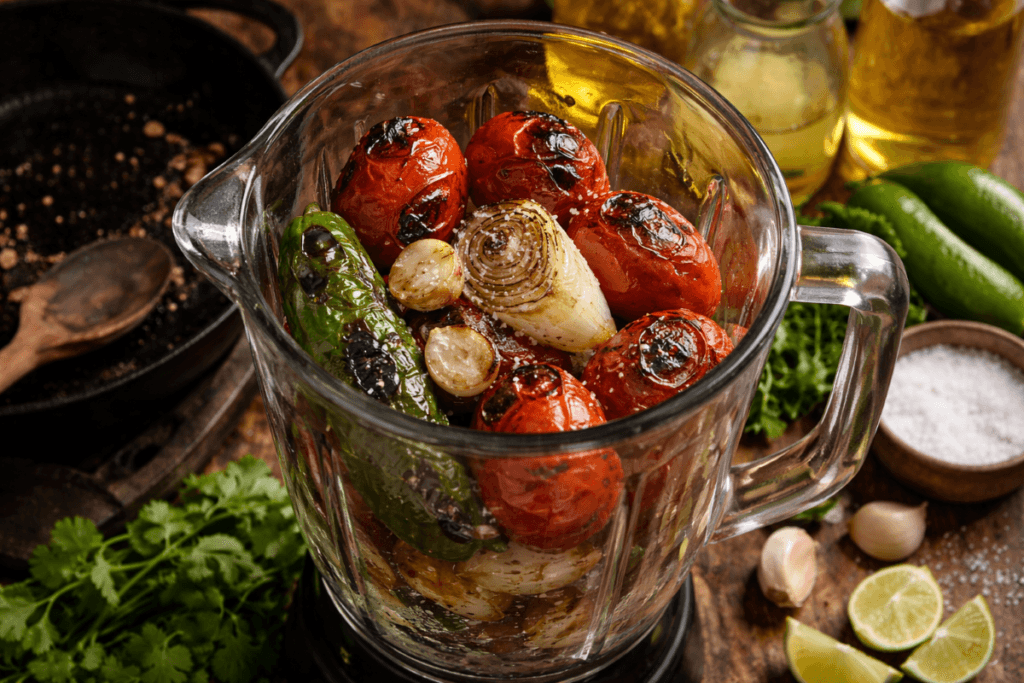
Roasted tomatoes, chiles, onion, and garlic ready to be blended into Salsa Ranchera
Storage and Reheating
Refrigerator
Store Salsa Ranchera in an airtight container for up to 5 days.
Freezer
Freeze for up to 2 months.
Reheating
Warm gently in a saucepan over medium heat.
Because the salsa is cooked, reheating actually deepens the flavor.
My Go-To Tools for Mexican Cooking
If you want taquería-style flavor at home, the right tools make a huge difference. These are the ones I reach for constantly — the kind that get stained with salsa, smell like toasted chiles, and actually earn their place in the kitchen instead of sitting pretty on a shelf.
Cast Iron Tortilla Press — makes perfect tortillas every time
Cast Iron Skillet (Comal Alternative) — heats tortillas evenly
Tortilla Warmer — keeps tortillas hot and soft
Non-Stick Comal — lightweight, easy to clean, great for everyday use
Ninja Professional Blender (1000W) — powerful enough for smooth salsas
Granite Molcajete — traditional way to crush salsas and release flavor
Wooden Rolling Pin — perfect for masa and empanadas
More Salsas from The Half Jalapeño
If you’re building your salsa lineup, these belong in your kitchen too.
• Salsa Roja Taquera — the classic taco-truck salsa
• Pico de Gallo — fresh tomato salsa for tacos and grilled meats
• Molcajete Salsa — smoky salsa crushed the traditional way
Want the full lineup? Visit the Salsa Hub to explore every Mexican salsa recipe in the series.
Frequently Asked Questions
Is Salsa Ranchera spicy?
It depends on the chiles you use. Serranos will create more heat, while jalapeños keep the salsa milder.
What’s the difference between Salsa Ranchera and Salsa Roja?
Salsa Ranchera is simmered after blending, giving it a thicker texture. Salsa Roja is often thinner and served as a table salsa.
Can I make Salsa Ranchera chunky?
Yes. Blend briefly so the texture stays rustic.
Do I have to roast the vegetables?
Roasting is essential. It creates the deep flavor that defines Salsa Ranchera.
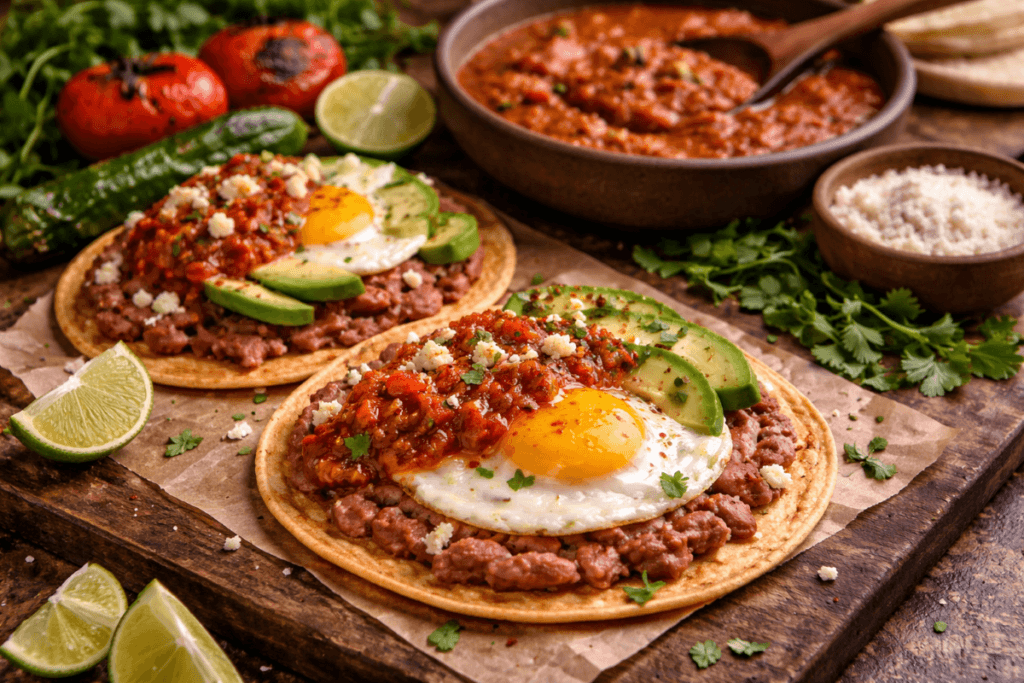
Crispy tostadas piled with eggs, avocado, beans, and a generous spoonful of Salsa Ranchera
The Final Bite
Salsa Ranchera doesn’t try to be the loudest salsa on the table.
Instead, it quietly makes everything taste better.
Eggs, tacos, beans, grilled meat, roasted potatoes — they all benefit from a spoonful of this warm roasted salsa.
And once you start keeping a jar of it in the fridge, you’ll understand why it’s one of the quiet workhorses of Mexican cooking.
Buen provecho,
Join the Comal Crew
Ready for more? Join the Comal Crew and get Hot Off the Comal every Tuesday at 9 a.m. — new recipes, deep-dive stories, kitchen tips, and the flavor-first Mexican cooking you won’t find anywhere else.