
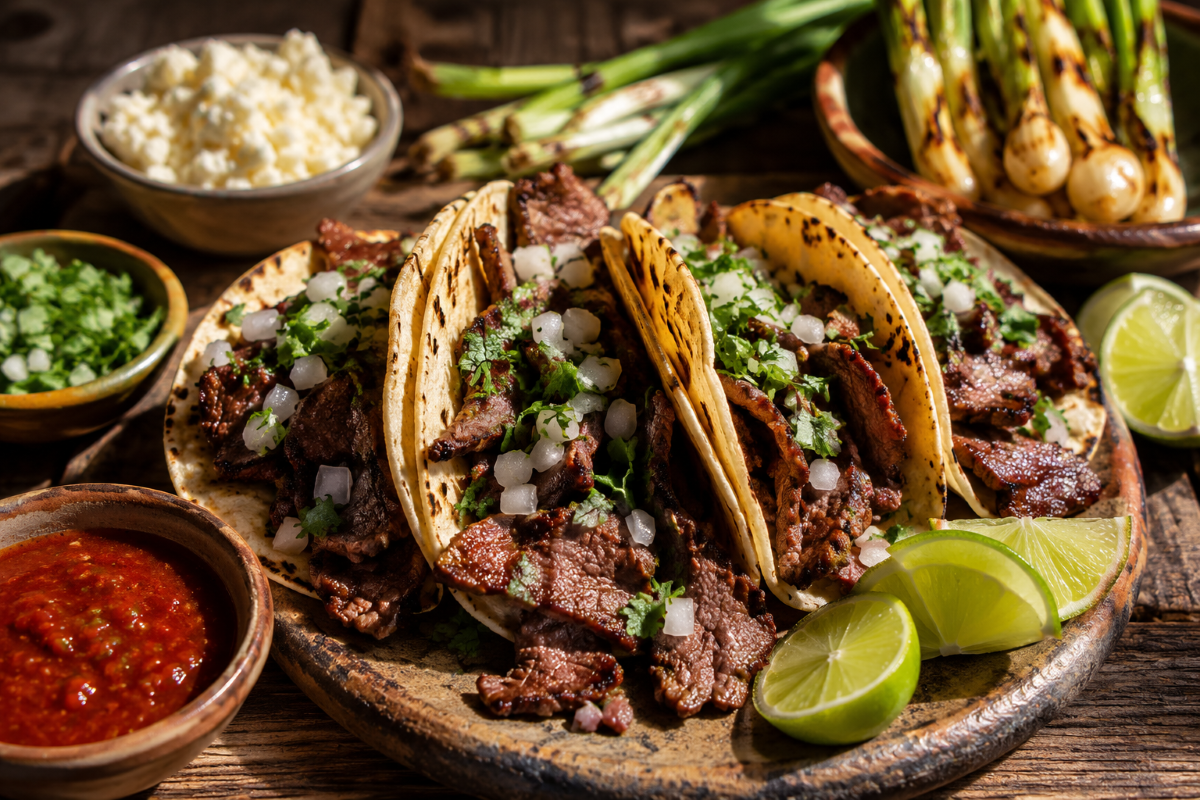
Some tacos earn their reputation through complicated marinades. Others rely on long braises, bubbling pots, and hours of patience. Cecina tacos take a different path. Their flavor comes from one of the oldest cooking techniques in Mexico: preserving meat with salt and letting simplicity do the rest.
In the town of Yecapixtla, located in the state of Morelos, cecina isn’t just food—it’s part of the local identity. Sheets of thinly sliced beef hang behind market counters, ready to hit a hot grill. The aroma of smoke and sizzling meat drifts through the air while stacks of tortillas wait nearby. It’s the kind of meal that feels humble at first glance but leaves a lasting impression after the first bite.
What makes cecina special is how little stands between the cook and the ingredient. The beef is salted, lightly cured, and cooked quickly over high heat. There are no heavy sauces hiding the flavor. No complicated seasoning blends. Just beef, salt, fire, and a few simple toppings.
Growing up around Mexican food, I learned that some of the best dishes don’t come from trying to do more. They come from knowing when to stop. My Mom’s weeknight cooking and my Nana’s weekend cooking were very different, but both understood this lesson. Some recipes ask for every spice in the cabinet. Others trust a handful of ingredients to carry the entire meal.
Cecina falls squarely into that second category.
The first time I learned about cecina, I was surprised by how different it was from the beef tacos most people in the United States already know. It isn’t smoky brisket. It isn’t shredded barbacoa. It isn’t rich birria swimming in consommé. Cecina has its own personality—savory, lightly cured, smoky, and intensely beefy.
Today we’re bringing that Central Mexican tradition into a home kitchen with a version designed for American grocery stores while staying true to the spirit of Yecapixtla’s famous cecina.
At a Glance
What It Is
Thin-sliced beef that’s salted, lightly cured, and grilled over high heat before being served in warm tortillas.
Where It’s From
Most closely associated with Yecapixtla in Morelos and neighboring regions of Central Mexico.
What Makes It Special
The curing process concentrates the flavor of the beef, creating tacos that are smoky, savory, and surprisingly simple.
The Story Behind Cecina
Long before refrigeration, people needed practical ways to preserve meat. Throughout Mexico, different regions developed their own methods. Some relied on drying, some on smoking, and many used salt.
Cecina emerged from that tradition.
The exact origins are difficult to pinpoint, but versions of cecina have existed across Mexico for centuries. In Central Mexico, thin slices of beef were salted and partially dried, making them easier to preserve and transport while intensifying their flavor.
Over time, what began as a practical preservation method became a beloved regional specialty.
No place embraced cecina more fully than Yecapixtla, Morelos.
Today, the town is famous throughout Mexico for its cecina. Visitors travel specifically to eat it. Restaurants build entire menus around it. Local festivals celebrate it. Mention Yecapixtla to many Mexican food lovers and cecina is often the very first thing that comes to mind.
That reputation has made Yecapixtla one of Mexico’s best-known food destinations, with travelers visiting specifically to experience authentic cecina prepared the traditional way.
Walk through the markets there and you’ll find large sheets of beef displayed behind counters. Vendors grill it over open flames, slice it into manageable pieces, and serve it alongside fresh tortillas, salsa, nopales, onions, and queso fresco.
The beauty of cecina is that every component knows its role. The beef carries the meal. Everything else supports it.
That’s a philosophy you’ll find throughout Mexican cooking.
When an ingredient is good, the goal isn’t to cover it up. The goal is to highlight it.
Why Cecina Is Different From Other Beef Tacos
One of the reasons cecina deserves a place in the Taco Series is because it occupies a completely different lane than many of Mexico’s other famous beef tacos.
Take birria, for example. Birria develops its flavor through a long braise in a rich chile broth. The meat becomes tender enough to shred and soak up every bit of the cooking liquid.
Barbacoa follows a similar path. Slow cooking transforms tougher cuts into juicy strands of beef that practically fall apart.
Suadero is another completely different experience. Popular throughout Mexico City, it delivers buttery richness and crispy edges from cooking in rendered fat.
Cecina relies on none of those techniques.
Instead, its flavor comes from salt curing and quick cooking. The texture remains meatier and more substantial. You taste the beef immediately. The salt enhances the natural flavor while the grill adds smoky depth.
That’s what makes cecina such a valuable addition to the Taco Series.
Each taco tells a different story about Mexico. Cecina tells the story of preservation, simplicity, and regional identity.
While cecina celebrates the simplicity of cured, grilled beef, Tacos de Guisado showcase another side of Mexican taco culture, where slow-simmered stews become comforting everyday meals tucked into warm tortillas.
Cecina vs. Carne Asada vs. Suadero vs. Birria
Although all four use beef, they couldn’t be more different.
- Cecina is lightly salt-cured and grilled quickly.
- Carne Asada is fresh grilled beef without the curing process.
- Suadero is slowly cooked in rendered beef fat before crisping on the plancha.
- Birria is braised for hours in a rich chile broth until shreddable.
Each represents a different region and cooking tradition in Mexico, which is why beef tacos are far more diverse than many people realize.
How Cecina Is Traditionally Served
While tacos are one of the most popular ways to enjoy cecina, they’re far from the only way.
Throughout Morelos, large platters of grilled cecina are commonly served family-style. Warm tortillas are stacked nearby. Bowls of salsa sit in the center of the table. Grilled onions, nopales, avocado, beans, and queso fresco round out the meal.
Everyone builds their own tacos.
It’s the kind of food that naturally slows people down. Conversations stretch longer. Tortillas disappear one after another. Someone always reaches for just one more piece of meat.
That communal style of eating feels familiar to me because it reminds me of so many family meals growing up. Whether it was carne asada, tamales, or a holiday gathering, Mexican food has always had a way of bringing people toward the center of the table.
Cecina fits perfectly into that tradition.
Want to learn more about the region that made this dish famous? Explore Morelos to discover the history, culture, and culinary traditions behind one of Mexico’s most celebrated cecina destinations.
Ingredients Overview
Flank Steak
Traditional cecina uses very thin sheets of beef. Flank steak provides an accessible substitute that slices beautifully and develops excellent flavor during the curing process.
Kosher Salt
Salt is the heart of cecina. Beyond seasoning, it helps draw moisture from the meat and creates the concentrated flavor that makes cecina unique.
Lime Juice
Adds brightness and balances the savory richness of the beef.
Corn Tortillas
Fresh corn tortillas provide the most authentic foundation for these tacos.
White Onion
Adds crunch and sharpness that contrasts beautifully with the cured beef.
Fresh Cilantro
Brings freshness and color.
Salsa Roja Taquera
One of the best salsa pairings for cecina because its roasted chile flavor complements the smoky beef.
Queso Fresco
Optional, but highly traditional and an excellent addition.
This post contains affiliate links. As an Amazon Associate, I earn from qualifying purchases at no extra cost to you.
Cecina Tacos Recipe
Ingredients
- For the Cecina
- 2 pounds flank steak sliced very thin
- 2 tablespoons kosher salt
- 1 tablespoon lime juice
- For Serving
- 12 corn tortillas
- 1 cup diced white onion
- ½ cup chopped cilantro
- Salsa Roja Taquera
- Crumbled queso fresco optional
- Lime wedges
Instructions
- Step 1
- Slice the flank steak as thinly as possible against the grain.
- Step 2
- Season evenly with kosher salt and lime juice.
- Step 3
- Arrange the beef on a tray, cover, and refrigerate for 4 hours.
- Step 4
- Remove from the refrigerator about 20 minutes before cooking.
- Step 5
- Heat a grill, cast-iron skillet, or comal over high heat.
- Step 6
- Cook the beef for 2–3 minutes per side until lightly charred and cooked through.
- Step 7
- Transfer to a cutting board and slice into bite-sized strips.
- Step 8
- Warm the tortillas.
- Step 9
- Build tacos with cecina, onion, cilantro, salsa, and queso fresco.
- Step 10
- Serve immediately with lime wedges.
Notes
- Traditional cecina from Yecapixtla, Morelos is often cut much thinner and partially air-dried before cooking. This home-cook version captures the flavor and spirit of the dish using ingredients commonly available in U.S. grocery stores.
- For easier slicing, place the flank steak in the freezer for 20–30 minutes before cutting.
- A hot grill or cast-iron skillet will provide the best smoky flavor and light char.
- Cecina is traditionally served with salsa, onions, queso fresco, and sometimes grilled nopales.
- Leftover cecina makes excellent tacos, burritos, tortas, and breakfast tacos the next day.
- If you enjoy more heat, pair these tacos with Salsa Roja Taquera or Salsa Macha.
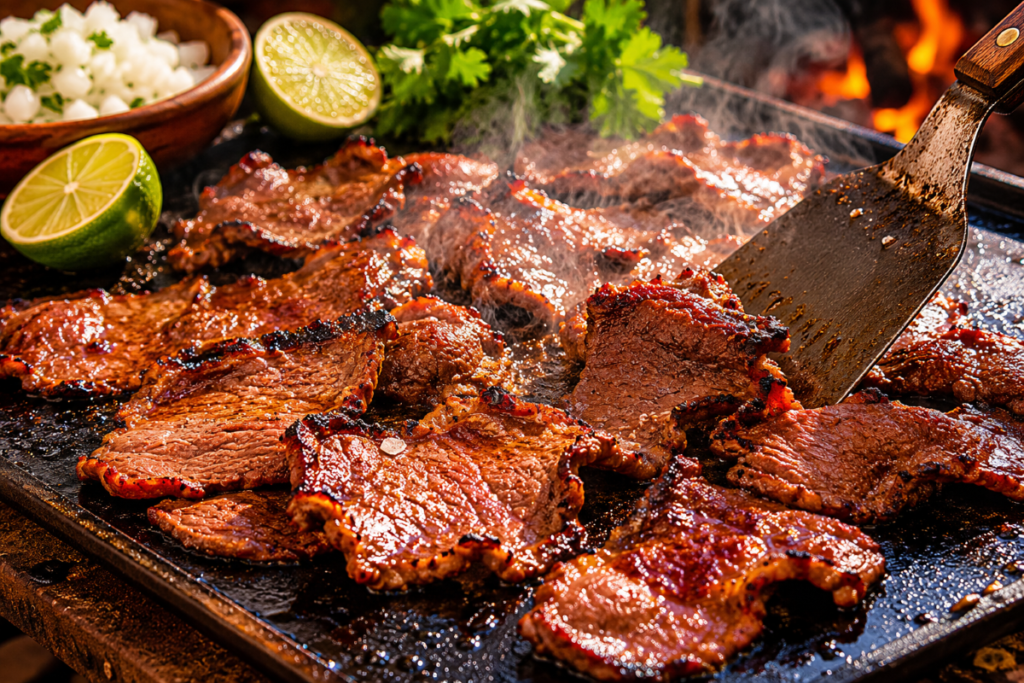
Thin slices of cecina cook quickly over high heat, developing smoky flavor and lightly charred edges that make these tacos unforgettable
Storage + Reheating
Store leftover cecina in an airtight container in the refrigerator for up to 4 days.
To reheat, warm the meat in a hot skillet for 1–2 minutes until heated through. Quick reheating helps preserve the texture and prevents the beef from drying out.
My Go-To Tools for Mexican Cooking
These are the tools I personally recommend for building real Mexican flavor at home — the kind that gets stained with salsa, smells like toasted chiles, and earns a permanent spot in your kitchen.
- Cast Iron Tortilla Press — Nothing beats fresh homemade tortillas, and a good tortilla press makes them easy.
- Cast Iron Skillet (Comal Alternative) — Perfect for searing meats, warming tortillas, and creating those crispy taco edges.
- Tortilla Warmer — Keeps tortillas soft, warm, and ready for the table.
- Non-Stick Comal — Great for tortillas, tacos, quesadillas, and everyday Mexican cooking.
- Ninja Professional Blender (1000W) — My go-to recommendation for smooth salsas, sauces, and blended soups.
- Granite Molcajete — The traditional way to make salsa, guacamole, and chile pastes with incredible texture.
- Wooden Rolling Pin — A simple kitchen staple that’s useful for everything from dough to dessert projects.
- Lodge 6-Quart Enameled Dutch Oven — Excellent for soups, stews, braises, beans, and slow-cooked Mexican classics.
Frequently Asked Questions
What is cecina?
Cecina is thinly sliced beef that has been salted and lightly cured before cooking.
Is cecina the same as beef jerky?
No. Cecina is cooked and served as a meal, while jerky is dried much longer and eaten as a snack.
Why is Yecapixtla famous for cecina?
The town is widely known throughout Mexico for producing and serving some of the country’s most celebrated cecina.
Can I grill cecina?
Yes. Grilling is one of the most traditional cooking methods for cecina.
What cut of meat works best?
Flank steak is one of the best and most accessible options for home cooks.
Can I make cecina without curing it overnight?
Yes. Traditional cecina may be cured longer depending on the regional style, but a four-hour cure develops excellent flavor while remaining practical for home cooks.
What salsa goes best with cecina tacos?
Salsa Roja Taquera is one of the most traditional and flavorful pairings.
What are traditional toppings for cecina tacos?
Traditional cecina tacos are commonly served with diced white onion, fresh cilantro, salsa roja, lime wedges, queso fresco, and sometimes grilled nopales.
More From The Half Jalapeño
Love these cecina tacos? Here are a few more recipes and guides to keep the Taco Train rolling:
- Taco Series Hub — explore every taco in the series from birria and barbacoa to seafood favorites and regional specialties.
- Birria Tacos — crispy beef tacos served with rich consommé for dipping.
- Quesabirria Tacos — the cheesy, griddled cousin of birria tacos that took social media by storm.
- Barbacoa Tacos — slow-cooked shredded beef inspired by Mexico’s legendary Sunday tradition.
- Suadero Tacos — Mexico City’s famous street taco known for buttery beef flavor and crispy edges.
- Tacos Gobernador — Sinaloa’s shrimp-filled taco loaded with melted cheese and coastal flavor.
- Cabrito al Pastor — Nuevo León’s fire-roasted goat specialty and one of northern Mexico’s most iconic meat dishes.
- Carne Asada (Coahuila) — smoky grilled beef that showcases northern Mexico’s love affair with live-fire cooking.
- Salsa Roja Taquera — the classic taco-shop salsa that pairs perfectly with rich beef tacos like cecina.
- Salsa Verde Asada — smoky roasted tomatillo salsa that adds brightness to grilled meats.
- Mexican Salsas Hub — discover every salsa recipe on The Half Jalapeño in one place.
- Street Food & Antojitos Hub — explore the snacks, tacos, and market foods that fuel Mexico’s streets.
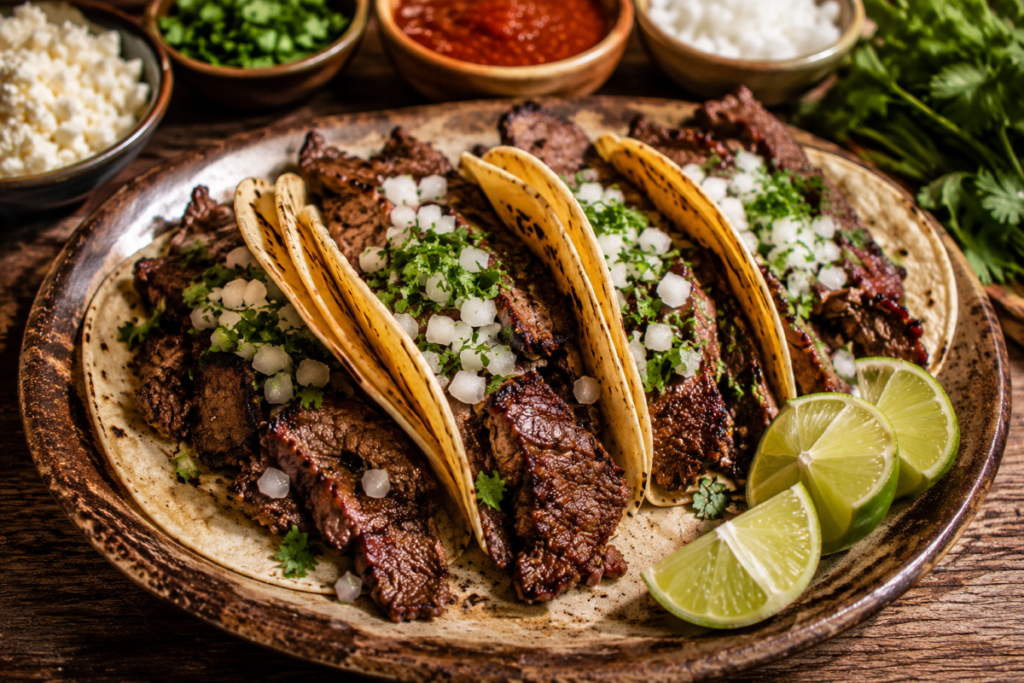
Thin-sliced cecina brings bold, concentrated beef flavor to these Central Mexican tacos, finished simply with onion, cilantro, and a squeeze of fresh lime
The Final Bite
Cecina tacos tell a different story than many of Mexico’s most famous beef tacos. Instead of long braises and complicated preparations, they rely on one of the oldest culinary techniques in the country: preserving meat with salt and letting the quality of the ingredient speak for itself.
The result is a taco that’s smoky, savory, deeply satisfying, and rooted in the traditions of Central Mexico. One bite makes it easy to understand why Yecapixtla built a reputation around it.
Whether you’re discovering cecina for the first time or recreating a flavor you’ve enjoyed before, these tacos deserve a place in every taco lover’s rotation.
Buen provecho,
Join the Comal Crew
Ready for more? Join the Comal Crew and get Hot Off the Comal every Tuesday at 9 a.m. — new recipes, deep-dive stories, kitchen tips, and the flavor-first Mexican cooking you won’t find anywhere else.