

Tamales are not a quiet food. They steam, they perfume the kitchen, they demand time, and they always arrive with a story attached. Tamales de rajas might not get the same spotlight as sweet corn or pork-filled versions, but in Mexico City kitchens, they’re an everyday staple — spicy, comforting, and deeply familiar.
These tamales are built around rajas: strips of roasted poblano peppers softened with onion and folded into masa with melty cheese. They’re rich without being heavy, spicy without being aggressive, and endlessly satisfying in that way only masa can be. Wrapped in corn husks and steamed until tender, they’re the kind of breakfast that feels like it’s doing more for you than just filling your stomach.
This is a dish that rewards patience. Not because it’s difficult, but because it asks you to slow down. Roast the peppers. Let the masa rest. Give the steam time to work its magic. When you finally unwrap one, the aroma alone explains why tamales remain sacred in Mexican food culture.
At a Glance
What it is:
Soft masa tamales filled with roasted poblano strips (rajas), onions, and melted cheese, then wrapped in corn husks and steamed until tender.
Where it’s from:
A beloved everyday tamal style popular in Mexico City and central Mexico, often served for breakfast or sold warm from neighborhood vendors.
What makes it special:
The balance — smoky roasted chiles, creamy cheese, and fluffy masa create a tamal that feels comforting, flavorful, and deeply satisfying without being heavy.
What Are Tamales de Rajas?
Tamales de rajas are savory Mexican tamales made with soft masa dough and filled with roasted poblano pepper strips, usually mixed with onion and cheese. The word rajas refers to the thin slices of peppers that give these tamales their signature flavor.
Unlike meat-filled tamales that lean hearty and rich, tamales de rajas strike a balance. The peppers bring a gentle heat and smokiness, the cheese adds creaminess, and the masa acts as a warm, tender base that holds everything together. They’re most often eaten for breakfast or brunch, paired with coffee, atole, or hot chocolate.
These tamales are especially common in Mexico City and central Mexico, where poblano peppers are widely used and fresh cheese is a daily ingredient. They’re simple, satisfying, and unmistakably home-cooked.
The History Behind Tamales de Rajas
Tamales are one of the oldest foods in Mexico, dating back thousands of years to pre-Hispanic civilizations that relied on corn as both sustenance and symbol. While the fillings and fats have evolved over time, the core idea — masa wrapped and steamed — has remained unchanged.
Tamales de rajas are a more modern expression of that tradition. The use of poblano peppers and dairy reflects colonial-era influences, when cheese and cooking fats became more common in everyday kitchens. In Mexico City, these tamales became a practical, affordable option: vegetables were cheaper than meat, and poblanos delivered big flavor with minimal cost.
Street vendors, home cooks, and neighborhood markets all embraced rajas tamales for their accessibility. They didn’t require long braises or expensive cuts, just good peppers, fresh masa, and time. Over generations, they earned a permanent place on breakfast tables, especially on weekends and holidays.
They’re not ceremonial in the way some tamales are. They’re daily. Dependable. The kind of tamal you grab on your way to work or unwrap slowly at the kitchen table while the coffee finishes brewing.
Ingredients Overview
This is where tamales de rajas really shine — the ingredient list is short, but every element matters.
Poblano peppers
These are the heart of the dish. Roasting them brings out a smoky sweetness and softens their heat. Once peeled and sliced into rajas, they become tender and deeply flavorful.
Onion
Sautéed onion adds sweetness and rounds out the peppers. It’s not just filler — it keeps the filling balanced.
Cheese
Fresh, mild cheeses work best. Oaxaca, queso fresco, or even Monterey Jack melt gently without overpowering the peppers.
Masa harina or fresh masa
The dough should be soft, spreadable, and lightly seasoned. Good masa tastes slightly savory on its own — never bland.
Fat
Traditionally lard, but vegetable shortening or oil works well. Fat is what keeps the masa tender instead of dense.
Corn husks
Soaked and pliable, they act as both wrapper and flavor carrier during steaming.
How Tamales de Rajas Come Together
First comes the peppers. Poblanos are roasted until blistered, then steamed briefly so the skins slip off easily. Once peeled, they’re sliced into rajas and sautéed with onion until soft and aromatic. Cheese is folded in at the end so it stays creamy.
Meanwhile, the masa is mixed until light and fluffy. This step matters — properly aerated masa leads to tamales that are tender instead of heavy.
Assembly is calm and rhythmic. A thin layer of masa, a spoonful of rajas filling, a careful fold of the husk. No rushing. Once stacked upright in the steamer, the tamales cook gently until the masa pulls cleanly from the husk.
The payoff comes when you unwrap one and the steam rises. That’s the moment tamales earn their reputation.
This post contains affiliate links. As an Amazon Associate, I earn from qualifying purchases at no extra cost to you.
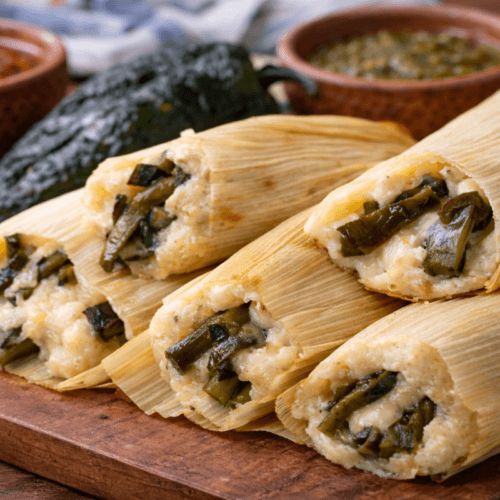
Tamales de Rajas
Ingredients
- For the Rajas Filling
- 3 poblano peppers
- 1 tablespoon vegetable oil
- ½ white onion thinly sliced
- 1½ cups shredded Oaxaca cheese or Monterey Jack
- ½ teaspoon kosher salt
- For the Masa
- 3 cups masa harina
- 2 teaspoons baking powder
- 1½ teaspoons kosher salt
- ¾ cup vegetable shortening or lard
- 2½ –3 cups warm vegetable broth
- For Assembly
- 16 dried corn husks soaked in warm water
Instructions
- Roast the poblano peppers over an open flame or under the broiler until blistered on all sides. Transfer to a bowl, cover, and let steam for 10 minutes.
- Peel off the skins, remove stems and seeds, then slice the peppers into thin rajas.
- Heat oil in a skillet over medium heat and sauté the onion until soft. Add the rajas and salt, cooking 3–4 minutes. Remove from heat and stir in the cheese. Set aside.
- In a large bowl, mix masa harina, baking powder, and salt.
- Beat the shortening until light and fluffy, then mix into the masa.
- Gradually add warm broth until the dough is soft, smooth, and spreadable.
- Drain corn husks and pat dry. Spread about ¼ cup masa onto each husk, leaving space at the bottom.
- Add 2 tablespoons of rajas filling to the center, then fold the sides and bottom of the husk to enclose.
- Stand tamales upright in a steamer with the open ends facing up.
- Steam over medium heat for 60 minutes, checking water level as needed.
- Tamales are done when the masa pulls cleanly away from the husk. Let rest 10 minutes before serving.
Notes
- Masa should be soft but not sticky — add broth gradually.
- Oaxaca cheese melts best, but Monterey Jack works well.
- Let tamales rest after steaming for best texture.
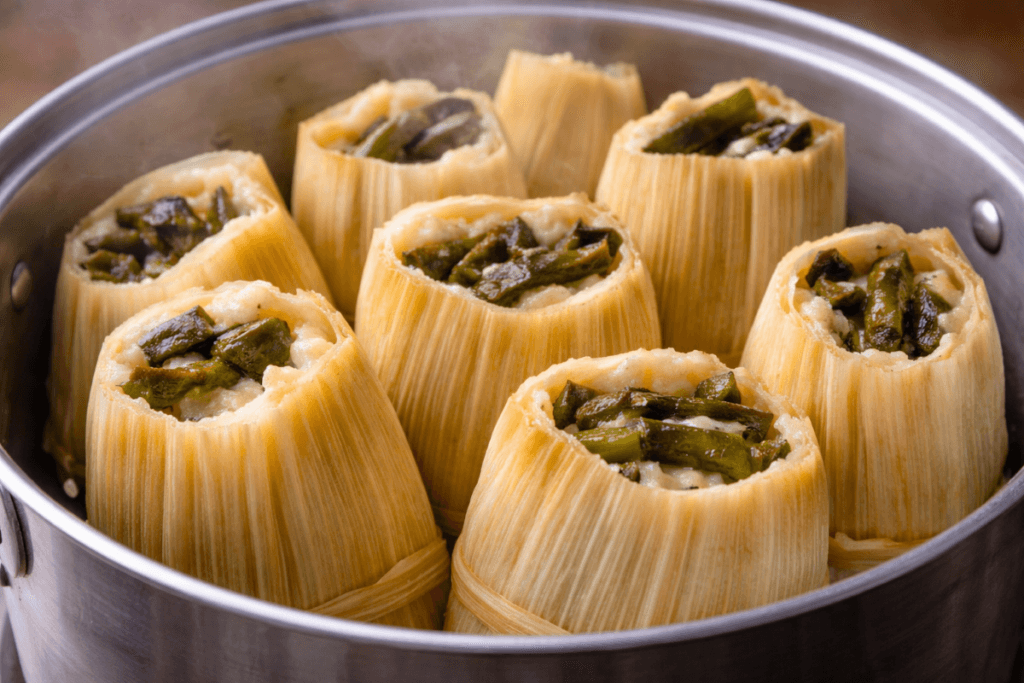
Tamales de rajas cook upright in the steamer, letting the masa firm up while the poblano and cheese filling melts into a soft, savory center
Storage & Reheating
Storage:
Cooked tamales keep well in the refrigerator for up to 4 days, tightly wrapped or stored in an airtight container.
Reheating:
Steam for best texture, or microwave wrapped in a damp towel. Avoid dry heat — it toughens the masa.
Freezing:
Tamales freeze beautifully. Wrap individually and freeze up to 2 months. Steam straight from frozen.
My Go-To Tools for Mexican Cooking
These are the tools I personally recommend for building real Mexican flavor at home — the kind that gets stained with salsa, smells like toasted chiles, and actually gets used instead of sitting pretty on a shelf.
Cast Iron Tortilla Press – makes perfect tortillas every time
👉 https://amzn.to/4vdeuPI
Cast Iron Skillet (Comal Alternative) – heats tortillas evenly
👉 https://amzn.to/3KMrGZI
Tortilla Warmer – keeps tortillas hot and soft
👉 https://amzn.to/4aHpT2v
Non-Stick Comal – lightweight, easy to clean, great for everyday use
👉 https://amzn.to/3Oigaaa
Ninja Professional Blender (1,000W) – salsas, aguas frescas, marinades
👉 https://amzn.to/48PRpIH
Granite Molcajete – crush chiles, make salsas the traditional way
👉 https://amzn.to/48yctod
Wooden Rolling Pin – perfect for tortillas, gorditas, empanadas
👉 https://amzn.to/44YSvR5
Lodge 6-Quart Dutch Oven – birria, pozole, moles, beans, stews
👉 https://amzn.to/3KsF4Ch
Tamale Steamer (Vaporera) — large capacity for steaming fluffy tamales the traditional way
👉 https://amzn.to/4aLrMLt
Tips & Variations
- Add corn kernels to the filling for sweetness and texture.
- Roast extra peppers — leftovers are great in quesadillas.
- Control heat by mixing poblanos with roasted Anaheim peppers.
- Serve with salsa verde for contrast.
- Make them smaller for brunch spreads or gatherings.
Frequently Asked Questions
Are tamales de rajas spicy?
They’re mildly spicy. Poblanos bring warmth, not heat.
Can I make them vegetarian?
They already are — just ensure your fat choice isn’t lard.
Why is my masa dense?
It likely needs more fat or mixing time. Masa should be soft and airy.
Can I assemble ahead of time?
Yes. Assemble and refrigerate overnight, then steam the next day.
More from The Half Jalapeño
If tamales are your comfort zone, don’t miss Tamales de Elote, sweet and spoon-soft, or Tamales de Chipilín from Chiapas. For another Mexico City breakfast classic, Huevos Rancheros delivers bold sauce and crispy eggs.
Want the full lineup? Visit the Breakfast Hub to explore every Mexican breakfast recipe in the series.
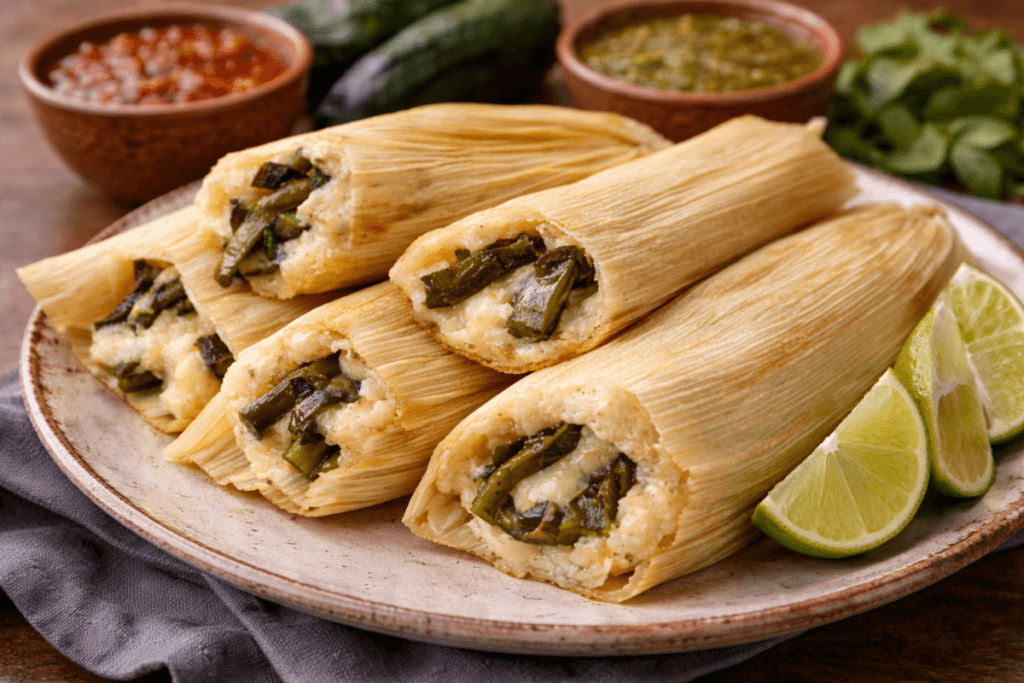
Tamales de rajas served hot and unwrapped, showing tender masa wrapped around smoky poblano peppers and melted cheese
The Final Bite
Tamales de rajas don’t try to steal the show — they earn their place quietly.
They’re warm, balanced, and deeply familiar. The kind of breakfast that slows you down just enough to notice the steam, the aroma, the simple satisfaction of masa and peppers working together. This is Mexico City cooking at its most honest.
Buen provecho,
Join the Comal Crew
Ready for more? Join the Comal Crew and get Hot Off the Comal every Tuesday at 9 a.m. — new recipes, deep-dive stories, kitchen tips, and the flavor-first Mexican cooking you won’t find anywhere else.