
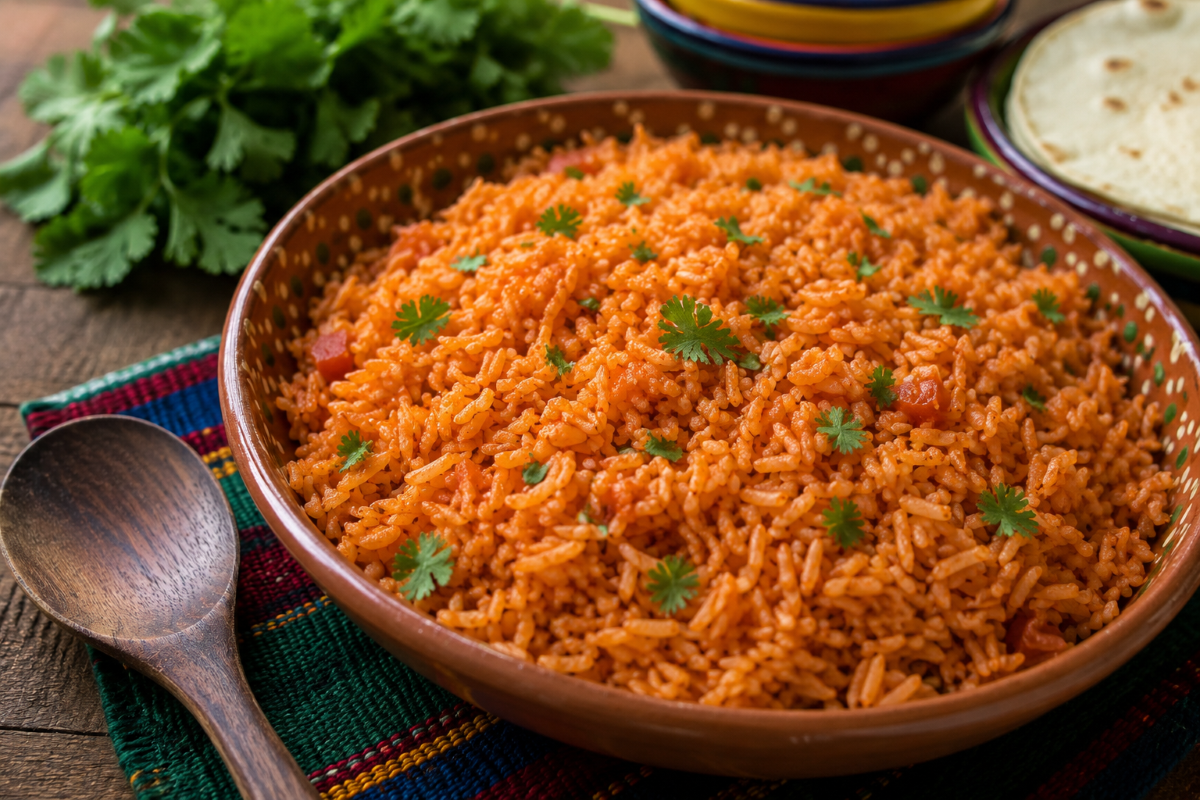
There are Mexican dishes that announce themselves the second they hit the table. Mole gets attention. Chiles rellenos get attention. A platter of tacos definitely gets attention.
Arroz rojo usually doesn’t.
It sits beside everything else, quietly doing its job. A scoop next to enchiladas. A pile beside carne asada. Rice soaking up the sauce from chiles rellenos. A spoonful added to a plate at a family gathering because somehow the plate doesn’t look finished without it.
That’s what makes arroz rojo so interesting. It isn’t usually the reason everyone gathered around the table, but take it away and something feels missing.
For generations, Mexican cooks have transformed a handful of basic ingredients into the familiar red rice served in homes, fondas, restaurants, celebrations, and everyday meals across the country.
Rice. Tomato. Onion. Garlic. Broth.
Nothing extravagant.
But when you toast the rice properly, build a flavorful tomato base, and give it enough time to steam without constantly messing with it, those simple ingredients become one of the great supporting players in Mexican cooking.
And sometimes the dishes that never ask to be the star tell us the most about how people actually eat.
At a Glance
What it is: Arroz rojo is Mexican red rice made by toasting white rice before simmering it with a tomato-based mixture, aromatics, and broth until the grains are tender, fluffy, and deeply flavored.
Where it’s from: Rice arrived in Mexico through Spanish colonization and global trade, then became integrated into Mexican cooking alongside tomatoes, chiles, herbs, and regional ingredients.
What makes it special: The rice is toasted before it simmers, giving the grains a nuttier flavor and helping them remain separate. The tomato broth then gives arroz rojo its familiar color and savory flavor.
The Story Behind Arroz Rojo
Rice feels so natural on a Mexican plate that it’s easy to forget it wasn’t always there.
Rice is not native to Mexico.
Its story reaches across continents.
Rice cultivation has ancient roots in Asia and Africa. Through centuries of migration and trade, different varieties and rice-growing traditions spread through the Middle East, Mediterranean, and Europe.
Spain developed its own deep relationship with rice, particularly during centuries of Muslim presence on the Iberian Peninsula. Rice cultivation became especially important in parts of what is now Spain, and rice eventually became part of Spanish culinary traditions.
Then came the Spanish colonization of the Americas.
Rice was among the Old World foods introduced into New Spain. Its cultivation and consumption expanded over time, aided not only by Spanish colonists but also by the knowledge and labor of Africans brought across the Atlantic.
That part of the story matters.
Mexican cuisine wasn’t created by one single culinary tradition. Indigenous ingredients and techniques remained its foundation, but colonization, migration, forced migration, trade, geography, and generations of adaptation all shaped what eventually became Mexican food as we know it today.
Rice entered that world and found tomatoes waiting for it.
Mexico is one of the ancestral homes of the tomato, an ingredient that would eventually transform cuisines around the world.
Put rice and tomato together with onion, garlic, broth, and Mexican cooking technique, and something new emerged.
Arroz rojo.
Mexico didn’t simply adopt rice.
Mexico made rice its own.
How Arroz Rojo Became Part of the Mexican Table
Arroz rojo works because it understands its role.
It’s flavorful without overpowering the main dish. It’s inexpensive. It stretches a meal. It feeds a crowd. It can absorb sauce from whatever is sitting beside it, and it works with an enormous range of Mexican foods.
That’s a pretty good résumé for a side dish.
Walk into different Mexican kitchens and you’ll see plenty of variations.
Some cooks blend fresh Roma tomatoes with onion and garlic.
Others use tomato sauce or tomato purée.
Some add peas and carrots. Others keep it completely simple.
Chicken broth is common, but water and bouillon are another familiar combination. A serrano or jalapeño might simmer in the pot for flavor without necessarily turning the rice spicy.
Every family seems to have its method.
And, naturally, everybody knows the method they grew up with is the right one.
That’s exactly the kind of dish we want in Comfort Classics.
Not because it’s elaborate.
Because people actually eat it.
Why Toasting the Rice Matters
If there’s one step I wouldn’t skip when making arroz rojo, it’s toasting the rice.
Raw rice goes into a little oil and cooks before the tomato mixture or broth ever touches the pot.
At first, the grains look translucent.
Then they gradually become opaque and lightly golden.
That changes more than the color.
Toasting develops a subtle nutty flavor and coats the grains with oil, helping them remain more distinct as they cook.
It’s one of the differences between great arroz rojo and a pot of rice that simply tastes like tomato.
Don’t rush this part.
Stir regularly and watch the color. You want lightly golden rice, not burned rice.
Once you smell that slightly toasted aroma coming from the pot, you’re getting close.
Ingredients You’ll Need
Arroz rojo proves how much flavor you can build from a short ingredient list.
Long-Grain White Rice
Long-grain white rice is my choice here because the grains cook up light and separate when handled correctly.
Rinsing removes excess surface starch, which helps prevent the finished rice from becoming overly sticky.
Make sure you drain it well before adding it to hot oil.
Roma Tomatoes
Roma tomatoes give the rice its signature red color and fresh tomato flavor.
They have plenty of flesh without being excessively watery, which makes them a great choice for blending into the cooking liquid.
White Onion
Onion gives the tomato mixture sweetness and savory depth.
Garlic
A couple of garlic cloves go a long way. We’re not trying to make garlic rice, but arroz rojo wouldn’t taste complete without it.
Chicken Broth
Broth gives the rice considerably more flavor than water alone.
You can use homemade or store-bought chicken broth. Just pay attention to the salt level if your broth is already heavily seasoned.
Neutral Oil
We need enough oil to properly toast and coat the rice.
Avocado, vegetable, or another neutral cooking oil works well.
Salt
Rice needs seasoning.
Taste your broth mixture before cooking and adjust carefully, especially if you’re using salted broth or bouillon.
Peas and Carrots
These are optional.
Some versions of arroz rojo include diced carrots, peas, or both. Others don’t have a vegetable in sight.
Both belong at the Mexican table.
As an Amazon Associate, I earn from qualifying purchases. If you buy through the links below, it helps support The Half Jalapeño at no extra cost to you. ¡Gracias!
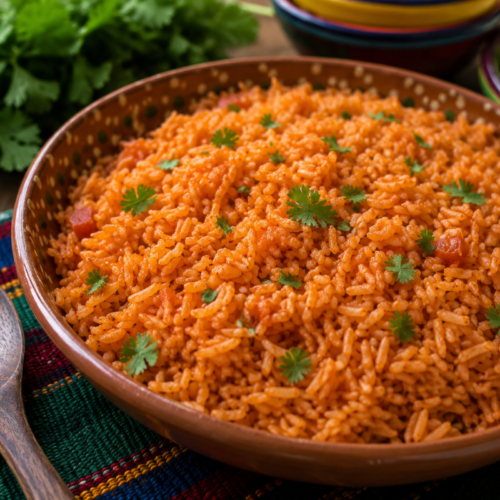
Arroz Rojo:
Ingredients
- 1 ½ cups long-grain white rice
- 3 medium Roma tomatoes roughly chopped
- ¼ medium white onion
- 2 garlic cloves
- 2 ½ cups chicken broth divided as needed
- 2 tablespoons neutral oil
- 1 teaspoon kosher salt or to taste
- ½ cup diced carrots optional
- ½ cup frozen peas optional
- 1 whole serrano pepper optional
Instructions
- Rinse the rice. Place the rice in a fine-mesh strainer and rinse under cool water until the water becomes mostly clear. Drain thoroughly. Excess water can cause hot oil to splatter, so let the rice drain well.
- Make the tomato mixture. Add the Roma tomatoes, onion, garlic, and enough chicken broth to help everything blend smoothly to a blender. Blend until completely smooth.
- Measure the cooking liquid. Combine the blended tomato mixture with enough remaining chicken broth to give you about 3 cups of total cooking liquid.
- Toast the rice. Heat the oil in a medium saucepan over medium heat. Add the drained rice and cook, stirring frequently, for about 6 to 8 minutes. The grains should become lightly golden and smell toasted.
- Add the tomato mixture. Carefully pour the tomato and broth mixture into the toasted rice. It may bubble aggressively at first, so pour slowly.
- Season the rice. Add the salt and carrots, if using. Add the whole serrano now if you want its flavor in the rice.
- Bring to a simmer. Allow the liquid to come to a gentle boil, then immediately reduce the heat to low.
- Cover and cook. Cover the pot tightly and cook for about 18 to 20 minutes. Resist the urge to repeatedly lift the lid or stir the rice.
- Add peas. If using frozen peas, scatter them over the rice during the final few minutes of cooking and replace the lid.
- Rest the rice. Remove the pot from the heat and leave it covered for 10 minutes. This final steaming period helps the grains finish cooking evenly.
- Fluff and serve. Remove the serrano if used. Gently fluff the rice with a fork and serve warm.
Notes
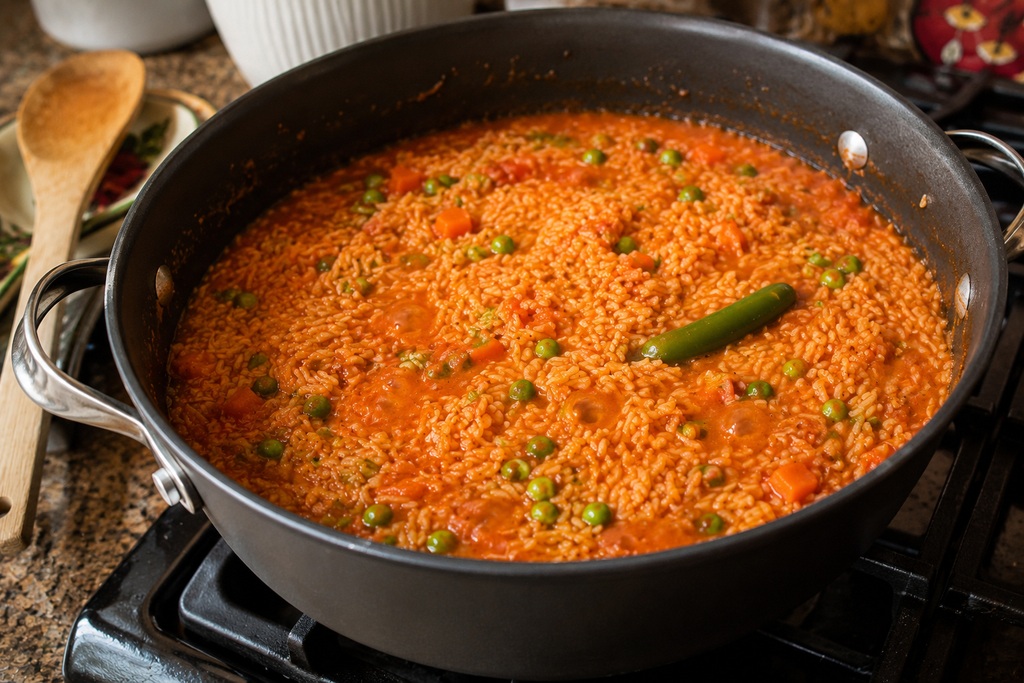
Arroz rojo simmers gently in its tomato broth with peas, carrots, and a whole serrano before being covered to finish cooking
Cooking Arroz Rojo
The most important part of arroz rojo happens before the lid ever goes on.
After rinsing and thoroughly draining the rice, toast it in oil until the grains begin taking on a pale golden color.
You’ll notice the texture and aroma changing.
That’s your signal.
Once the tomato mixture hits the pan, you’ll get an immediate burst of steam and sizzling. Stir just enough to distribute everything, add your vegetables if you’re using them, and let the liquid come to a simmer.
Then lower the heat.
Cover it.
And leave it alone.
Rice doesn’t need encouragement every three minutes.
It needs steam.
How to Keep Arroz Rojo From Getting Mushy
Mushy arroz rojo usually isn’t caused by one catastrophic mistake.
It’s often several small ones.
Too much liquid.
Rice that wasn’t rinsed.
Not enough toasting.
Too much stirring.
Cooking too aggressively.
Skipping the resting period.
Start by rinsing away excess surface starch and draining the rice thoroughly. Toast it properly, measure your liquid, bring everything to a simmer, and then turn the heat down.
Once the lid is on, trust the pot.
After the cooking time is finished, turn off the heat but don’t immediately attack the rice with a spoon.
Let it rest covered for about 10 minutes.
Then fluff it gently with a fork.
Those little details are what get you closer to separate, fluffy grains instead of tomato-flavored mush.
Arroz Rojo Variations
There isn’t one universal pot of Mexican red rice.
With Peas and Carrots
Probably one of the most recognizable versions. Small diced carrots cook with the rice while peas can be added toward the end.
With a Whole Serrano
Drop a whole serrano into the pot while the rice cooks.
It adds chile aroma and flavor without necessarily making the entire pot intensely spicy.
With Tomato Sauce
Plenty of home cooks reach for canned tomato sauce instead of blending fresh tomatoes.
Is it less homemade?
No.
It’s Tuesday and people need dinner.
With Bouillon
Tomato or chicken bouillon is another extremely common shortcut for adding concentrated flavor and color.
If you use it, reduce the additional salt until you’ve tasted the finished rice.
Arroz Blanco
Mexican rice isn’t always red.
Arroz blanco skips the tomato and lets onion, garlic, broth, and sometimes vegetables provide the flavor. It’s another important Mexican table staple, but it has a completely different personality.
What to Serve With Arroz Rojo
The easier question might be what doesn’t go with it.
Arroz rojo is at home next to enchiladas, chiles rellenos, carne asada, pollo asado, mole, milanesa, picadillo, tacos, grilled meats, stewed meats, and plenty more.
Add frijoles to the other side of the plate and you’ve got one of the most recognizable combinations in Mexican home cooking.
It also loves sauce.
A little enchilada sauce running into the rice?
Good.
Juices from carne asada?
Even better.
A spoonful of salsa accidentally making its way over?
There are worse problems to have.
That’s the beauty of arroz rojo.
It doesn’t compete with the rest of the plate.
It makes the rest of the plate better.
Storage & Reheating
Refrigerator
Allow leftover arroz rojo to cool before transferring it to an airtight container.
Store it in the refrigerator for up to 4 days.
Because cooked rice should not sit at room temperature for extended periods, refrigerate leftovers promptly once the meal is finished.
Freezer
Arroz rojo freezes surprisingly well.
Transfer cooled rice to a freezer-safe container or bag and freeze for up to 3 months.
Portioning the rice before freezing makes it easier to reheat only what you need.
Reheating
Add a small splash of water or broth before reheating to replace some of the moisture lost during refrigeration.
Cover and microwave until steaming hot, stirring partway through, or reheat gently in a covered pan on the stove.
The extra moisture and covered environment help steam the rice back to life.
My Go-To Tools for Mexican Cooking
These are the tools I personally recommend for building real Mexican flavor at home, the kind that gets stained with salsa, smells like toasted chiles, and earns a permanent spot in your kitchen.
Cast Iron Tortilla Press – Fresh tortillas make every taco better.
Cast Iron Skillet (Comal Alternative) – Perfect for searing meats, warming tortillas, and building incredible flavor.
Tortilla Warmer – Keeps tortillas soft, warm, and ready for taco night.
Non-Stick Comal – One of the best tools for roasting tomatoes, tomatillos, garlic, onions, and chiles.
Ninja Professional Blender (1000W) – Essential for silky salsa verde, salsa roja, marinades, and sauces.
Granite Molcajete – The traditional way to make salsa with unbeatable texture and authentic flavor.
Wooden Rolling Pin – A versatile kitchen staple that always earns its keep.
Lodge 6-Quart Enameled Dutch Oven – Perfect for birria, barbacoa, beans, soups, stews, braises, and slow-cooked Mexican favorites.
🌮 Taco Night Essentials
Everything I reach for when tacos are on the menu, from tortilla warmers and presses to serving pieces and everyday tools.
👉 Shop My Taco Night Essentials
Frequently Asked Questions
What is arroz rojo?
Arroz rojo literally means “red rice.” It’s a Mexican rice dish made by toasting rice and cooking it in a seasoned tomato-based liquid with ingredients such as onion, garlic, and broth.
Is arroz rojo the same as Mexican rice?
Arroz rojo is the dish commonly called “Mexican rice” in the United States. In Mexico, arroz rojo is a more descriptive name because it distinguishes tomato-based red rice from other preparations such as arroz blanco.
Why do you fry rice before making Mexican rice?
Toasting the rice in oil develops flavor and helps coat the grains before liquid is added. Combined with rinsing and proper cooking technique, this helps produce rice with more distinct grains.
Why does my Mexican rice come out sticky?
Excess starch, too much liquid, stirring during cooking, or skipping the resting period can all contribute to sticky rice. Rinse the rice, toast it, measure the liquid carefully, and avoid stirring once the pot is covered.
Can I make arroz rojo without fresh tomatoes?
Yes. Tomato sauce or another tomato purée can be used instead of fresh tomatoes. You’ll need to account for the tomato product as part of the total cooking liquid.
Can I make arroz rojo ahead of time?
Yes. Arroz rojo keeps well in the refrigerator for up to four days. Add a splash of water or broth before reheating it covered so the rice can steam and regain moisture.
More From The Half Jalapeño
If arroz rojo reminds you that some of the most important Mexican dishes are also the simplest, you’re in the right place. At The Half Jalapeño, we’re building a collection of authentic Mexican recipes that celebrates both the iconic dishes everyone knows and the everyday foods families have been making for generations.
Arroz Rojo is part of our Comfort Classics series. We’re working our way through the home-style dishes that have filled Mexican kitchens for generations, from hearty soups and stews to the sides and family dinners that rarely get the spotlight they deserve.
🌮 Explore More Authentic Mexican Favorites
While we keep building Comfort Classics, explore some of the collections already waiting for you at The Half Jalapeño:
The Complete Taco Series
Our collection of Mexican tacos exploring regional favorites, street-food legends, and the everyday tacos that make Mexico one of the world’s great food cultures.
Mexican Salsas & Sauces Guide
Roasted, fresh, smoky, creamy, and fiery. Start here for the sauces that bring Mexican food to life.
Soups & Stews Hub
Pozole, caldo de res, albóndigas soup, and the deeply comforting bowls that belong in Mexican home cooking.
Mexican Breakfast Recipes
Chilaquiles, huevos rancheros, and the dishes that prove breakfast deserves just as much attention as dinner.
At The Half Jalapeño, we’re not just collecting recipes.
We’re building a living archive of Mexican home cooking, one dish at a time.
🌶 Pair It With Authentic Mexican Flavor
Arroz rojo might be a side dish, but it’s rarely alone on the plate.
Pair it with a spoonful of Salsa Roja Taquera when you want some heat.
Add Salsa Verde Asada for roasted tomatillo flavor.
Put Pico de Gallo on the table when the meal needs something fresh.
Or bring out Guacamole Taquero when tacos, grilled meat, or anything else tortilla-related is happening nearby.
Rice doesn’t mind sharing the plate.
That’s kind of its whole thing.
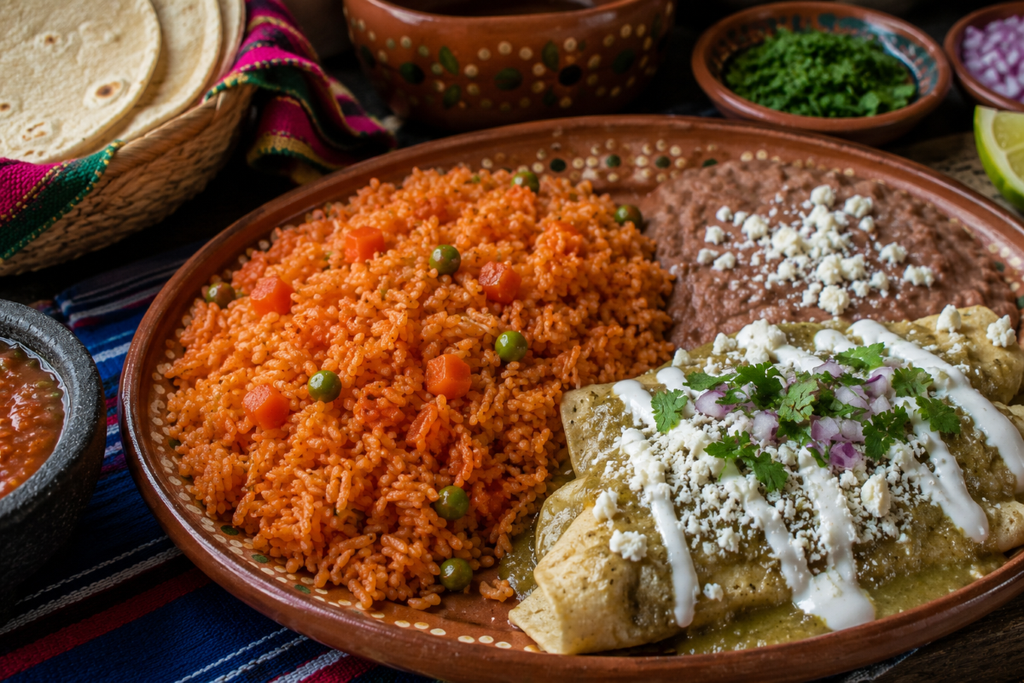
Fluffy arroz rojo completes a classic Mexican plate with enchiladas verdes, refried beans, and warm tortillas
The Final Bite
Arroz rojo probably isn’t going to be the first thing somebody talks about when they remember a great Mexican meal.
And that’s okay.
It was never really asking for the attention.
It’s the scoop beside the enchiladas.
The rice catching a little mole from the other side of the plate.
The pile next to carne asada and beans.
The spoonful somebody adds because there’s still a little empty space on the plate.
It’s there at regular dinners and birthday parties. At somebody’s house on Sunday. At restaurants. At celebrations. At the meals where nobody thought twice about the rice because everybody simply expected it to be there.
That’s the funny thing about staples.
Sometimes you don’t realize how important they are until they’re missing.
Rice traveled an enormous distance before becoming part of Mexican cooking. It crossed cultures, oceans, and centuries. Then generations of Mexican cooks put it in a pan with tomatoes, onion, garlic, and broth and turned it into something that now feels completely at home.
Today arroz rojo doesn’t need to be the star.
It has something better.
A permanent seat at the Mexican table.
Buen provecho,
Join the Comal Crew for a new Mexican recipe every Tuesday, stories from the kitchen, cooking tips, and more from The Half Jalapeño.