Some Mexican dishes are defined by a specific recipe. Albóndigas soup isn’t really one of them. Ask different Mexican families what belongs in a pot of albóndigas and you’ll probably hear different answers. Potatoes or no potatoes. Zucchini, chayote, carrots, or whatever vegetables happen to be around. Cilantro in the meatballs for one family, mint for another.
That’s exactly why albóndigas belongs in our Comfort Classics series. This isn’t restaurant food trying to impress anybody. It’s a big pot of meatballs, vegetables, and broth meant to feed people. It’s the kind of dish that gets passed through families, changes a little along the way, and somehow still tastes like home.
At a Glance
What it is: A comforting Mexican soup made with tender meatballs filled with rice and herbs, simmered with vegetables in a savory tomato-based broth.
Where it’s from: Albóndigas have roots stretching from Arabic cooking into Spain and eventually Mexico, where the meatball evolved into countless regional and family versions.
What makes it special: Rice cooked directly inside the meatballs, a broth that gets richer as everything simmers together, and the fact that no two Mexican families seem to make their albóndigas exactly the same way.
The Story Behind Albóndigas
The story of albóndigas starts long before there was a pot of Mexican meatball soup simmering on somebody’s stove.
Even the name gives us a clue.
The Spanish word albóndiga traces back to Arabic linguistic roots associated with meatballs. During centuries of Muslim rule and cultural influence on the Iberian Peninsula, Arabic cooking left a lasting mark on Spanish food. Spices, rice, agricultural techniques, and preparations involving seasoned ground meat all became part of the culinary exchange.
Meatballs eventually became firmly established in Spanish cooking, and Spain later carried its culinary traditions across the Atlantic during the colonial period.
But as we’ve seen again and again with Mexican food, the story doesn’t end with something arriving from Spain.
Mexico made it Mexican.
Local ingredients, cooking traditions, regional tastes, and generations of home cooks transformed albóndigas into something distinctly their own. Tomatoes and chiles became natural companions. Brothy preparations became common. Vegetables turned the dish into a complete meal. Rice found its way directly into many versions of the meatballs.
And then families did what families always do.
They changed it.
One household might make its albóndigas with beef. Another might use beef and pork. Some cooks mix cilantro into the meatballs, while others insist on fresh mint. Potatoes and carrots are common, but zucchini, chayote, celery, squash, green beans, and other vegetables can find their way into the pot.
That’s why trying to identify the single authentic albóndigas recipe misses something important about the dish.
The variation is part of the tradition.
Albóndigas survived because people made them with what they had, taught their children how they liked them, and kept putting the pot on the stove.
That’s Mexican comfort food.
Why Albóndigas Soup Is a Mexican Comfort Classic
A good pot of albóndigas checks almost every box for a family meal.
You’ve got protein from the meatballs. Rice is already tucked inside them. Potatoes and vegetables make the soup substantial. The tomato broth brings everything together, and warm tortillas turn a bowl into dinner.
It’s economical, adaptable, filling, and even better when there’s enough left for tomorrow.
But there’s something else that makes albóndigas feel like comfort food.
It’s hard to make a small, lonely-looking pot of them.
This is food that naturally feels like it should be shared. You put the pot in the middle of the kitchen, warm tortillas, cut a few limes, and start filling bowls.
Nothing fancy required.
Ingredients You’ll Need
The ingredient list is straightforward, but the way these ingredients cook together is what makes the soup.
Ground Beef
Ground beef gives the albóndigas their rich, savory flavor. I like beef with enough fat to keep the meatballs tender while they simmer.
White Rice
Rice is one of the defining ingredients in many Mexican albóndigas.
Instead of cooking it separately, uncooked rice goes directly into the meatball mixture. It cooks inside the albóndigas while absorbing flavor from both the beef and the broth.
Egg
Egg helps bind the meatball mixture so the albóndigas hold together as they simmer.
Cilantro
Fresh cilantro adds brightness to both the meatballs and the finished soup.
Some traditional versions use mint instead, which is a great example of how much these recipes vary from one family to another.
Garlic, Cumin, and Mexican Oregano
Garlic provides savory depth, while a little cumin and Mexican oregano bring warmth and earthiness without overpowering the broth.
Roma Tomatoes
Fresh Roma tomatoes form the backbone of our broth. Blending them with onion and garlic creates a simple tomato base that becomes richer as it cooks.
Onion and Garlic
These aromatics give the tomato broth its foundation.
Broth
Chicken broth produces a slightly lighter soup, while beef broth makes it richer. Either works.
Carrots
Carrots add sweetness, color, and texture.
Potatoes
Potatoes help turn albóndigas from a bowl of soup into a full meal.
Zucchini
Zucchini gives the soup another layer of vegetables and cooks quickly, so we’ll add it toward the end.
Lime
A squeeze of lime at the table cuts through the richness and wakes up the entire bowl.
As an Amazon Associate, I earn from qualifying purchases. If you buy through the links below, it helps support The Half Jalapeño at no extra cost to you. ¡Gracias!
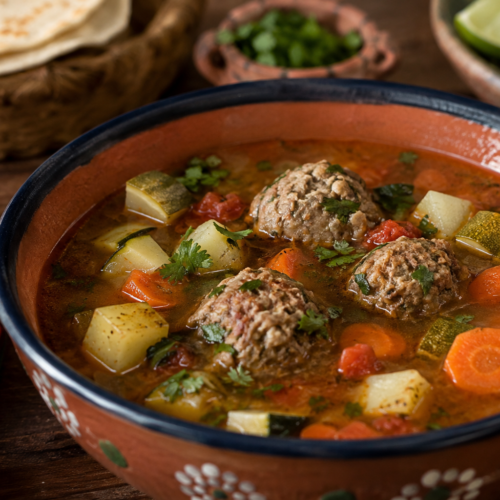
Albóndigas Soup
Ingredients
- For the Albóndigas
- 1 pound ground beef
- ⅓ cup uncooked long-grain white rice rinsed and drained
- 1 large egg
- 2 garlic cloves finely minced
- ¼ cup finely chopped fresh cilantro
- ½ teaspoon ground cumin
- ½ teaspoon Mexican oregano
- 1 teaspoon kosher salt
- ½ teaspoon black pepper
- For the Soup
- 4 Roma tomatoes
- ½ medium white onion
- 2 garlic cloves
- 1 tablespoon neutral oil
- 6 cups chicken or beef broth
- 2 medium carrots peeled and sliced
- 2 medium potatoes cut into bite-size pieces
- 1 medium zucchini cut into bite-size pieces
- ½ teaspoon Mexican oregano
- 1 small handful fresh cilantro
- Salt to taste
- Black pepper to taste
- For Serving
- Fresh cilantro
- Lime wedges
- Warm corn tortillas
- Your favorite salsa optional
Instructions
- Make the albóndigas mixture. Add the ground beef, rice, egg, garlic, cilantro, cumin, Mexican oregano, salt, and black pepper to a large bowl. Gently mix until everything is evenly distributed. Don’t overwork the meat.
- Shape the meatballs. Roll the mixture into meatballs about 1 1/2 inches in diameter. You should get approximately 16 to 20 albóndigas. Set them aside while you prepare the broth.
- Blend the tomato base. Add the Roma tomatoes, onion, garlic, and about 1 cup of the broth to a blender. Blend until smooth.
- Cook the tomato mixture. Heat the oil in a large Dutch oven or soup pot over medium heat. Carefully pour in the blended tomato mixture. Cook for 5 to 7 minutes, stirring occasionally, until the tomatoes darken slightly and lose their raw flavor.
- Build the broth. Pour in the remaining broth. Add the Mexican oregano and cilantro. Bring the broth to a gentle boil, then reduce the heat to maintain a steady simmer.
- Add the albóndigas. Carefully lower the meatballs into the simmering broth one at a time. Avoid aggressively stirring the pot while the meatballs are setting. Simmer for about 10 minutes.
- Add the carrots and potatoes. Add the carrots and potatoes and continue simmering for 15 to 20 minutes.
- Add the zucchini. Stir in the zucchini and continue cooking for another 8 to 10 minutes, until the vegetables are tender and the rice inside the albóndigas is completely cooked. The meatballs should reach an internal temperature of 160°F.
- Taste the broth. Taste and adjust with additional salt and black pepper as needed.
- Serve. Ladle several albóndigas, vegetables, and plenty of broth into each bowl. Finish with fresh cilantro and a squeeze of lime. Serve with warm corn tortillas.
Notes
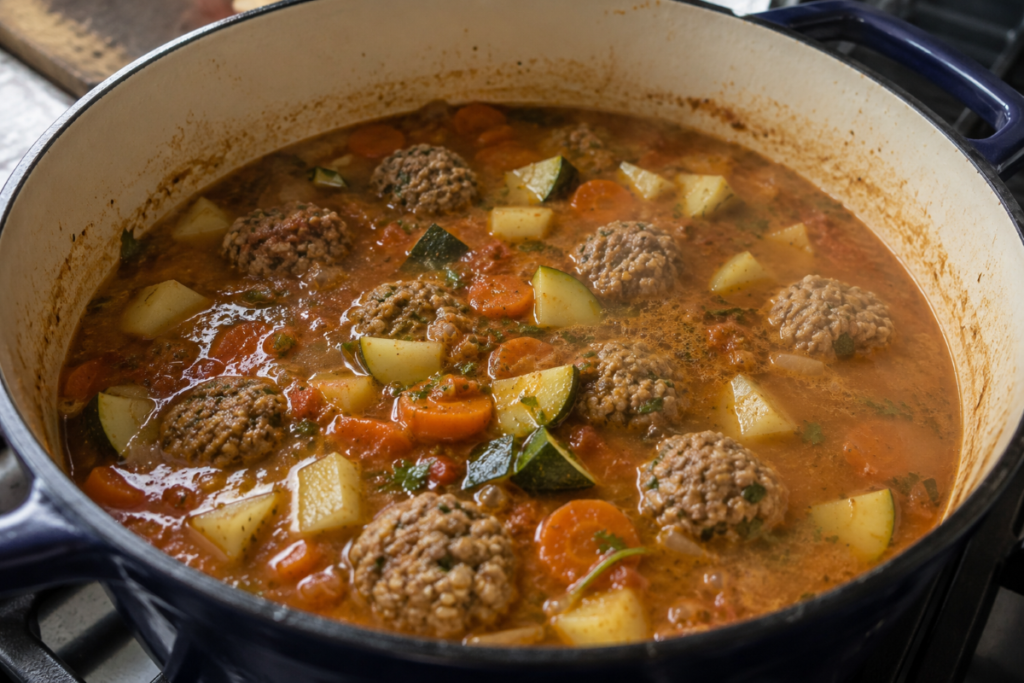
Albóndigas simmer gently with potatoes, carrots, and zucchini as the meatballs flavor the rich tomato broth
Cooking the Albóndigas
Once the tomato base has cooked and the broth is simmering, lower the meatballs into the pot carefully.
This is the point where patience matters.
You don’t want to immediately start stirring everything around. Give the albóndigas time to firm up in the hot broth first. Once they’ve begun cooking, they’ll be much easier to move without breaking.
The carrots and potatoes go in next because they need the most time. Zucchini joins the pot near the end.
As everything simmers together, the broth changes. The meatballs season it from within, the vegetables add sweetness, and the tomato base mellows into something much deeper than where it started.
Why Do Mexican Albóndigas Have Rice in Them?
If you’ve never made Mexican albóndigas before, putting uncooked rice directly into a meatball might seem unusual.
But it works.
As the albóndigas simmer, the rice absorbs moisture and flavor while cooking inside the beef. It gives the meatballs a different texture from an Italian-style meatball made with breadcrumbs.
The rice also stretches the meat mixture, which matters when you’re making a dish designed to feed a family.
Some recipes partially cook the rice first, while others use it raw. In this version, rinsed uncooked rice goes directly into the beef and finishes cooking in the broth.
What to Serve With Albóndigas Soup
Honestly, not much.
That’s one of the beauties of this dish.
The meatballs give you beef and rice. You’ve got potatoes, carrots, zucchini, and a tomato broth all in the same bowl.
Warm corn tortillas are the natural side.
Use them to scoop up pieces of meatball and potato or dip them straight into the broth.
I also like plenty of lime at the table. That little hit of acidity at the end makes the tomato broth taste brighter.
And if you want heat, bring out the salsa.
Everyone can make their bowl as mild or spicy as they want.
Storage & Reheating
Refrigerator
Allow the soup to cool before transferring it to an airtight container.
Albóndigas soup will keep in the refrigerator for 3 to 4 days.
And this is one of those dishes that can be even better the next day. The meatballs and vegetables continue flavoring the broth while everything sits.
Freezer
Albóndigas soup can be frozen for up to 3 months.
The meatballs and broth freeze well, although potatoes and zucchini can become softer after thawing.
If you’re intentionally preparing the soup for the freezer, consider freezing the broth and albóndigas and adding fresh vegetables when you reheat it.
Reheating
Warm the soup gently in a saucepan over medium-low heat until the broth is simmering and the albóndigas are heated completely through.
The rice may continue absorbing some liquid during storage, so don’t be surprised if the soup is thicker the next day.
Just add a splash of broth or water until you get the consistency you want.
My Go-To Tools for Mexican Cooking
These are the tools I personally recommend for building real Mexican flavor at home, the kind that gets stained with salsa, smells like toasted chiles, and earns a permanent spot in your kitchen.
Cast Iron Tortilla Press – Fresh tortillas make every taco better.
Cast Iron Skillet (Comal Alternative) – Perfect for searing meats, warming tortillas, and building incredible flavor.
Tortilla Warmer – Keeps tortillas soft, warm, and ready for taco night.
Non-Stick Comal – One of the best tools for roasting tomatoes, tomatillos, garlic, onions, and chiles.
Ninja Professional Blender (1000W) – Essential for silky salsa verde, salsa roja, marinades, and sauces.
Granite Molcajete – The traditional way to make salsa with unbeatable texture and authentic flavor.
Wooden Rolling Pin – A versatile kitchen staple that always earns its keep.
Lodge 6-Quart Enameled Dutch Oven – Perfect for birria, barbacoa, beans, soups, stews, braises, and slow-cooked Mexican favorites.
Frequently Asked Questions
What does albóndigas mean?
Albóndigas means meatballs in Spanish. Mexican albóndigas are commonly seasoned with herbs and spices, often mixed with rice, and simmered in a flavorful broth.
Do you cook the rice before adding it to albóndigas?
Not for this version. Rinsed uncooked rice goes directly into the meatball mixture and cooks while the albóndigas simmer in the broth.
Why are my albóndigas falling apart?
The mixture may be too loose, the meatballs may not have been shaped firmly enough, or the broth may be boiling too aggressively. Lower them carefully into a gentle simmer and give them time to set before stirring.
Can I make albóndigas soup ahead of time?
Yes. It stores well in the refrigerator for 3 to 4 days, and the broth often develops even more flavor overnight.
Can I use ground turkey instead of ground beef?
Yes. Ground turkey works, although the meatballs will have a lighter flavor. Avoid extremely lean turkey if possible because a little fat helps keep the albóndigas tender.
What vegetables traditionally go in albóndigas soup?
There isn’t one required combination. Potatoes, carrots, zucchini, chayote, celery, squash, green beans, and corn can all appear depending on the region and family making the soup.
More From The Half Jalapeño
If albóndigas soup reminds you that the best meals don’t have to be complicated, you’re in the right place. At The Half Jalapeño, we’re building a collection of authentic Mexican recipes that celebrate both the iconic dishes everyone knows and the everyday meals families have been making for generations.
Albóndigas Soup is part of our Comfort Classics series. We’re building this collection around the cozy, home-style dishes that have filled Mexican kitchens for generations, from hearty soups and comforting rice dishes to the everyday meals families make their own.
Explore More Authentic Mexican Favorites
Comfort Classics is growing one recipe at a time. While we continue building the collection, explore some of The Half Jalapeño’s other essential Mexican recipe series and guides below.
The Complete Taco Series – Explore 14 authentic taco recipes showcasing regional favorites from across Mexico. From street-style classics to home-cooked staples, this collection celebrates the incredible range of Mexican taco culture.
Mexican Salsas & Sauces Guide – The foundation of Mexican cooking starts here. Learn the essential salsas, from roasted and smoky to fresh and fiery, that bring every dish to life.
Soups & Stews Hub – Deep, comforting bowls like pozole, caldo de res, and other traditional soups that define Mexican home cooking.
Mexican Breakfast Recipes – From chilaquiles to huevos rancheros, these are the breakfasts that power mornings across Mexico.
At The Half Jalapeño, we’re not just collecting recipes. We’re building a living archive of Mexican home cooking- one dish at a time.
🌶 Pair It with Authentic Mexican Flavor
No comforting Mexican meal is complete without something fresh, bright, or spicy on the side. These essential salsas and toppings bring balance to every bowl of albóndigas soup:
Pico de Gallo – Fresh, simple, and essential. Diced tomatoes, onion, cilantro, and lime that brighten every bite.
Salsa Roja – A bold, taquería-style red salsa that brings heat, depth, and street-food flavor to the table.
Salsa Verde Asada – Roasted tomatillos, chiles, and garlic blended into a smoky, tangy green salsa that pairs beautifully with soups and meats.
Guacamole Taquero – Creamy, spicy, and spoonable. This taquería-style guacamole salsa belongs on everything from tacos to soup.
These are the flavors that turn a simple bowl of soup into a full Mexican meal.
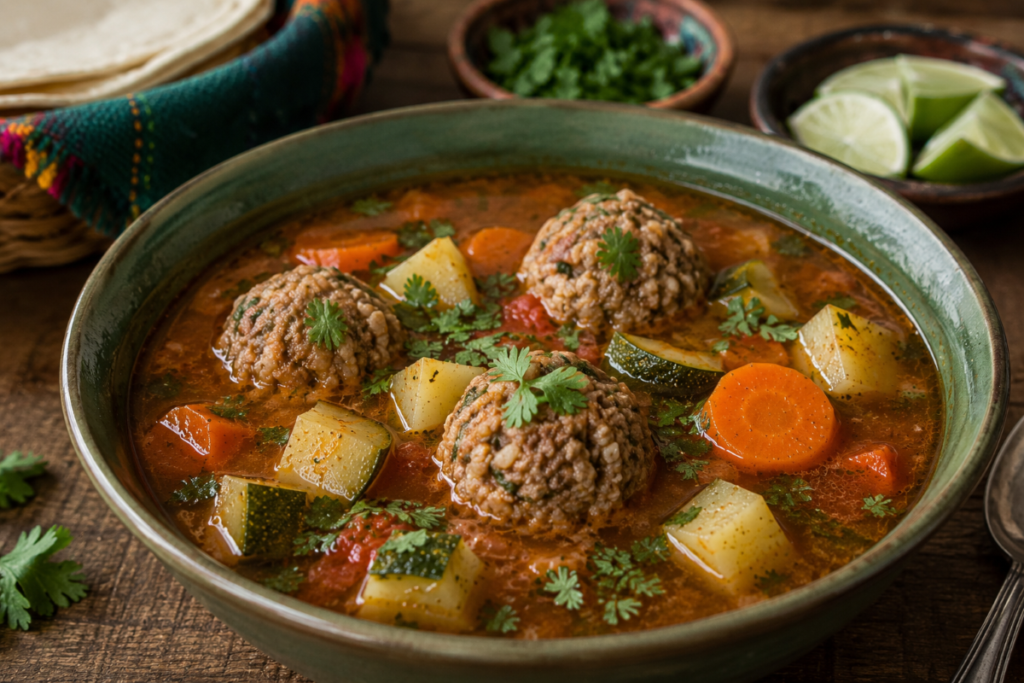
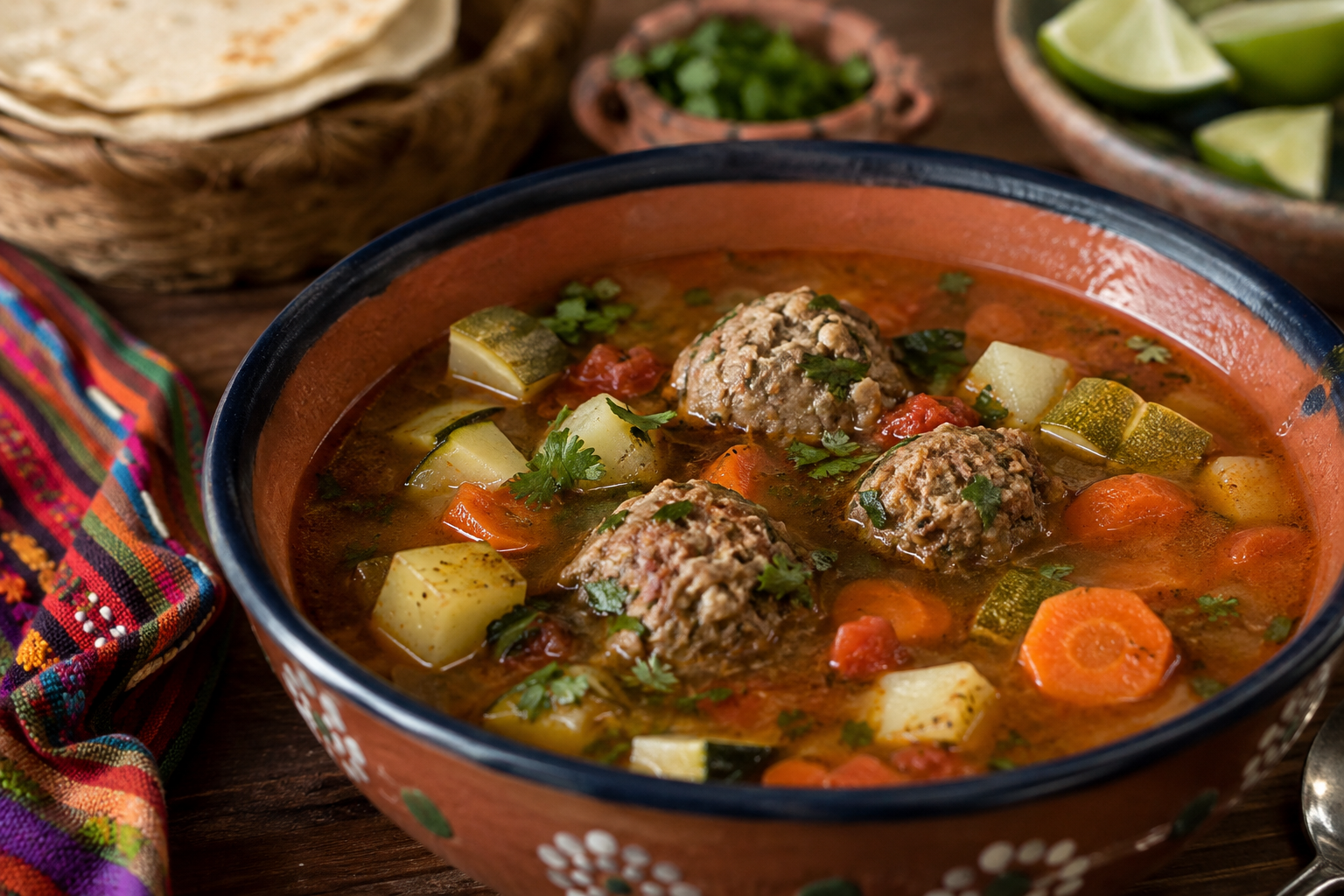
A warm bowl of albóndigas soup finished with fresh cilantro and served with lime and warm corn tortillas
The Final Bite
What I like most about albóndigas isn’t that there’s one perfect way to make them.
It’s almost the opposite.
Somebody’s Mom adds mint. Somebody else’s uses cilantro. One family wants potatoes and zucchini. Another reaches for chayote. The meatballs might be larger, smaller, beef, pork, or a mixture somebody learned to make decades ago.
And everybody knows which version tastes right to them.
That’s what happens when food becomes part of a family.
It stops belonging entirely to a recipe and starts belonging to the people making it.
The history of albóndigas may stretch across languages, cultures, and continents, but the version that matters most is usually much closer to home.
It’s the pot simmering on the stove.
The tortillas getting warm.
The lime wedges sitting on the table.
And somebody asking if there’s enough for another bowl.
That’s albóndigas.
And that’s exactly why it belongs among Mexico’s Comfort Classics.
Buen provecho,
Join the Comal Crew for a new Mexican recipe every Tuesday, stories from the kitchen, cooking tips, and more from The Half Jalapeño.