
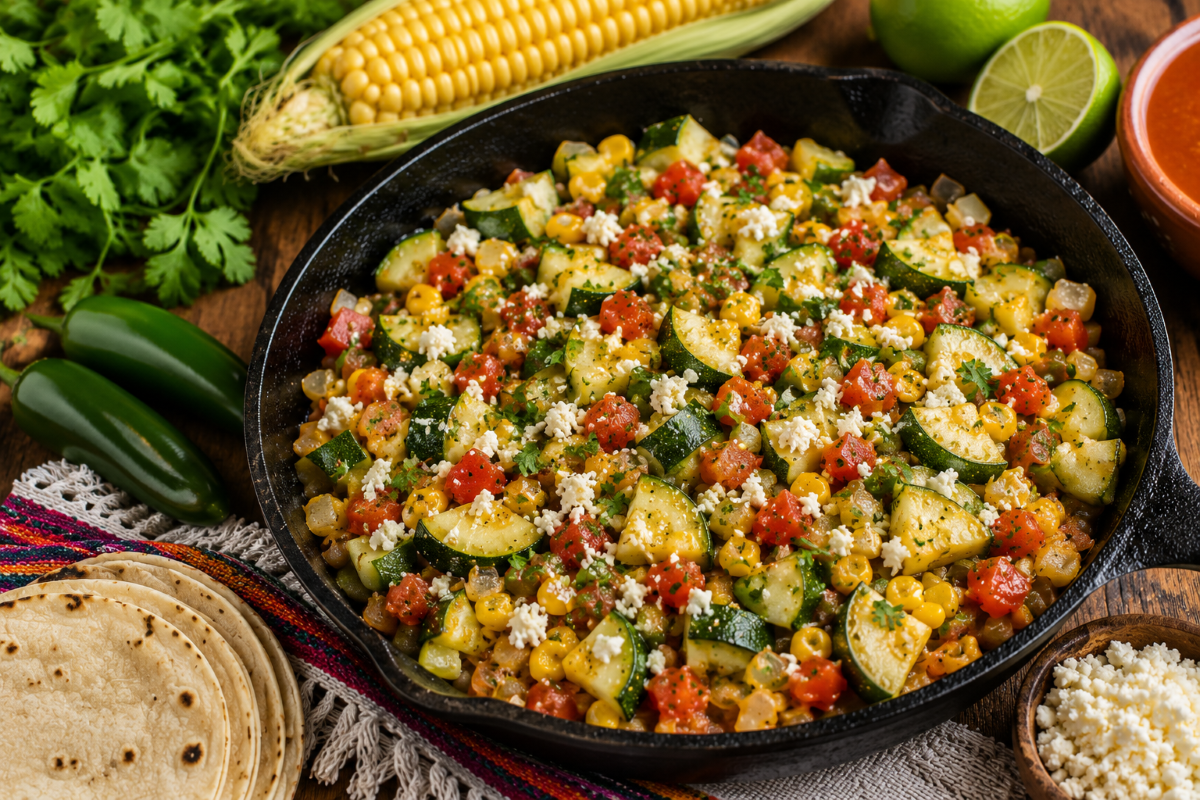
Some Mexican dishes don’t need a long ingredient list or hours on the stove to taste like home. Calabacitas con Elote is one of them.
Tender squash, sweet corn, tomato, onion, garlic, and chile come together in one skillet for the kind of everyday Mexican cooking that is simple enough for a weeknight but good enough to earn a permanent place at the table. When zucchini and corn are at their best, this skillet tastes like summer.
At a Glance
What it is: A traditional Mexican vegetable dish made with tender squash, corn, tomatoes, onion, garlic, and chile cooked together in one skillet.
Where it’s from: Calabacitas are part of Mexican home cooking rather than a dish tied to one single state. Squash, corn, tomatoes, and chiles have deep roots in Mexican cuisine, and versions of this skillet are made in kitchens throughout the country.
What makes it special: It takes a handful of inexpensive vegetables and turns them into something much greater than the sum of their parts. Sweet corn balances the tender squash, tomatoes add acidity and moisture, and jalapeño gives the skillet just enough heat.
What Are Calabacitas con Elote?
Calabacitas literally translates to “little squash,” but in Mexican cooking the word commonly refers to a home-style squash dish cooked with other vegetables.
Add elote, or corn, and you get one of the simplest and most satisfying combinations in Mexican cooking.
The basic idea is straightforward: squash and corn are cooked with onion, tomato, garlic, and chile until the vegetables are tender and everything has had a chance to mingle in the skillet.
The finished dish should not be soupy, and the zucchini should not disappear into mush. Good calabacitas still have texture. You should be able to taste the sweetness of the corn, the freshness of the squash, the acidity of the tomatoes, and the gentle heat of the chile.
There is also no single version that every Mexican family makes.
Some cooks add roasted poblano strips. Some add crema. Others finish the skillet with queso fresco, panela, or a melting cheese. You will even find versions made with chicken, pork, or ground beef.
That flexibility is part of what makes calabacitas such a classic home-cooked dish. It is less about following one rigid formula and more about taking a few familiar ingredients and making them work with whatever else is going on in the kitchen.
Why Calabacitas Belong in Comfort Classics
When we think about Mexican comfort food, it is easy to picture a bubbling pot of caldo, a plate of enchiladas, or something that has been simmering on the stove for hours.
But comfort food does not have to be heavy or complicated.
Sometimes comfort comes from familiarity.
Calabacitas are exactly that kind of food.
This is a dish built from affordable ingredients, cooked in one skillet, and ready without much fuss. There is no complicated sauce to make and no special technique you need to master before dinner can begin.
During summer, the combination makes even more sense.
Zucchini seems to be everywhere. Corn is sweet. Tomatoes actually taste like tomatoes. Put them together with onion, garlic, and a little jalapeño and you have a skillet that tastes fresh while still feeling like something you would want to eat with warm tortillas at the kitchen table.
Even outside summer, the recipe still works.
Zucchini is easy to find year-round and frozen corn means you never have to wait for corn season to come back around.
That practicality is one of the things I love about Mexican home cooking. You work with what is available, season it well, put tortillas on the table, and somehow a handful of ordinary ingredients becomes dinner.
Ingredients Overview
Calabacitas
Mexican gray squash is excellent here if you can find it. It is tender, mild, and especially well suited to skillet cooking.
Regular green zucchini is the easiest substitute and works beautifully.
Choose squash that feels firm and avoid oversized zucchini with especially tough skin or large seeds. Smaller squash also tends to hold its shape better once it hits the skillet.
Corn
Fresh corn cut directly from the cob is my first choice during summer.
The kernels stay sweet and slightly crisp, which gives the dish a nice contrast to the tender zucchini.
Frozen corn works extremely well the rest of the year and can go directly into the skillet without thawing.
Roma Tomatoes
Roma tomatoes provide acidity and enough moisture to bring everything together.
Dice them rather than blending them. We want pieces of tomato throughout the skillet, not a tomato sauce.
White Onion
White onion gives the dish its savory foundation.
It softens first in the skillet and helps flavor everything that follows.
Garlic
Two cloves are enough.
The garlic should be noticeable without overpowering the vegetables.
Jalapeño
One jalapeño gives the calabacitas a fresh chile flavor and mild heat.
Remove the seeds and membranes for a gentler skillet, or leave some in if you prefer more heat.
Cilantro
Fresh cilantro goes in at the end so it keeps its bright flavor.
Queso Fresco or Cotija
Cheese is optional, but a little crumbled queso fresco or cotija over the finished skillet is hard to argue with.
It adds saltiness and richness without covering up the vegetables.
As an Amazon Associate, I earn from qualifying purchases. If you buy through the links below, it helps support The Half Jalapeño at no extra cost to you. ¡Gracias!
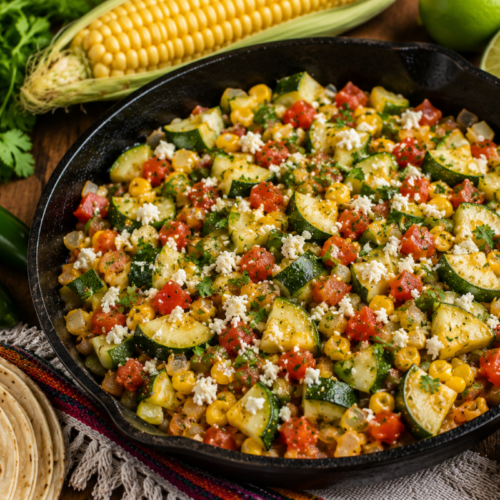
Calabacitas con Elote
Ingredients
- 2 tablespoons neutral oil or olive oil
- ½ medium white onion diced
- 1 jalapeño finely chopped
- 2 garlic cloves minced
- 3 medium zucchini or Mexican gray squash cut into ½-inch pieces
- 2 cups corn kernels fresh or frozen
- 3 Roma tomatoes diced
- ¾ teaspoon kosher salt plus more to taste
- ¼ teaspoon freshly ground black pepper
- ¼ cup chopped fresh cilantro
- ½ cup crumbled queso fresco or cotija optional
- Lime wedges for serving
Instructions
- Heat the oil in a large skillet over medium heat.
- Add the onion and jalapeño. Cook for 3 to 4 minutes, stirring occasionally, until the onion begins to soften.
- Add the garlic and cook for about 30 seconds, just until fragrant.
- Stir in the corn and cook for 2 to 3 minutes. If you are using fresh corn, let some of the kernels sit against the hot skillet long enough to pick up a little color.
- Add the zucchini, salt, and black pepper. Cook for about 5 minutes, stirring occasionally.
- Add the diced tomatoes and continue cooking for another 5 to 7 minutes, until the tomatoes soften and the zucchini is tender but still holds its shape.
- Taste and adjust the salt as needed.
- Remove the skillet from the heat and fold in the cilantro.
- Top with queso fresco or cotija, if using, and serve with lime wedges.
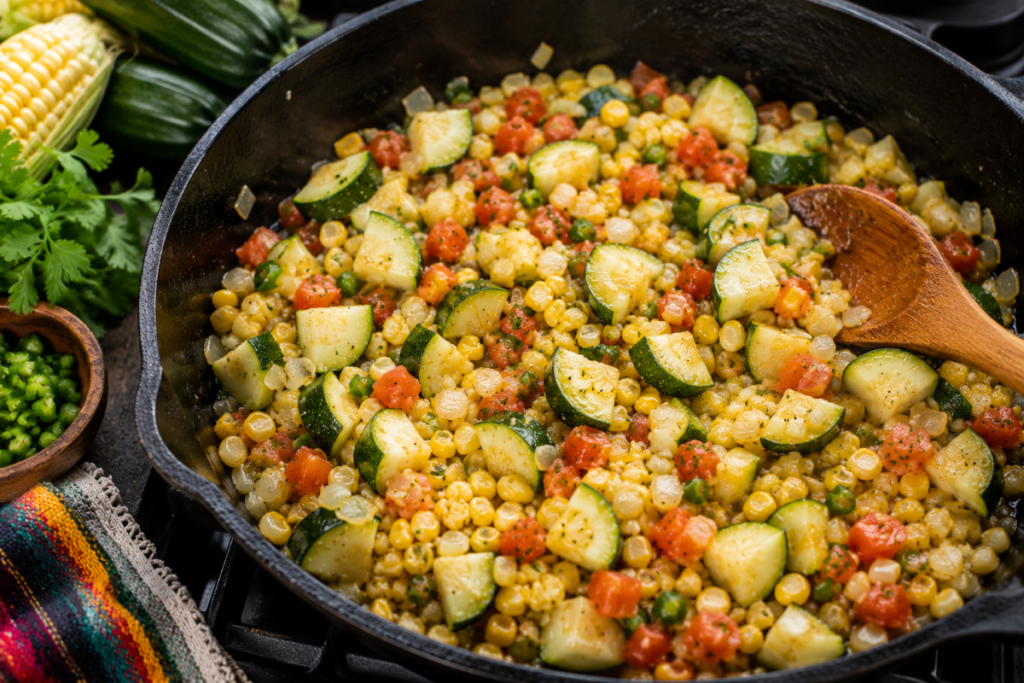
Zucchini, corn, tomatoes, onion, and jalapeño cook together in one skillet until tender and full of flavor
The Secret to Good Calabacitas
This is the one place where a very simple recipe can go wrong.
Do not overcook the squash.
Zucchini contains a lot of water. As it cooks, that moisture begins releasing into the skillet. Leave it over the heat too long and those neat pieces of squash start collapsing, eventually turning the entire pan soft and watery.
The goal is tender squash that still holds its shape.
That is also why I cook the calabacitas uncovered. A lid traps steam. Leaving the skillet open allows some of the moisture to evaporate while the vegetables cook.
You also do not need to stir constantly.
Give the corn and zucchini some time against the hot skillet before moving them around. A little direct contact with the pan develops more flavor and helps the vegetables cook without immediately releasing all of their moisture.
The tomatoes go in toward the end for the same reason.
They need enough time to soften and release their juices into the vegetables, but they do not need to cook down into a sauce.
Simple dishes make technique more noticeable. With calabacitas, a few extra minutes can be the difference between vegetables that are tender and distinct and vegetables that have cooked into each other.
Fresh Corn vs. Frozen Corn
If you make this in the middle of summer, fresh corn is hard to beat.
Cutting the kernels directly from the cob gives the skillet little bursts of sweetness that work especially well with zucchini, tomato, and jalapeño.
You can even let the kernels sit undisturbed in the skillet for a minute before stirring. A few lightly browned spots add another layer of flavor.
But frozen corn is absolutely worth using.
I would rather make calabacitas with good frozen corn than wait several months for fresh corn to come back into season.
Add it straight from the freezer and give it an extra minute or two in the skillet before adding the zucchini.
I prefer frozen over canned corn here because the kernels keep a better texture and do not bring extra liquid into the pan.
The point of this recipe is not to make you chase perfect seasonal produce every time you want calabacitas. Fresh corn makes the summer version especially good, but frozen corn keeps this firmly in the category of practical everyday cooking.
Easy Calabacitas Variations
Once you understand the basic skillet, there are plenty of ways to make it your own.
Calabacitas con Queso
Add shredded Oaxaca, Chihuahua, Monterey Jack, or another good melting cheese during the last few minutes.
Let it melt into the vegetables before serving.
You can also keep things lighter and simply crumble queso fresco over each serving.
Calabacitas con Crema
Stir in a little Mexican crema at the end for a richer version with a gentle tang.
Add it after lowering the heat so the crema blends into the vegetables without cooking too aggressively.
Add Roasted Poblano
Roasted poblano strips add mild heat and a smoky flavor that works especially well with corn.
If you already have roasted poblanos in the refrigerator, this is an easy place to use them.
Add Chicken
Shredded chicken turns the skillet into an easy main dish.
Add cooked chicken near the end and give it just enough time to warm through.
Keep It Meatless
Calabacitas do not need meat to feel like dinner.
Serve them with beans, rice, tortillas, queso fresco, and salsa and you have a complete meal built from some of the simplest staples in the Mexican kitchen.
What to Pair It With
Calabacitas con elote can sit next to just about anything coming off a Mexican grill or stove.
They are especially good with carne asada or pollo asado because the fresh vegetables balance the smoky richness of grilled meat.
They also work beautifully beside carnitas, grilled fish, chile verde, or a simple plate of beans and rice.
For a completely meatless dinner, put the skillet on the table with Mexican rice, frijoles de la olla, warm corn tortillas, queso fresco, and salsa.
You can also turn the calabacitas themselves into tacos.
Spoon them into warm tortillas, add crumbled queso fresco, and finish with salsa roja or salsa verde. If you have a roasted poblano around, a few strips on top make them even better.
And do not overlook leftovers for breakfast.
Warm the calabacitas in a skillet, cook a couple of eggs, and serve everything with beans and tortillas. Yesterday’s vegetable side suddenly becomes a very good breakfast.
That versatility is one of the reasons this recipe earns its place in the regular rotation. It does not demand a particular main dish or occasion. It simply works with whatever else you are cooking.
Storage & Reheating
Store leftover calabacitas in an airtight container in the refrigerator for up to 4 days.
You may notice some liquid collecting at the bottom of the container after they sit overnight. That is normal because zucchini continues releasing moisture.
For the best texture, reheat the vegetables in a skillet over medium heat.
The skillet allows some of that excess moisture to evaporate and keeps the zucchini from becoming even softer. Heat only until everything is warmed through.
The microwave works when convenience matters, but use shorter intervals and avoid cooking the vegetables longer than necessary.
I do not recommend freezing calabacitas.
The flavor survives, but zucchini tends to become very soft after freezing and thawing. This is one of those dishes that is much better eaten fresh or from the refrigerator within a few days.
My Go-To Tools for Mexican Cooking
These are the tools I personally recommend for building real Mexican flavor at home, the kind that gets stained with salsa, smells like toasted chiles, and earns a permanent spot in your kitchen.
Cast Iron Tortilla Press — Fresh tortillas make every taco better.
Cast Iron Skillet (Comal Alternative) — Perfect for searing meats, warming tortillas, and building incredible flavor.
Tortilla Warmer — Keeps tortillas soft, warm, and ready for taco night.
Non-Stick Comal — One of the best tools for roasting tomatoes, tomatillos, garlic, onions, and chiles.
Ninja Professional Blender (1000W) — Essential for silky salsa verde, salsa roja, marinades, and sauces.
Granite Molcajete — The traditional way to make salsa with unbeatable texture and authentic flavor.
Wooden Rolling Pin — A versatile kitchen staple that always earns its keep.
Lodge 6-Quart Enameled Dutch Oven — Perfect for birria, barbacoa, beans, soups, stews, braises, and slow-cooked Mexican favorites.
Frequently Asked Questions
What does calabacitas mean?
Calabacitas literally means “little squash.” In Mexican cooking, the word commonly refers to a prepared squash dish, often cooked with corn, tomato, onion, chiles, and sometimes cheese.
What kind of squash is best for calabacitas?
Mexican gray squash is excellent if you can find it. Regular zucchini is widely available and works very well. Choose smaller, firm squash for the best texture.
Can I use frozen corn?
Yes. Add frozen corn directly to the skillet without thawing it first. Let it cook for a few minutes before adding the zucchini.
Are calabacitas con elote spicy?
They do not have to be. One jalapeño gives the skillet mild heat. Remove the seeds and membranes to make it milder, or add more chile if you want more heat.
Can I make calabacitas ahead of time?
Yes. If you know you will reheat them later, slightly undercook the squash so it stays firmer. Reheat the vegetables in a skillet rather than simmering them again.
Can calabacitas be a main dish?
Absolutely. Serve them with beans, tortillas, and cheese for a meatless meal, or add chicken, pork, or beef for something more substantial.
More From The Half Jalapeño
If calabacitas con elote reminds you that some of the best Mexican food comes from simple ingredients cooked well, you’re in the right place. At The Half Jalapeño, we’re building a collection of authentic Mexican recipes that celebrates both the famous dishes everyone knows and the everyday meals families have been making for generations.
Calabacitas con Elote is the second recipe in our Comfort Classics series, where we’re digging into the cozy, home-style dishes that belong at the Mexican family table. From simple vegetable skillets and hearty soups to rice dishes, stews, and everyday favorites, this series is about the food that tastes like home.
🌮 Explore More Authentic Mexican Favorites
Continue through Comfort Classics with the recipe that started the series, or explore some of the larger collections that connect naturally with this dish:
Mexican Picadillo — The first recipe in our Comfort Classics series, made with seasoned ground beef, potatoes, vegetables, and tomato in one comforting skillet.
Mexican Breakfast Recipes — Explore traditional Mexican breakfasts, including the kind of eggs, beans, tortillas, and everyday dishes that calabacitas fit right alongside.
Soups & Stews Hub — Keep the comfort-food theme going with pozole, caldo de res, sopa de lima, and other warming Mexican favorites.
Mexican Salsas & Sauces Guide — Find the salsa to put on the table alongside calabacitas, warm tortillas, beans, and rice.
The Complete Taco Series — Explore fourteen authentic taco recipes from across Mexico, plus plenty of ideas for putting those leftover calabacitas and homemade salsas to work.
A skillet this simple is also a perfect excuse to put a bowl of homemade salsa on the table.
🌶 Pair It with Authentic Mexican Flavor
Salsa Verde Asada — Roasted tomatillos and chiles bring bright, tangy flavor that works especially well with sweet corn and tender squash.
Pico de Gallo — Fresh tomato, onion, chile, cilantro, and lime keep the whole meal light and fresh.
Guacamole Taquero Salsa — A creamy green salsa that adds richness and chile flavor without overwhelming the vegetables.
Salsa Roja Taquera — For anyone who wants to bring a deeper red-chile flavor and more heat to the skillet.
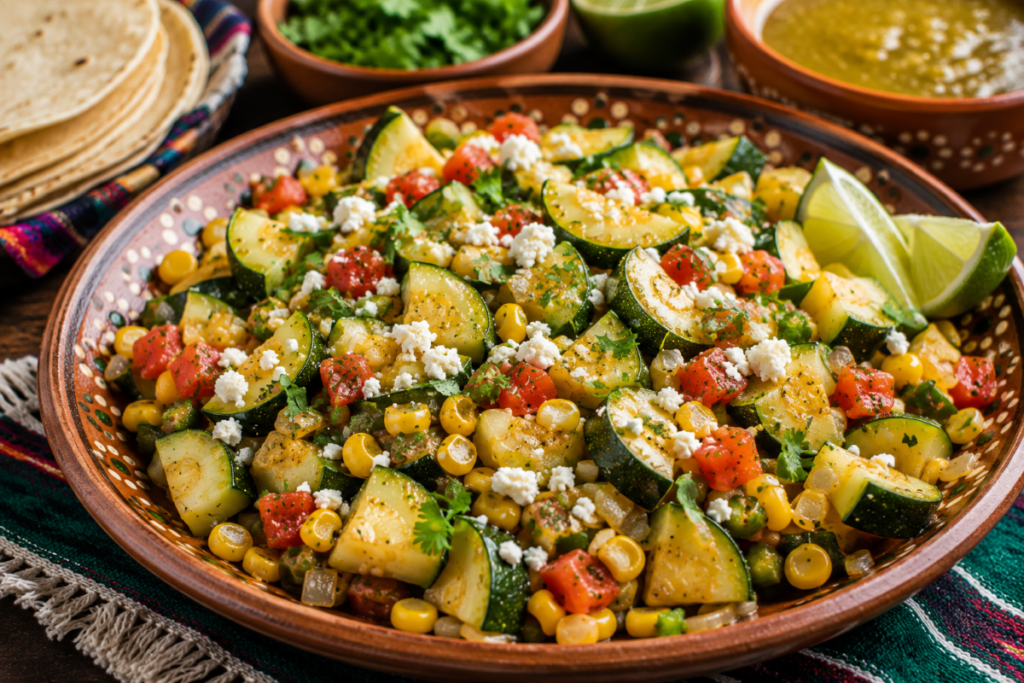
Finished calabacitas con elote topped with crumbled cheese and cilantro, served with lime, warm tortillas, and salsa
The Final Bite
Calabacitas con elote will probably never be the loudest dish on the table.
That is part of why it belongs in Comfort Classics.
It is squash, corn, tomatoes, onion, garlic, and chile cooked together in one skillet. No complicated technique. No expensive ingredients. No need to turn dinner into a project.
When the vegetables are good, they do most of the work.
The corn brings sweetness. The tomatoes bring acidity. The jalapeño adds a little spark. And the squash absorbs all of it while still tasting like itself.
That is the kind of cooking I keep coming back to with this series. Not every Mexican comfort classic needs to be a big Sunday meal. Some are the dishes that quietly fill the spaces around those meals, the things that show up beside beans, rice, grilled meat, eggs, or a stack of warm tortillas.
Calabacitas can do all of that.
Make them when summer gardens are overflowing with zucchini.
Make them in January with supermarket squash and frozen corn.
Serve them beside carne asada, pile them into a tortilla, or eat the leftovers with eggs the next morning.
Simple food has a way of sticking around for a reason.
And this one tastes like summer.
Buen provecho,
Join the Comal Crew for authentic Mexican recipes, regional cooking guides, and a new recipe every Tuesday.