The Sound of Something Good
There’s a particular sound that tells you a good pot of sopa de fideo is on its way.
It’s the gentle sizzle of dry noodles hitting warm oil.
At first, they look ordinary. Just thin, broken strands of pasta scattered across the bottom of a pot.
But keep stirring.
The noodles slowly turn golden. A warm, toasted aroma fills the kitchen. And those simple little strands begin developing the flavor that makes this soup so satisfying.
Then comes the tomato mixture.
It hits the hot pot with a hiss, coating the noodles in a deep red sauce before the broth goes in.
A little onion. Fresh garlic. A gentle simmer.
And before long, you’ve got a pot of sopa de fideo.
It’s the kind of dish that doesn’t need a special occasion.
You make it when the weather turns cool, when the pantry looks a little empty, or when dinner calls for something simple and warm.
For many Mexican families, it’s one of the first soups children come to recognize. Familiar, inexpensive, and easy to serve alongside whatever else is on the table.
And that’s what makes it worth talking about.
At The Half Jalapeño, we’ve explored some of Mexico’s boldest flavors and most celebrated dishes. We’ve made birria, pozole, chiles rellenos, and all kinds of tacos.
But a little bowl of tomato noodle soup deserves its place right alongside them.
Because Mexican cooking isn’t only about the big Sunday meals.
Sometimes, it’s about what happens on an ordinary Tuesday.
And sopa de fideo understands that perfectly.
At a Glance
What It Is
Sopa de fideo is a traditional Mexican noodle soup made by toasting short, thin pasta in oil before simmering it in a tomato-based broth seasoned with onion and garlic.
Where It’s From
Sopa de fideo is enjoyed throughout Mexico. It belongs to a long tradition of home-style pasta soups that developed as wheat-based noodles became part of Mexican cooking.
What Makes It Special
The noodles are toasted until golden before the liquid is added. This simple technique develops a warm, nutty flavor and gives the finished soup its distinctive character.
History & Cultural Context: How a Little Noodle Became Mexican Comfort Food
There’s something wonderfully Mexican about sopa de fideo.
Not because every ingredient originated in Mexico.
Quite the opposite.
The story of this soup is a reminder that Mexican cuisine has never stood still. It has grown through centuries of agriculture, migration, trade, adaptation, and the creativity of people making dinner with what they had.
Long before wheat pasta became part of Mexican cooking, Indigenous communities had developed extraordinary food traditions built around corn, beans, squash, chiles, and tomatoes.
Tomatoes, in particular, were already part of the culinary world of Mesoamerica.
Wheat came later, introduced during the Spanish colonial period. Over time, wheat-based foods and European-style pasta became familiar ingredients in Mexican kitchens.
But bringing an ingredient into a country is only the beginning of its story.
What matters is what cooks do with it.
In Mexico, thin pasta found a home in soups built around tomatoes, onion, garlic, and broth. The noodles were browned in fat before being simmered, creating a flavor that belonged to the dish itself rather than simply borrowing from the liquid around it.
The result was sopa de fideo.
There isn’t one reliably documented moment when a particular cook invented the soup, and it would be misleading to assign it to a single Mexican state. Its story is broader than that, tied to the development of everyday Mexican home cooking.
And that everyday character is important.
The Place of Sopa in the Mexican Meal
In many Mexican households, lunch has traditionally been the day’s substantial meal, often called la comida.
A bowl of soup may begin that meal before a larger plate of meat, vegetables, beans, or rice.
Sopa de fideo fits beautifully into that tradition.
It’s warm without being heavy, flavorful without demanding a long list of ingredients, and economical enough to make whenever the family needs something comforting.
In comida corrida, the affordable set meals served in restaurants and neighborhood eateries, a simple soup is also a familiar first course.
And the word sopa doesn’t always mean the same thing as the English word soup.
Mexican cooking distinguishes between preparations such as sopa aguada, with plenty of liquid, and sopa seca, where pasta or rice absorbs most of its cooking liquid.
Sopa de fideo is typically brothy.
Its close relative, fideo seco, is cooked with less liquid until the noodles become more concentrated and saucy.
Same family of ingredients. Different result.
That distinction tells you something about Mexican cooking: a technique and a few pantry staples can lead to entirely different dishes.
Why the Simplest Recipes Matter
It’s easy to admire the complexity of mole or the long cooking process behind a great birria.
Those dishes deserve their reputation.
But sopa de fideo represents another side of Mexican food, one that’s just as important.
The everyday side.
The side that knows a bag of noodles, a few tomatoes, and a pot of broth can become a meal.
The side that doesn’t need to be elaborate to be meaningful.
When you look at Mexican cuisine through that lens, dishes like sopa de fideo stop seeming small.
They become part of the larger story of how families eat, how cooking knowledge is passed along, and how simple ingredients become traditions.
And that’s exactly why this soup belongs in our Comfort Classics collection.
Ingredients Overview: Simple Ingredients, Real Purpose
Sopa de fideo doesn’t ask you to buy half the grocery store.
But it does ask you to pay attention to what goes into the pot.
Fideo Noodles
Fideo is thin wheat pasta, usually sold in short, straight pieces.
You’ll often find it in small packages in the Mexican foods aisle.
The size matters. Those short noodles are easy to scoop up with a spoon, and they cook quickly once they reach the broth.
If you can’t find packaged fideo, break thin vermicelli or angel hair pasta into short lengths.
Regular spaghetti can work in a pinch, but thinner pasta gives you a texture closer to traditional fideo.
Kitchen tip: Don’t rinse or boil the noodles before toasting them. They go into the oil dry.
Roma Tomatoes
Tomatoes provide the color, acidity, and body of the broth.
Roma tomatoes are a good choice because they’re meaty and blend smoothly.
Four medium tomatoes make a flavorful base without turning the soup into a thick tomato sauce.
If fresh tomatoes are bland or out of season, canned plain tomato sauce can work, although the amount of water and broth may need adjustment.
White Onion
White onion adds savory sweetness and helps round out the tomatoes.
It’s blended directly into the broth base, so you get its flavor without large onion pieces floating in the finished soup.
Yellow onion is a perfectly good substitute.
Garlic
Two cloves of garlic are enough to give this soup an aromatic foundation.
Fresh garlic is ideal, especially in a recipe where every ingredient has a noticeable role.
Chicken Broth
Chicken broth adds savory depth and gives the soup its comforting character.
Use low-sodium broth so you can control the final seasoning.
Vegetable broth works well if you’re making a meatless version.
And if you grew up in a kitchen where chicken bouillon was always within reach, you’ll recognize why some cooks use it to season soups like this. Just be mindful of the salt.
Neutral Oil
The oil is what allows the noodles to brown before any liquid goes into the pot.
Vegetable, canola, or avocado oil all work.
You need enough to coat the noodles lightly, not deep-fry them.
Salt and Mexican Oregano
Salt is essential. The amount will depend on your broth.
Mexican oregano is optional. It contributes a gentle herbal note, but there’s no need to add it if you prefer a simpler tomato flavor.
Optional Garnishes
Cilantro, lime, avocado, queso fresco, and Mexican crema can all be served with sopa de fideo.
But there’s something to be said for eating it plain.
Sometimes the best garnish is simply a warm tortilla on the side.
As an Amazon Associate, I earn from qualifying purchases. If you buy through the links below, it helps support The Half Jalapeño at no extra cost to you. ¡Gracias!
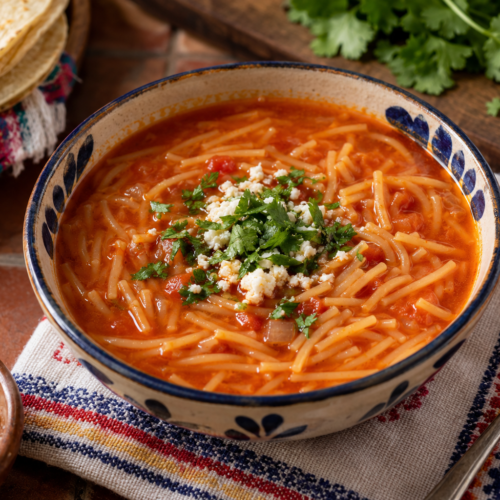
Sopa de Fideo (Mexican Noodle Soup)
Ingredients
- – 7 ounces dry fideo noodles
- – 2 tablespoons neutral cooking oil
- – 4 medium Roma tomatoes roughly chopped
- – 1/4 medium white onion
- – 2 garlic cloves peeled
- – 1 cup water for blending
- – 4 cups low-sodium chicken broth
- – 1 teaspoon kosher salt or to taste
- – 1/4 teaspoon Mexican oregano optional
- Optional garnishes: Chopped cilantro lime wedges, crumbled queso fresco, diced avocado, or Mexican crema.
Instructions
- Make the tomato base.
- Add the chopped Roma tomatoes, white onion, garlic, and water to a blender. Blend until smooth. For an especially silky broth, strain the mixture through a fine-mesh sieve, although this is optional.
- Toast the fideo.
- Heat the oil in a medium soup pot or Dutch oven over medium heat. Add the dry fideo noodles and cook for 3 to 5 minutes, stirring frequently, until golden brown. Watch closely because the noodles can burn quickly.
- Cook the tomato mixture.
- Carefully pour the blended tomato mixture over the toasted noodles. It may splatter when it hits the hot oil. Stir gently and cook for 2 to 3 minutes, until the tomato mixture loses some of its raw aroma.
- Add the broth and seasonings.
- Pour in the chicken broth. Add the salt and optional Mexican oregano. Stir and bring the soup to a gentle boil.
- Simmer the soup.
- Reduce the heat to medium-low and simmer uncovered for 7 to 10 minutes, stirring occasionally, until the noodles are tender. Check the pasta early because cooking times vary by brand.
- Taste and serve.
- Taste the broth and adjust the salt. If the soup has thickened more than you like, stir in additional hot broth or water. Ladle into bowls and serve immediately with your favorite garnishes.
Notes
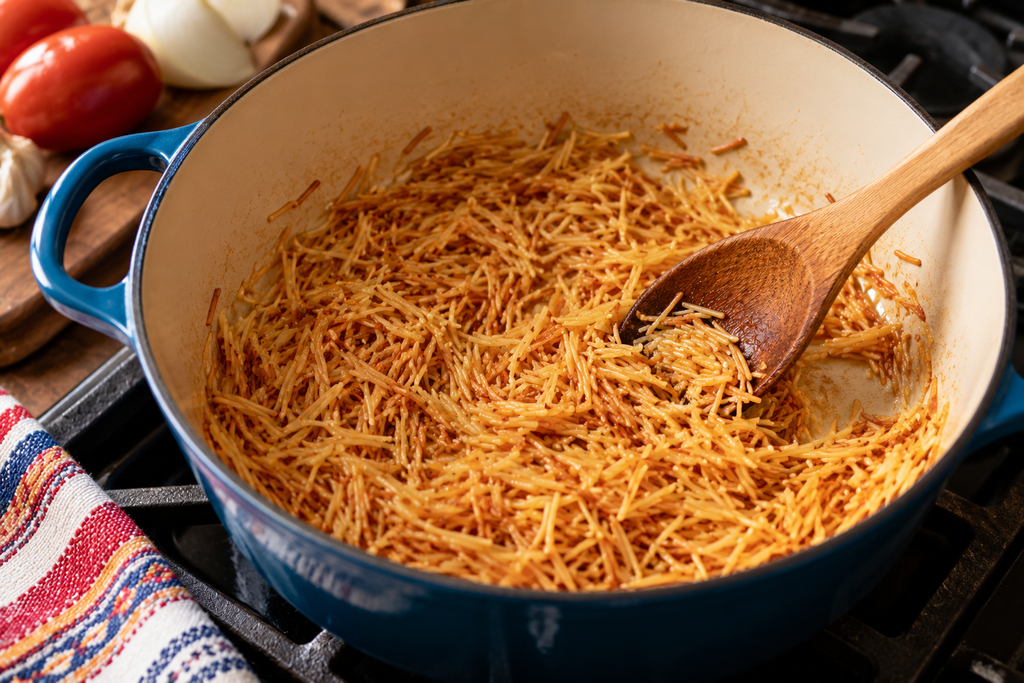
The secret to great sopa de fideo starts with the noodles. Toasting them in oil until golden develops the rich, nutty flavor that makes this Mexican comfort classic so special
Kitchen Wisdom: Getting the Toasting Just Right
Here’s where sopa de fideo can fool you.
It looks like one of the easiest soups in the world.
And in many ways, it is.
But there’s one step that deserves your full attention.
Toasting the noodles.
You’re not just warming them up. You’re building flavor.
As the dry pasta browns in oil, its surface develops toasted aromas that wouldn’t appear if you dropped it straight into boiling broth.
Think about the difference between plain bread and toast.
Same basic ingredient. Very different experience.
The principle is similar here.
The trick is finding that beautiful golden color without going too far.
Start with medium heat.
Keep the noodles moving.
And resist the temptation to answer your phone while they’re browning.
Fideo is thin, which means the distance between perfectly toasted and unpleasantly burned can be surprisingly short.
The Tomato Mixture Deserves a Minute, Too
When the noodles are ready, the blended tomato mixture goes directly into the hot pot.
You’ll hear it immediately.
That hiss isn’t just dramatic. It’s the beginning of the next flavor-building step.
Let the tomatoes cook briefly with the noodles before adding the broth.
This helps mellow the raw onion and garlic and gives the tomato mixture a little more depth.
It’s a simple habit worth carrying into other Mexican dishes.
The Soup Will Change While It Sits
Fresh sopa de fideo should have tender noodles and enough broth to spoon up comfortably.
But leave the pot on the stove for a while, and the noodles will continue drinking that liquid.
What started as a brothy soup can become a much thicker bowl.
That isn’t necessarily a disaster.
Some people enjoy their fideo on the thicker side.
But if you’re aiming for a classic brothy sopa, serve it soon after the noodles become tender.
And don’t be afraid to add more broth.
Make It Your Own Without Losing the Dish
One of the things I appreciate about everyday Mexican cooking is that home cooks adapt recipes to what they have.
A little shredded chicken makes sopa de fideo more substantial.
A handful of vegetables stretches it further.
A spoonful of salsa brings heat.
But the heart of the dish stays the same: toasted noodles, tomato, aromatics, and broth.
Get that foundation right, and the rest is up to you.
What to Serve With Sopa de Fideo
Sopa de fideo can open a larger meal or stand on its own when you want something light.
For a traditional home-style spread, serve it with warm corn tortillas and a pot of Frijoles de la Olla. The beans add substance, while the tortillas are perfect for enjoying the last spoonfuls of broth.
If you want something crisp alongside the soup, Tostadas de Pollo make a satisfying contrast. One bite is crunchy and loaded with toppings; the next is warm, soft, and tomato-rich.
A squeeze of fresh lime can brighten the broth, while diced avocado adds richness.
And if you want to keep the meal especially simple?
Just bring the pot to the table.
There are plenty of Mexican dishes that invite an elaborate spread.
Sopa de fideo doesn’t demand one.
Storage & Reheating
Refrigerating
Let the soup cool briefly, then transfer it to shallow airtight containers and refrigerate within two hours.
Store for up to 3 to 4 days.
Keep in mind that the noodles will continue absorbing the broth, so leftovers will be thicker than freshly made soup.
Reheating
Transfer the soup to a saucepan and warm over medium-low heat.
Add a splash of chicken broth, vegetable broth, or water to loosen the noodles.
Stir gently until heated through to 165°F.
Taste before serving. You may need a little additional salt after adding more liquid.
Freezing
You can freeze sopa de fideo, but the pasta tends to soften considerably after thawing.
For the best texture, I recommend enjoying it fresh or refrigerated.
If you do freeze it, use a freezer-safe container and aim to enjoy it within 2 to 3 months for best quality.
Thaw overnight in the refrigerator before reheating.
My Go-To Tools for Mexican Cooking
These are the tools I personally recommend for building real Mexican flavor at home, the kind that gets stained with salsa, smells like toasted chiles, and earns a permanent spot in your kitchen.
Cast Iron Tortilla Press – Fresh tortillas make every taco better.
Cast Iron Skillet (Comal Alternative) – Perfect for searing meats, warming tortillas, and building incredible flavor.
Tortilla Warmer – Keeps tortillas soft, warm, and ready for taco night.
Non-Stick Comal – One of the best tools for roasting tomatoes, tomatillos, garlic, onions, and chiles.
Ninja Professional Blender (1000W) – Essential for silky salsa verde, salsa roja, marinades, and sauces.
Granite Molcajete – The traditional way to make salsa with unbeatable texture and authentic flavor.
Wooden Rolling Pin – A versatile kitchen staple that always earns its keep.
Lodge 6-Quart Enameled Dutch Oven – Perfect for birria, barbacoa, beans, soups, stews, braises, and slow-cooked Mexican favorites.
Mexican Kitchen Essentials
For the tools I use to make tacos, salsas, sides, and everyday Mexican food at home:
👉Shop My Mexican Kitchen Essentials
Frequently Asked Questions
1. What is sopa de fideo?
Sopa de fideo is a Mexican noodle soup made with short, thin pasta that is toasted in oil before simmering in a savory tomato broth with onion and garlic. It’s a familiar part of everyday Mexican home cooking and is often served as a first course.
2. Why do you fry the noodles before making sopa de fideo?
Toasting the dry noodles in oil develops a deeper, nuttier flavor. It’s one of the defining techniques of the dish and gives the pasta more character than simply boiling it in broth.
3. What kind of noodles should I use?
Look for short, thin pasta labeled fideo. If it’s unavailable, break vermicelli or angel hair pasta into small pieces. Cooking times may vary depending on the pasta you choose.
4. Is sopa de fideo the same as sopita de conchas?
They’re closely related, but they’re not identical. Sopa de fideo uses thin, short noodles, while sopita de conchas uses small shell-shaped pasta. Both can be prepared in tomato-based broths, but the different pasta shapes create different textures.
5. What’s the difference between sopa de fideo and fideo seco?
Sopa de fideo is generally served with plenty of broth. Fideo seco uses less liquid, which is mostly absorbed during cooking, leaving the noodles in a thicker, more concentrated tomato preparation.
6. Can I make sopa de fideo without chicken broth?
Yes. Vegetable broth is an excellent substitute. You can also use seasoned water, although the finished soup may have a lighter flavor.
7. Why is my sopa de fideo mushy?
The noodles may have cooked too long or continued absorbing liquid after the soup was finished. Begin checking for tenderness early and serve soon after cooking.
8. Can I add chicken or vegetables?
Absolutely. Cooked shredded chicken, carrots, zucchini, and peas are all useful additions. Just make sure any vegetables have enough time to become tender.
9. Is sopa de fideo spicy?
Not usually. The basic tomato, onion, and garlic version is mild. You can add chipotle, serrano chile, or salsa if you prefer heat.
10. Can I make sopa de fideo ahead of time?
Yes, but the texture is best when freshly prepared. The noodles continue absorbing liquid during storage, so you’ll probably need additional broth when reheating.
More From The Half Jalapeño
One of the beautiful things about Mexican home cooking is how the simplest ingredients keep finding new ways to surprise us.
Tomatoes, onions, garlic, beans, tortillas, and a little patience. They’re the building blocks of countless dishes, yet every recipe tells a different story.
Sopa de fideo is just one chapter.
From the little pasta soups that fill everyday kitchens to the beans simmering on the stove and the crispy tostadas piled high with toppings, there’s an entire world of Mexican comfort food worth exploring.
And we’ve been busy bringing those stories together at The Half Jalapeño.
Mexican Macaroni (Sopita de Conchas): Childhood in a Bowl
Same comforting tomato broth. Completely different little noodle.
Sopita de conchas trades thin fideo strands for tiny pasta shells that catch the broth in every curve. It’s another beloved example of how Mexican kitchens transform ordinary pantry ingredients into something memorable.
If sopa de fideo speaks to your love of simple, home-cooked meals, this is the next bowl you’ll want to make.
Frijoles de la Olla
Before the toppings, the elaborate preparations, or the restaurant menus, there was the pot of beans.
Frijoles de la olla represent one of the great foundations of Mexican cooking. Tender beans, gently simmered until their broth becomes rich and satisfying.
Pair them with sopa de fideo and warm corn tortillas, and you’ve got the kind of everyday meal that explains why Mexican comfort food doesn’t need to be complicated.
Tostadas de Pollo
If sopa de fideo is the warm, comforting side of Mexican cooking, tostadas de pollo bring the crunch.
Crispy corn tortillas layered with chicken and fresh toppings deliver a completely different experience, but they’re just as connected to the traditions of everyday Mexican meals.
Serve a bowl of fideo alongside a loaded tostada and you’ve got two textures, two flavors, and one very satisfying table.
Explore Our Comfort Classics Collection
Sopa de fideo isn’t an isolated recipe. It’s part of a much bigger story.
Mexican picadillo, arroz rojo, carne con papas, enchiladas suizas, chiles rellenos, and so many more dishes represent the everyday cooking traditions that deserve to be remembered, shared, and passed along.
That’s why we’re building our Comfort Classics collection.
Not just to collect recipes, but to explore the flavors, history, and traditions behind the meals that have brought Mexican families together for generations.
And we’re nowhere near finished.
Every Tuesday, another recipe. Another story. Another piece of Mexico’s incredible culinary heritage.
Explore the Comfort Classics Collection →
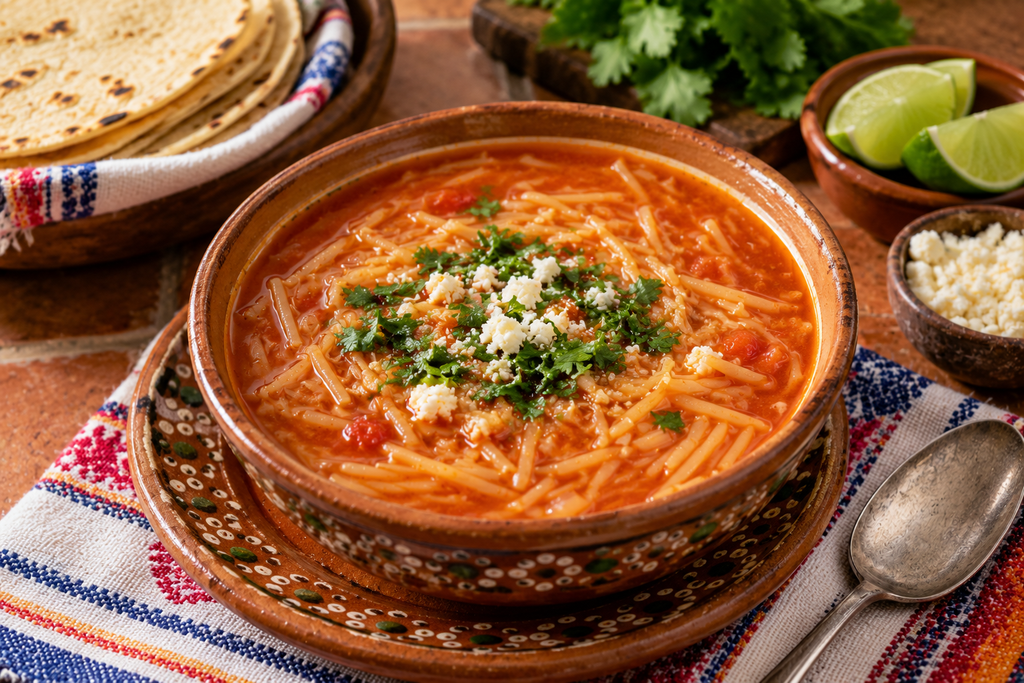
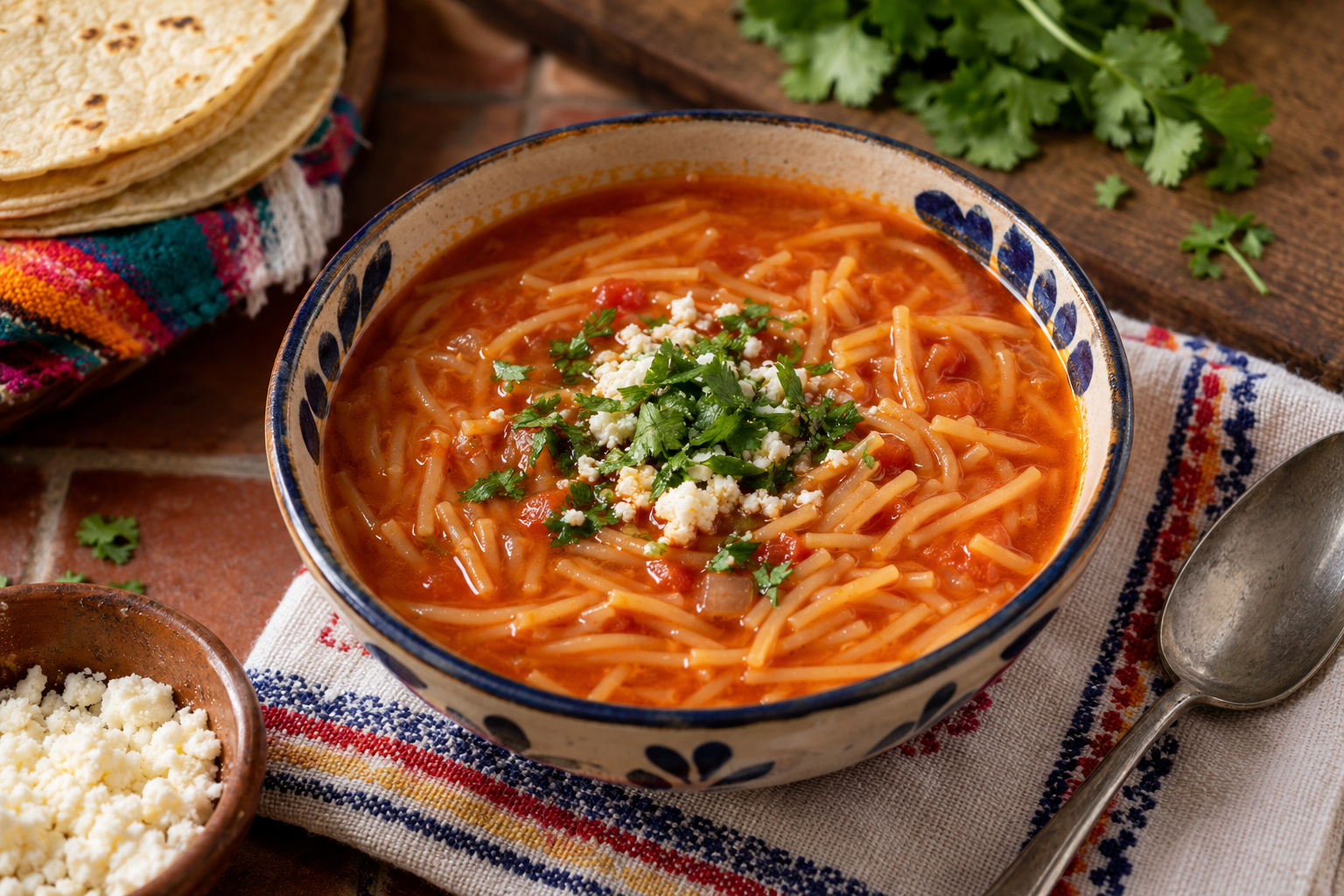
Golden toasted noodles, savory tomato broth, and simple ingredients come together in a comforting bowl of sopa de fideo, a beloved classic of Mexican home cooking
The Final Bite
A pot of sopa de fideo isn’t going to impress anyone with expensive ingredients.
There are no elaborate garnishes required.
No complicated spice blend.
No sauce that takes all afternoon.
And that’s exactly the point.
The beauty of this soup is how much it does with so little.
A handful of noodles.
A few tomatoes.
Some onion and garlic.
A pot of warm broth.
And one simple technique that changes everything.
Toast the noodles first.
Let them turn golden.
Give them time to develop their flavor.
Then watch those everyday ingredients come together into something that feels right at home on a Mexican family table.
That’s the kind of cooking I want to keep exploring at The Half Jalapeño.
Not just the famous dishes.
Not just the ones that look impressive in photographs.
But the everyday meals that quietly tell the story of how people really eat.
Because sometimes the most meaningful recipes aren’t the ones reserved for celebrations.
They’re the ones you can make on an ordinary afternoon.
And enjoy again the next day.
Buen provecho,
Love Mexican food with a story?
Join the Comal Crew for a new Mexican recipe, regional food story, and kitchen tip delivered to your inbox every Tuesday.
Plus, get our free guide:
5 Mexican Salsas That Go With Everything
Five flavorful Mexican salsas to bring more life to tacos, grilled meats, and everyday meals.
New recipes every Tuesday. No unnecessary clutter. Just good Mexican food and the stories behind it.