
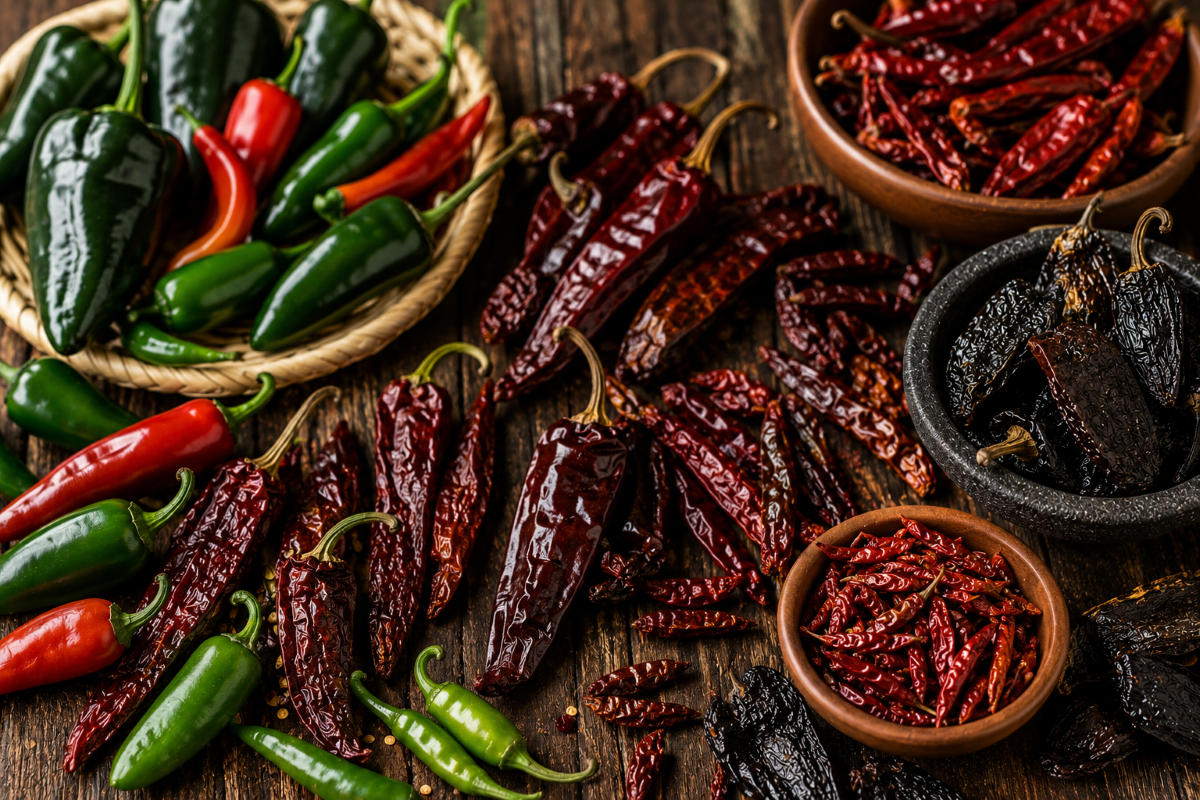
If tortillas are the foundation of Mexican food, chiles are its vocabulary.
Every great Mexican dish speaks through chiles. They bring color to birria, depth to mole, brightness to salsa verde, heat to salsa macha, smokiness to chipotle sauces, and character to countless family recipes passed down through generations.
The biggest misconception about Mexican chiles is that they’re only about spice.
They aren’t.
Some are sweet. Some are earthy. Some taste almost like raisins. Others bring smoke, fruit, citrus notes, bitterness, or rich complexity. The heat is only one part of the story.
Understanding chiles is one of the fastest ways to become a better Mexican cook.
Growing up around Mexican food, I didn’t hear people talking about Scoville units or chile charts. My Mom simply knew which chile belonged in which dish. My Nana seemed to understand them on an entirely different level. She’d toast a handful on the comal, smell them, taste them, and somehow know exactly what the pot needed.
No measuring.
No charts.
Just experience.
Most of us aren’t lucky enough to have decades of instinct built into our cooking. That’s why this guide exists.
Whether you’re trying to understand the difference between ancho and guajillo, wondering why your salsa tastes flat, or simply curious about which chile to buy first, this guide will help you navigate one of the most important ingredients in Mexican cooking.
By the end, you’ll understand the chiles that appear again and again throughout Mexican kitchens—and more importantly, you’ll know how to use them.
At a Glance
What Are Mexican Chiles?
Mexican chiles are peppers used fresh, roasted, smoked, dried, blended, stuffed, pickled, and cooked into thousands of dishes across Mexico.
Fresh vs Dried
Fresh chiles tend to be brighter, greener, and sharper. Dried chiles become deeper, sweeter, smokier, and more complex.
Best Chiles for Beginners
If you’re just getting started, focus on:
- Jalapeño
- Serrano
- Poblano
- Guajillo
- Ancho
- Chile de Árbol
These six alone can cover a huge percentage of Mexican cooking.
Most Versatile Chile
Guajillo.
If you only buy one dried chile, start there.
Mexican Chile Heat & Flavor Chart
| Chile | Fresh or Dried | Heat Level | Flavor Profile |
|---|---|---|---|
| Poblano | Fresh | Mild | Earthy, slightly sweet |
| Anaheim | Fresh | Mild | Green, mellow |
| Jalapeño | Fresh | Mild-Medium | Bright, grassy |
| Serrano | Fresh | Medium | Sharp, clean |
| Guajillo | Dried | Mild | Fruity, smooth |
| Ancho | Dried | Mild | Raisiny, sweet |
| Pasilla | Dried | Mild-Medium | Earthy, complex |
| Morita | Dried | Medium-Hot | Smoky, fruity |
| Chipotle | Dried | Medium-Hot | Smoky, rich |
| Chile de Árbol | Dried | Hot | Clean, direct heat |
| Habanero | Fresh | Very Hot | Fruity, floral |
Fresh vs. Dried Chiles: Why It Matters
One of the first things you’ll notice in Mexican recipes is that many call for dried chiles instead of fresh ones.
That’s because drying completely changes the flavor.
Think about a grape becoming a raisin.
It’s still the same fruit, but the character changes dramatically.
The same thing happens with chiles.
A fresh poblano becomes an ancho when dried.
A fresh jalapeño becomes a chipotle when smoked and dried.
Fresh chiles often bring brightness, freshness, and immediate heat.
Dried chiles bring concentration, depth, sweetness, and complexity.
That’s why recipes often combine multiple chiles.
A salsa may use guajillo for body, árbol for heat, and ancho for richness.
Each chile contributes something different.
Once you start thinking about flavor instead of simply heat, Mexican cooking becomes much easier to understand.
Fresh Mexican Chiles
Jalapeño
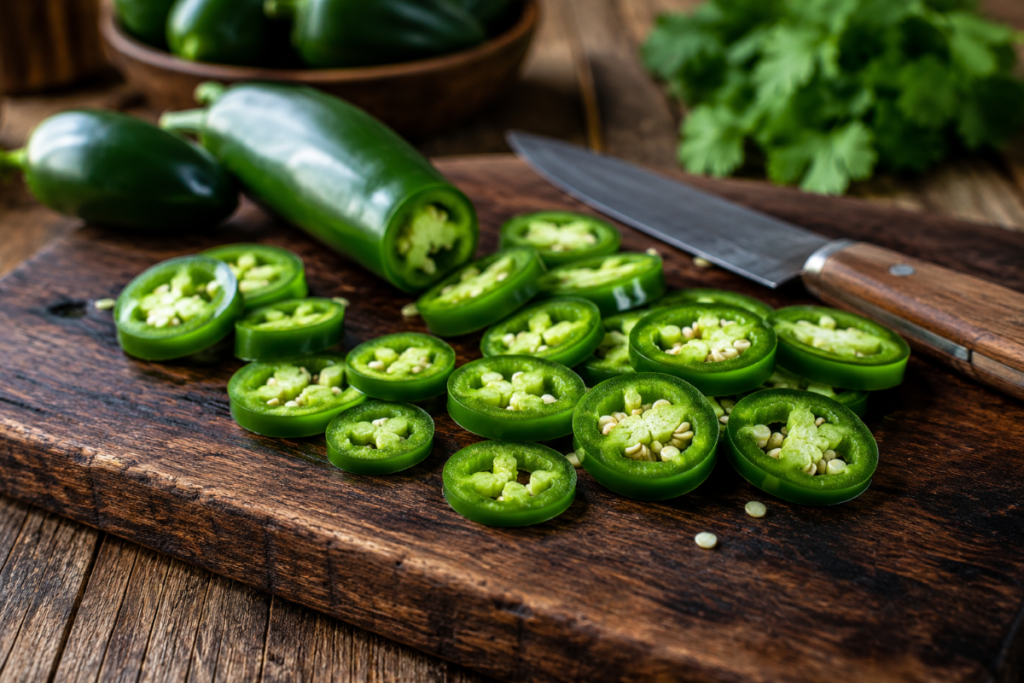
Fresh jalapeños bring bright flavor and moderate heat to salsas, tacos, beans, and countless Mexican recipes
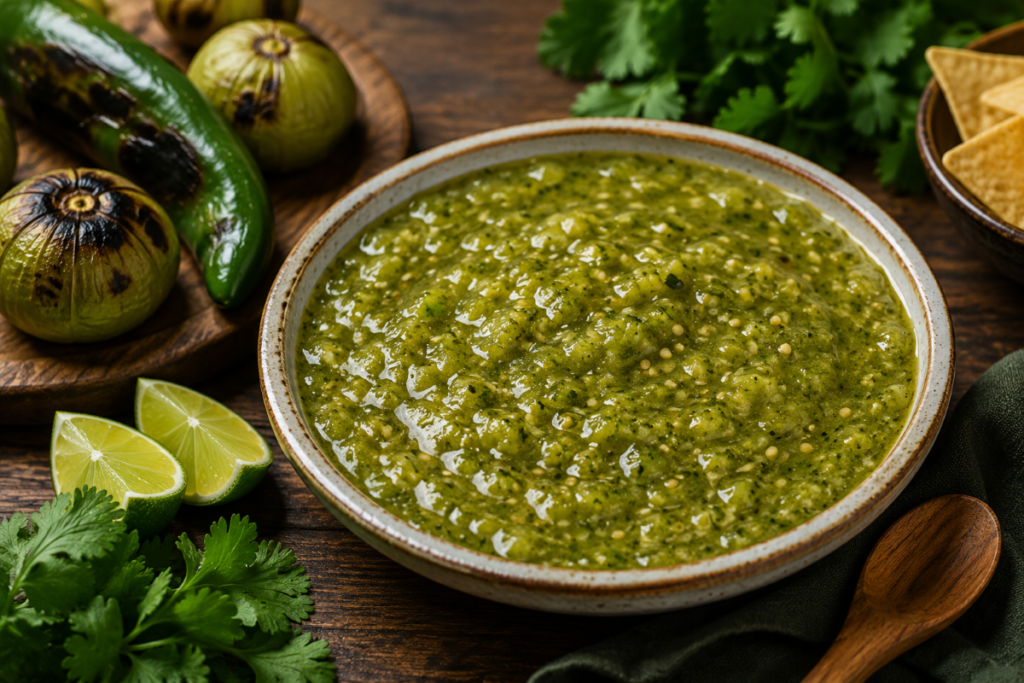
Salsa Verde Asada uses roasted jalapeños and tomatillos to create one of Mexico’s most versatile green salsas
The jalapeño is probably the most recognizable Mexican chile in the United States, and for good reason.
It’s versatile.
It’s approachable.
And it works in almost everything.
Fresh jalapeños bring a bright, grassy flavor with moderate heat. Unlike many hotter peppers, jalapeños contribute noticeable flavor beyond their spice level.
That’s why they’re so common in everyday cooking.
They’re equally comfortable in salsa verde, pico de gallo, tacos, eggs, beans, soups, and marinades.
One of the biggest mistakes beginners make is assuming jalapeños are only useful when they want heat.
In reality, they’re often used because they taste good.
Remove the seeds and membranes and the heat drops considerably while the flavor remains.
If you’re just starting your chile journey, jalapeños are the perfect place to begin.
Best Uses
- Salsa Verde
- Pico de Gallo
- Pickled Jalapeños
- Breakfast Tacos
- Beans
- Guacamole
- Nachos
👉 Make it at home: Salsa Verde Asada
Serrano
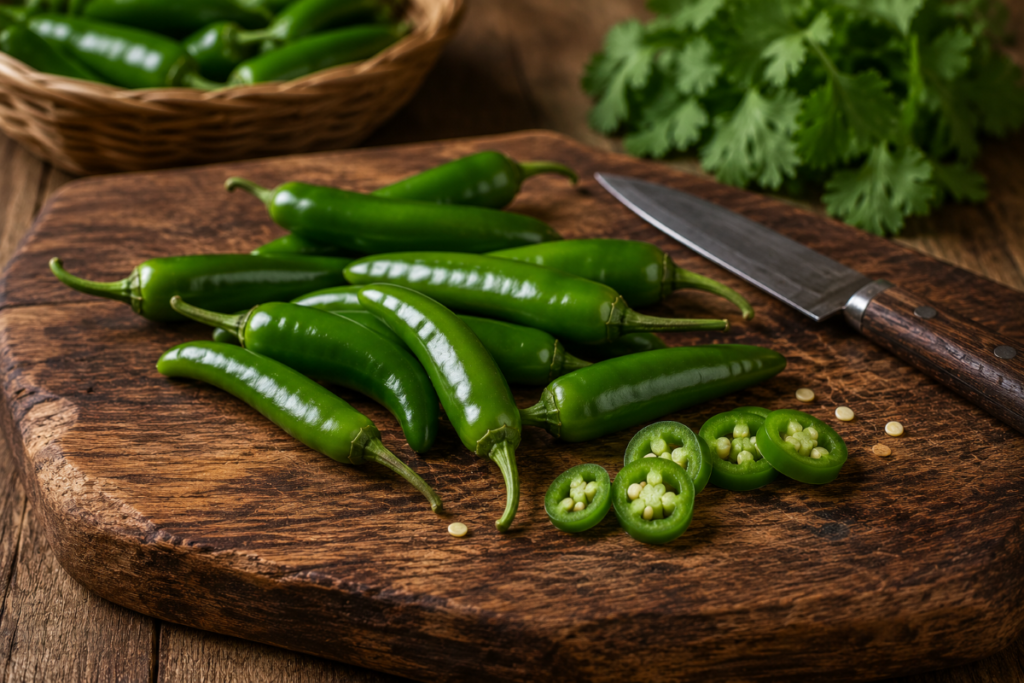
Serranos are smaller and hotter than jalapeños, delivering the bright, clean heat that defines many traditional Mexican salsas
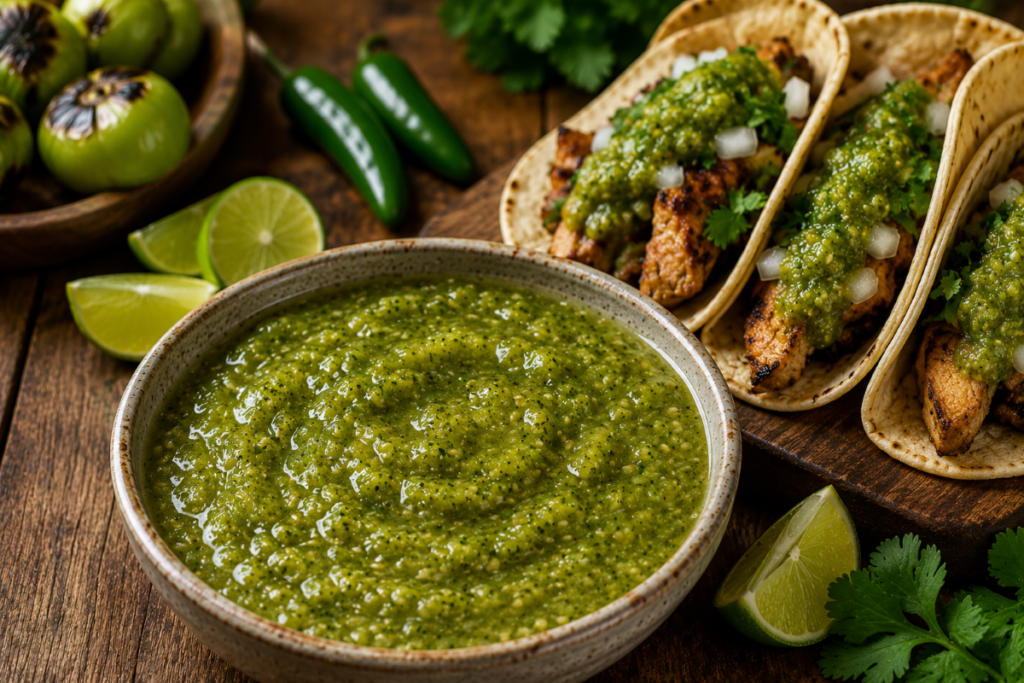
Roasted serrano salsa adds bold flavor, fresh heat, and authentic taquería character to tacos, grilled meats, and street food favorites
If jalapeños are friendly and approachable, serranos are their more intense cousin.
Serranos are smaller but generally hotter.
They deliver a sharper flavor and cleaner heat that works beautifully in fresh salsa.
Many Mexican cooks prefer serranos specifically because they allow the chile flavor to remain front and center without overwhelming the dish.
One bite of a fresh serrano salsa explains why.
The flavor feels alive.
Bright.
Sharp.
Fresh.
Serranos are especially common in salsa verde, where their heat balances the acidity of tomatillos perfectly.
If you love tacos, you should become friends with serranos.
Best Uses
- Salsa Verde
- Guacamole
- Pico de Gallo
- Taco Toppings
- Fresh Salsas
- Seafood Tacos
👉 Make it at home: Salsa Verde Asada
Poblano
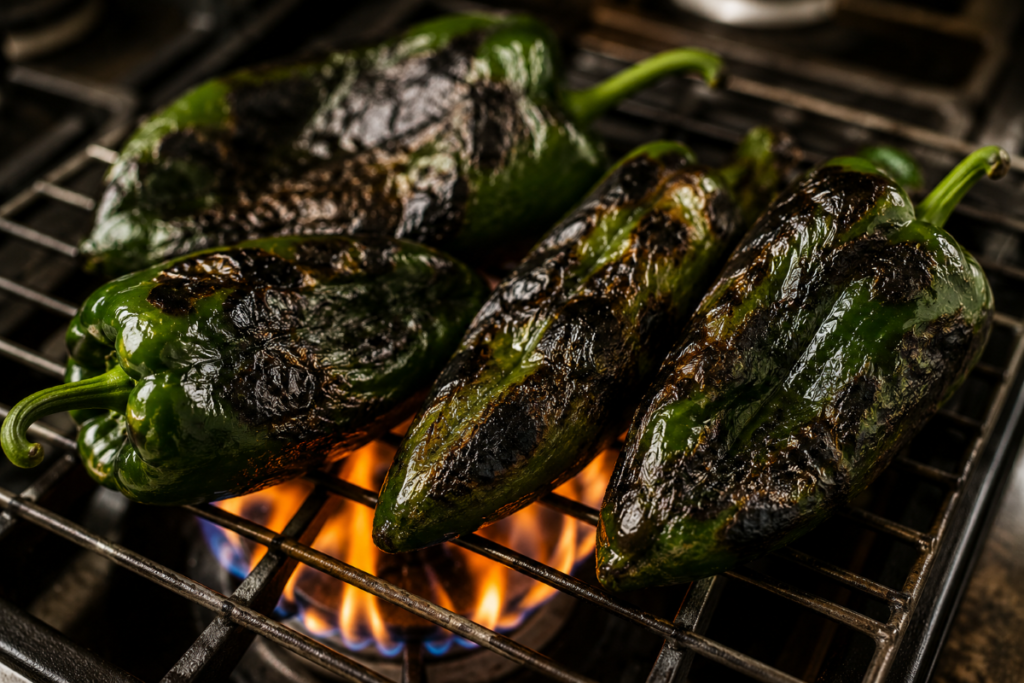
Roasting transforms poblanos from mild green peppers into smoky, flavorful ingredients used in some of Mexico’s most beloved dishes
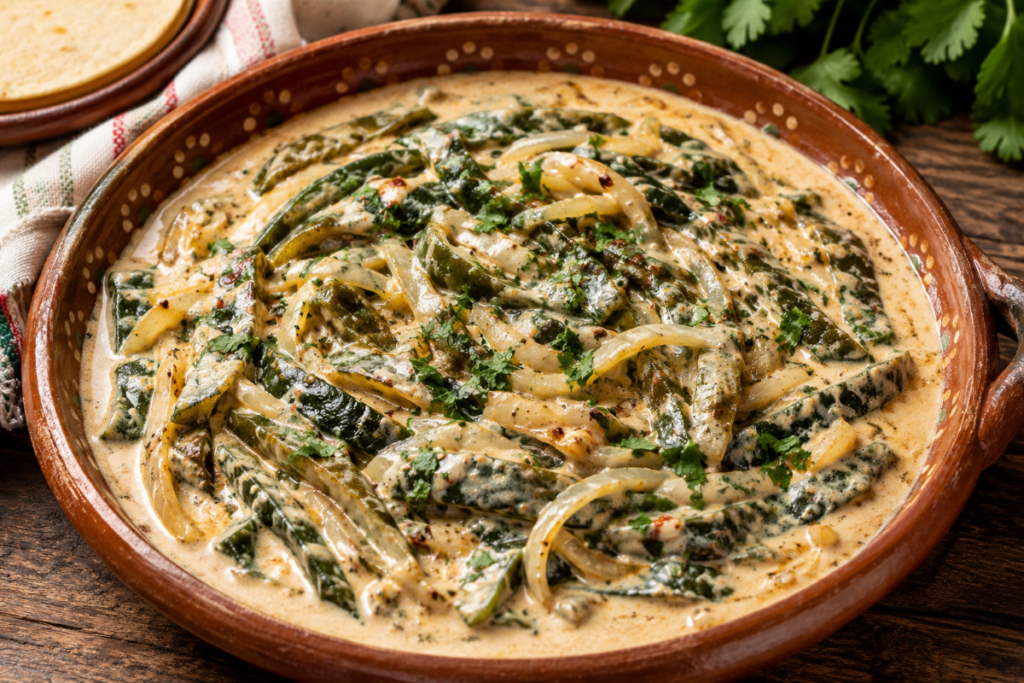
Poblanos shine in classics like Chiles Rellenos and Rajas con Crema, where their mild heat and earthy flavor take center stage
Few chiles represent comfort food better than the poblano.
Poblanos are large, dark green peppers with mild heat and rich earthy flavor.
Their magic happens when they’re roasted.
As the skin blackens and blisters, the flesh softens and develops a smoky sweetness that transforms the chile completely.
This is the chile behind some of Mexico’s most beloved dishes:
- Chiles Rellenos
- Rajas con Crema
- Roasted Green Sauces
- Poblano Soups
Poblanos prove that a chile doesn’t need extreme heat to be memorable.
In fact, many of the most comforting Mexican dishes rely on poblanos precisely because they bring flavor without overwhelming spice.
Best Uses
- Chiles Rellenos (Future)
- Rajas con Crema (Future)
- Cream Sauces
- Soups
- Roasted Salsa
- Rice Dishes
👉 Common dishes made with poblanos: Chiles Rellenos, Rajas con Crema, Chiles en Nogada, and poblano soup.
Anaheim (California Chile)
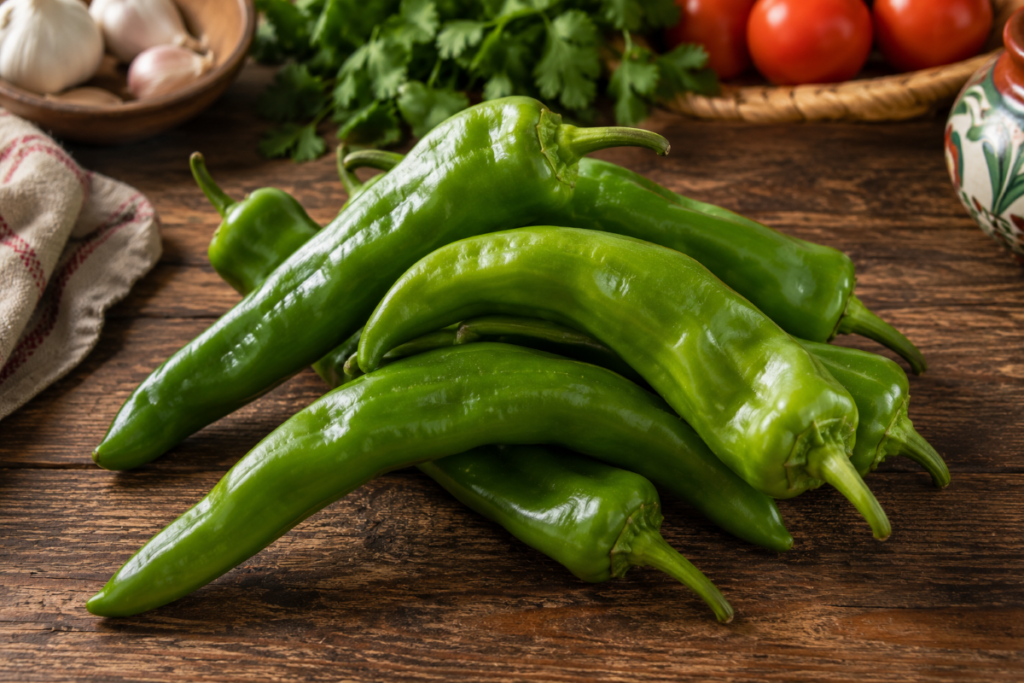
Anaheim chiles offer mild heat and roasted chile flavor, making them a great choice for beginners and family-friendly Mexican recipes
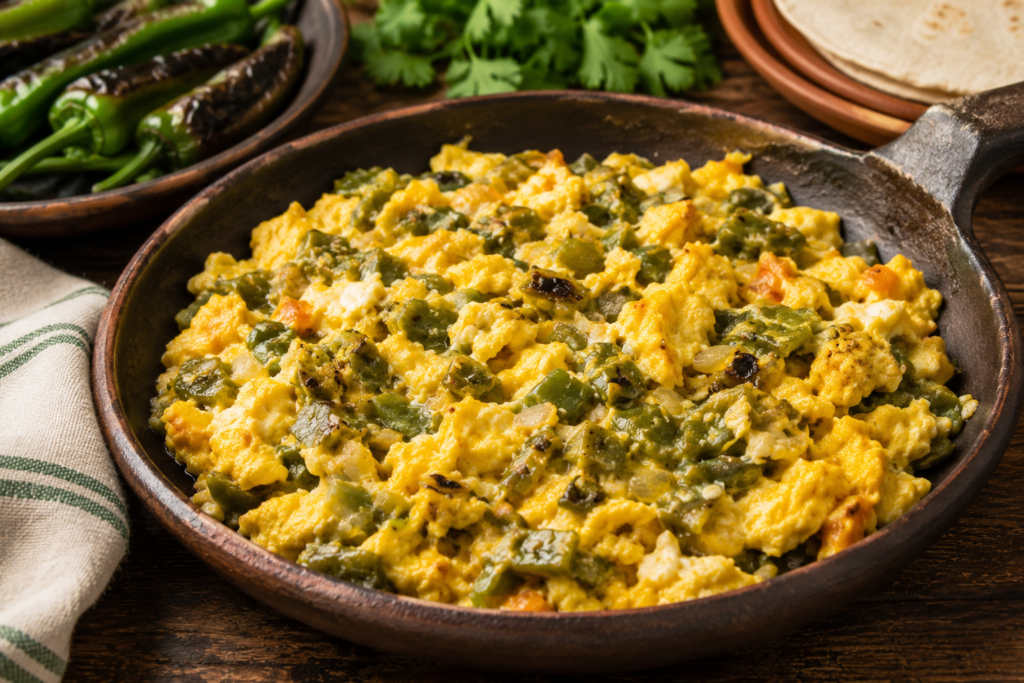
Anaheim chiles add gentle warmth and earthy flavor to breakfast dishes, soups, beans, and green chile sauces.
Anaheim chiles don’t always get the attention of poblanos, but they’re incredibly useful.
They’re mild, approachable, and widely available.
If you’re cooking for people who are sensitive to spice, Anaheim chiles can deliver roasted chile flavor without much heat.
Think of them as a gateway chile.
They’re excellent in breakfast dishes, soups, green chile sauces, beans, and rice.
While they may not have the cultural significance of poblanos, they’re practical and accessible—two qualities every home cook can appreciate.
Best Uses
- Eggs
- Green Chile Sauce
- Rice
- Soups
- Beans
- Breakfast Recipes
👉 Make it at home: Huevos Rancheros
Habanero
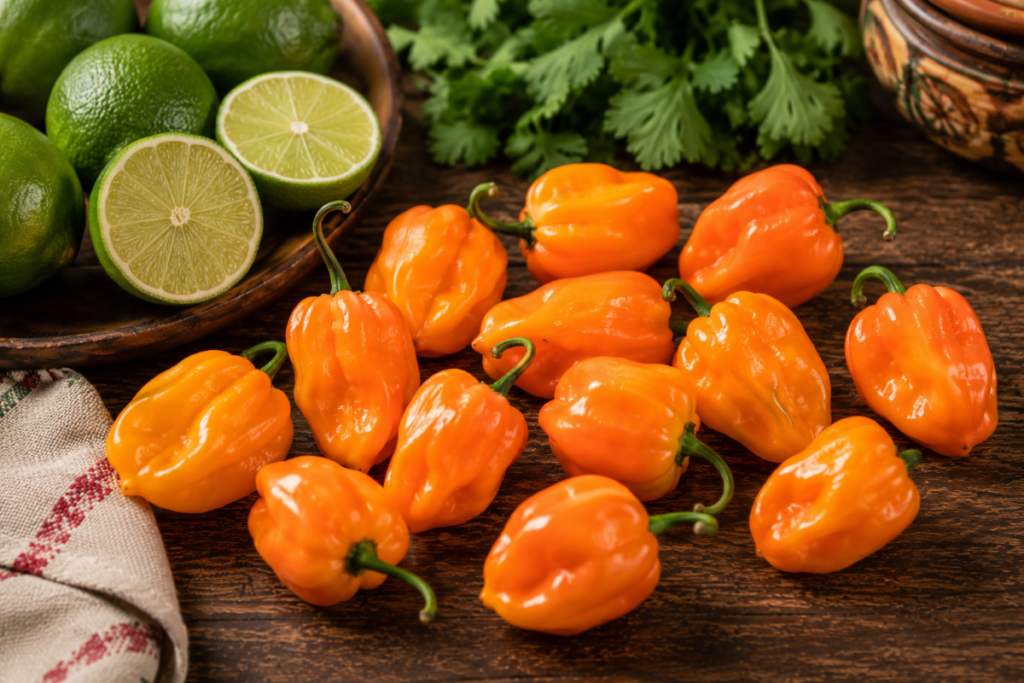
Habaneros are famous for their intense heat, but their fruity, floral flavor is what makes them a staple in Yucatán cooking
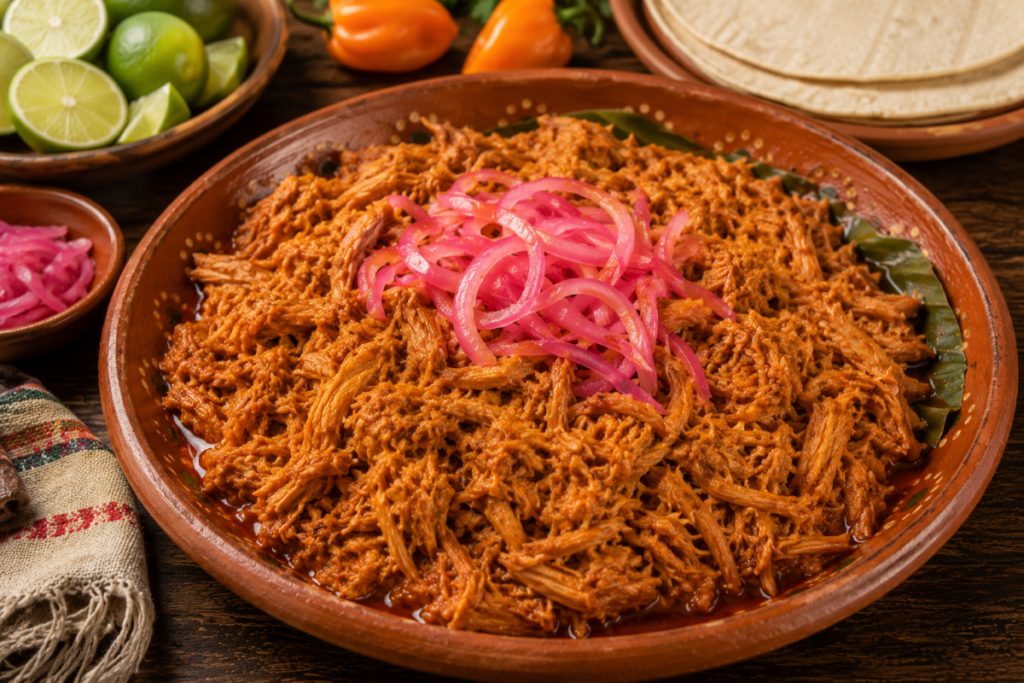
The bright heat of habaneros pairs perfectly with slow-roasted cochinita pibil, creating one of the most iconic flavor combinations in Mexican cuisine
Habaneros have a reputation.
And honestly?
They’ve earned it.
These small peppers bring serious heat.
But focusing only on the spice misses the best part.
Habaneros are incredibly flavorful.
They’re fruity, floral, citrusy, and surprisingly complex.
That’s why they’re such an important part of Yucatán cooking.
When paired with sour orange, lime, pickled onions, and slow-roasted pork, habaneros create one of the most distinctive flavor profiles in Mexican cuisine.
Used properly, habaneros don’t just make food hotter.
They make food more interesting.
Best Uses
- Cochinita Pibil
- Yucatán Salsa
- Seafood
- Pickled Onions
- Hot Sauce
- Citrus Marinades
👉 Make it at home: Cochinita Pibil
Dried Mexican Chiles
Fresh chiles get most of the attention, but dried chiles are where much of Mexican cooking finds its soul.
Drying transforms a chile completely.
The flavor becomes deeper.
Sweeter.
More concentrated.
More complex.
If fresh chiles are bright and energetic, dried chiles are rich and thoughtful.
Learning just a handful of dried chiles will open the door to birria, adobos, enchilada sauces, red salsas, moles, marinades, and countless regional dishes.
Guajillo Chile
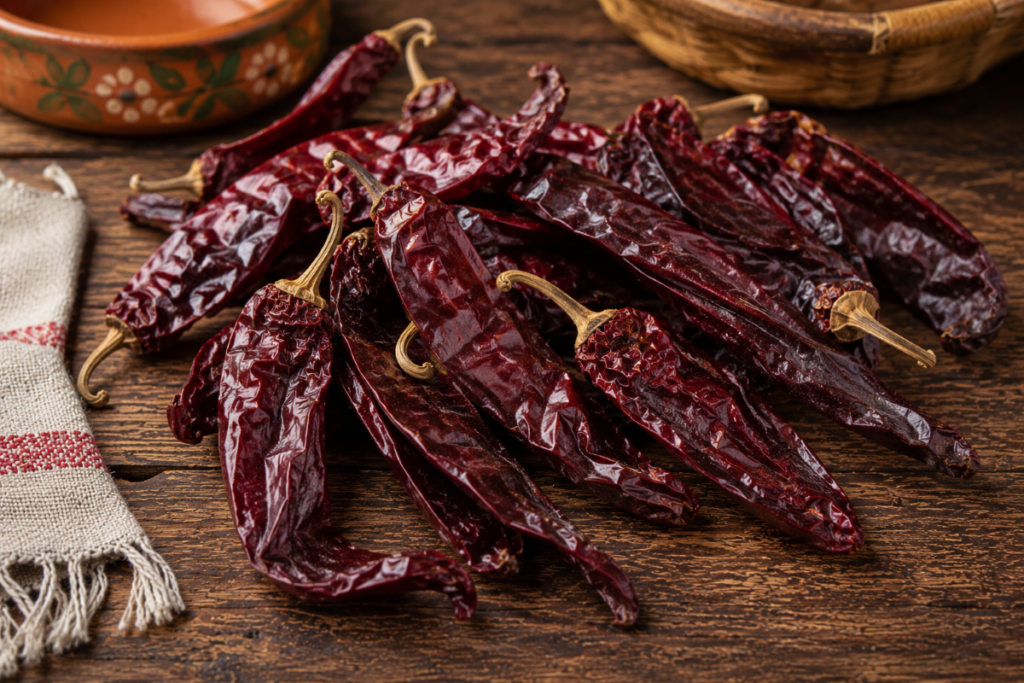
Guajillo chiles are one of the most widely used dried chiles in Mexico, prized for their mild heat, deep red color, and subtle fruity flavor
Guajillo chiles provide the color, body, and balanced flavor that make dishes like birria, adobo, and red salsa so memorable
If I could only keep one dried chile in my pantry, it would probably be guajillo.
Guajillos are the workhorse chile of Mexican cooking.
They’re smooth-skinned, deep red, mildly spicy, and packed with flavor.
Unlike hotter chiles, guajillos don’t dominate a dish. Instead, they provide body, color, and subtle fruitiness that make sauces feel complete.
Many people are surprised by how little heat guajillos actually have.
Their real strength is balance.
This is one reason guajillo appears in so many traditional recipes across Mexico.
Best Uses
- Birria
- Adobo
- Enchilada Sauce
- Salsa Roja
- Pozole Rojo
- Marinades
- Taco Sauces
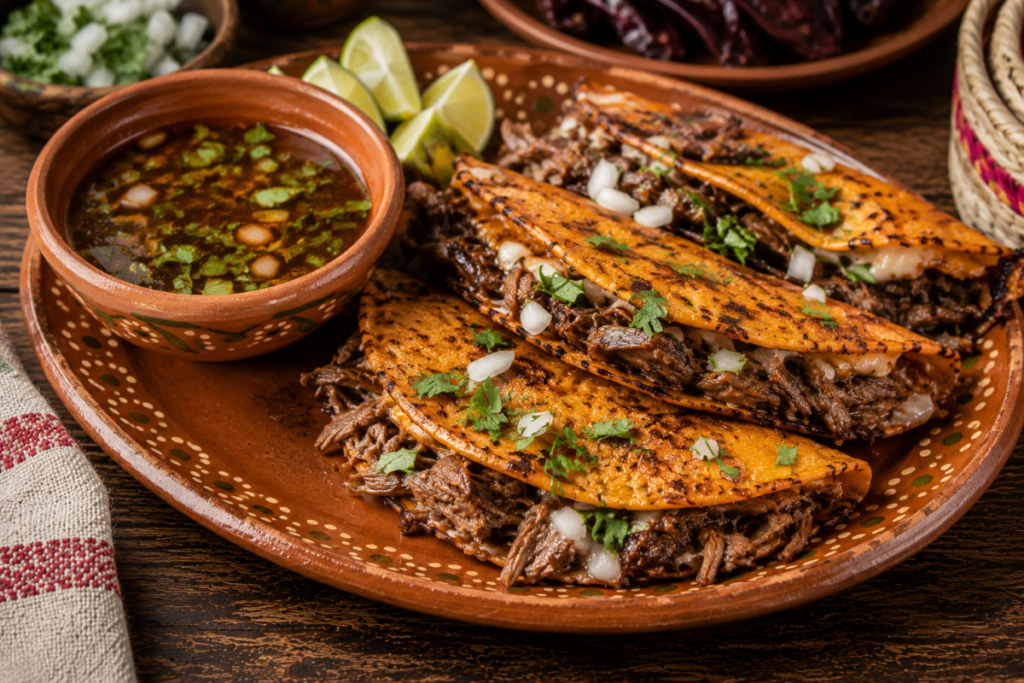
👉 Make it at home: Birria Tacos
Ancho Chile
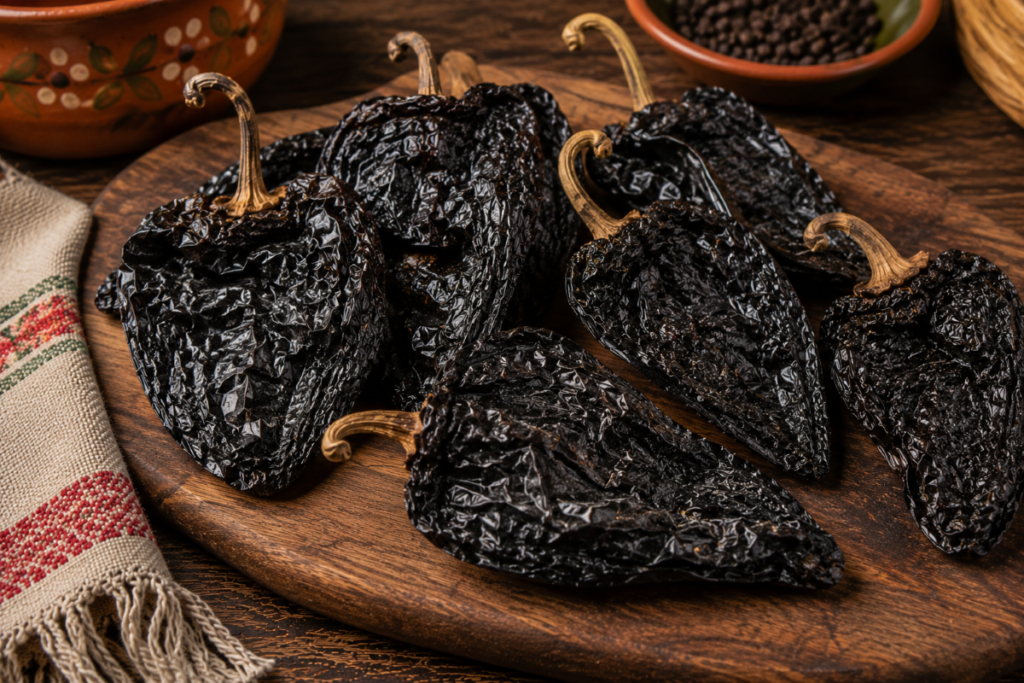
Ancho chiles are dried poblanos known for their mild heat, rich color, and sweet raisin-like flavor that adds depth to countless Mexican dishes
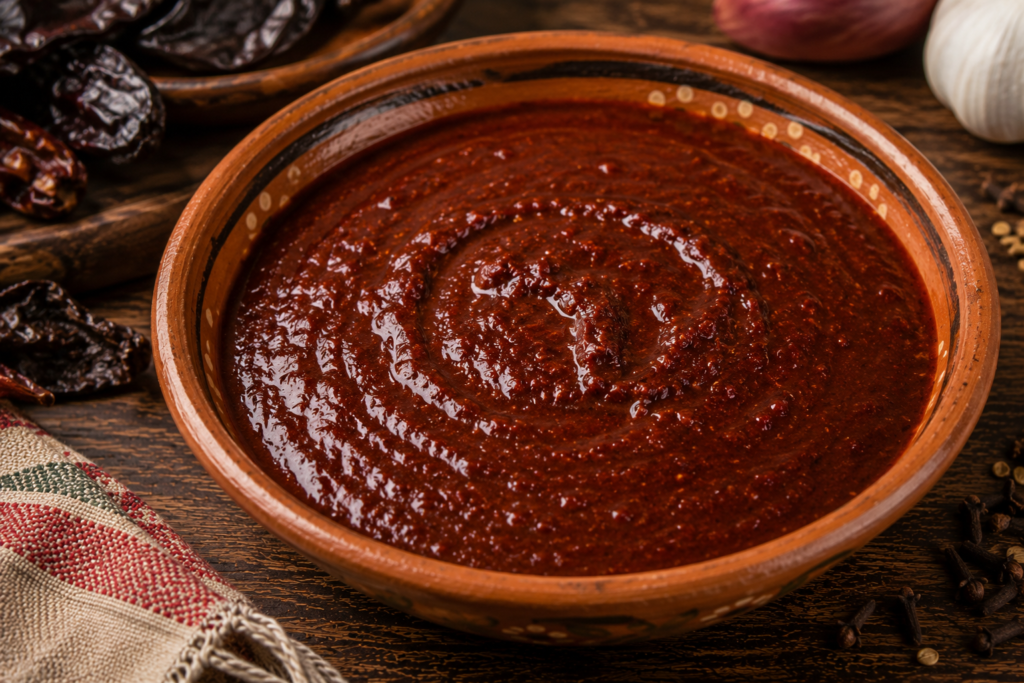
Ancho chiles bring warmth, sweetness, and complexity to adobos, moles, marinades, and slow-cooked Mexican classics
Ancho chiles are dried poblanos.
And they’re one of the most important ingredients in Mexican cooking.
The first thing most people notice is the aroma.
Sweet.
Earthy.
Almost raisin-like.
Ancho chiles aren’t particularly spicy, but they add tremendous depth to sauces and marinades.
If guajillo brings brightness, ancho brings bass notes.
Many traditional red sauces rely on ancho chiles to create richness without excessive heat.
Best Uses
- Mole
- Birria
- Adobo
- Red Enchilada Sauce
- Marinades
- Braised Meats
👉 Make it at home: Barbacoa Tacos
Pasilla Chile
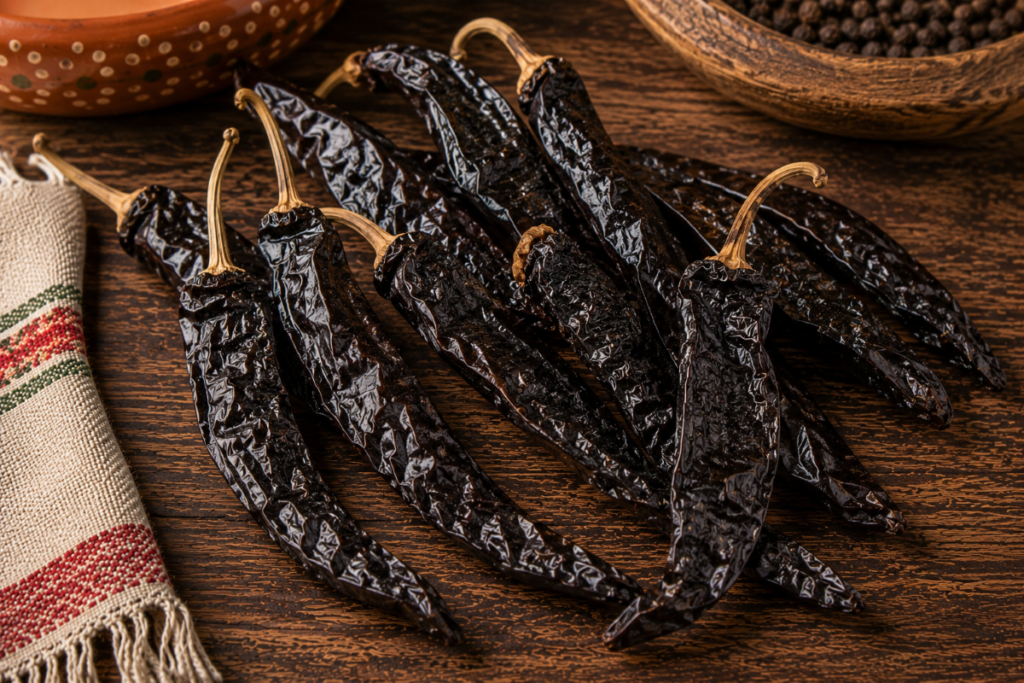
Pasilla chiles bring earthy, complex flavor with notes of dried fruit and cocoa, making them a favorite for rich sauces and stews
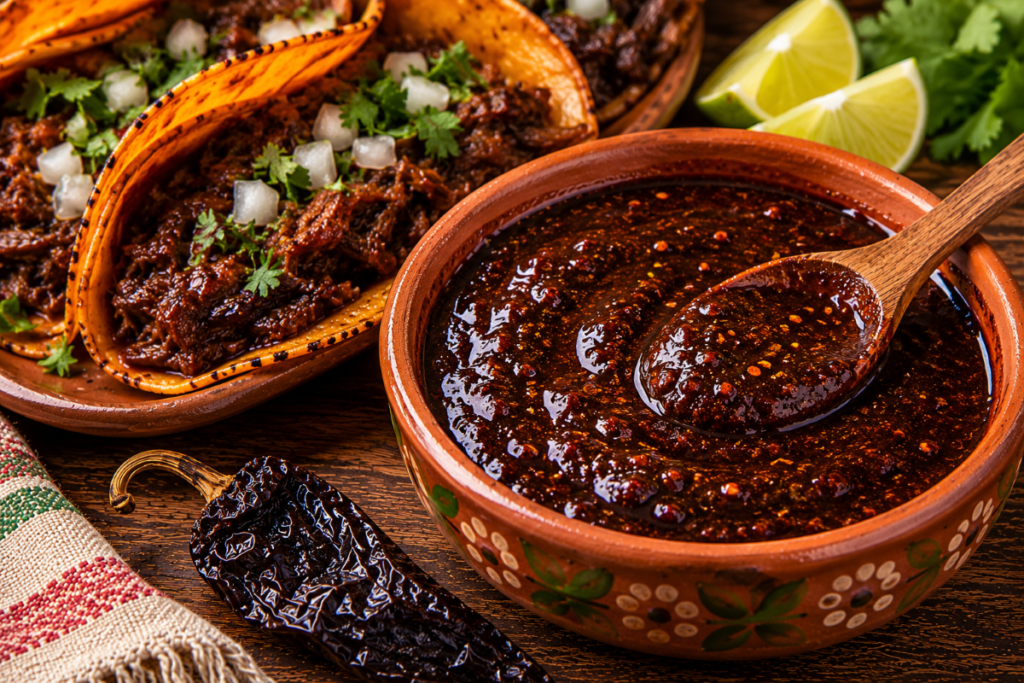
Pasilla chiles add depth and complexity to moles, adobos, and dark chile sauces without overwhelming a dish with heat
Pasilla chiles are often overlooked, but they’re one of Mexico’s most interesting dried chiles.
Their flavor is darker and more complex than guajillo.
Some cooks describe pasilla as earthy.
Others notice cocoa, dried fruit, or subtle bitterness.
Whatever description you choose, pasilla brings maturity to a sauce.
It’s often paired with guajillo or ancho to build complexity.
Best Uses
- Mole
- Dark Salsa
- Stews
- Soups
- Adobos
- Braises
👉 Make it at home: Pozole Rojo
Chile de Árbol
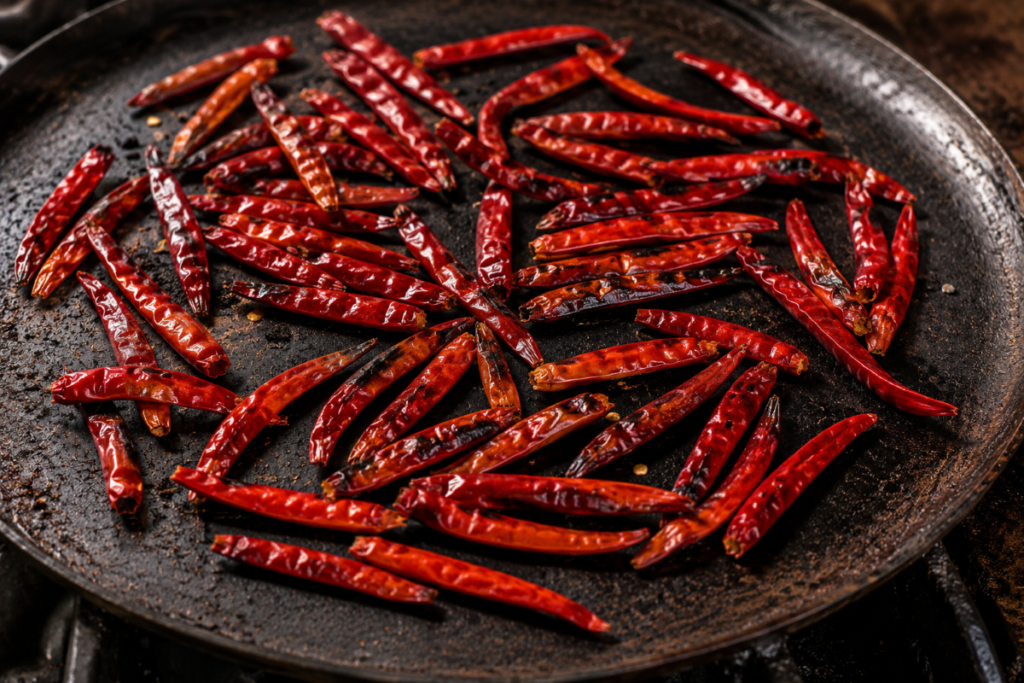
Chile de árbol delivers clean, direct heat and is one of the most important chiles for traditional taco salsas and chile oils
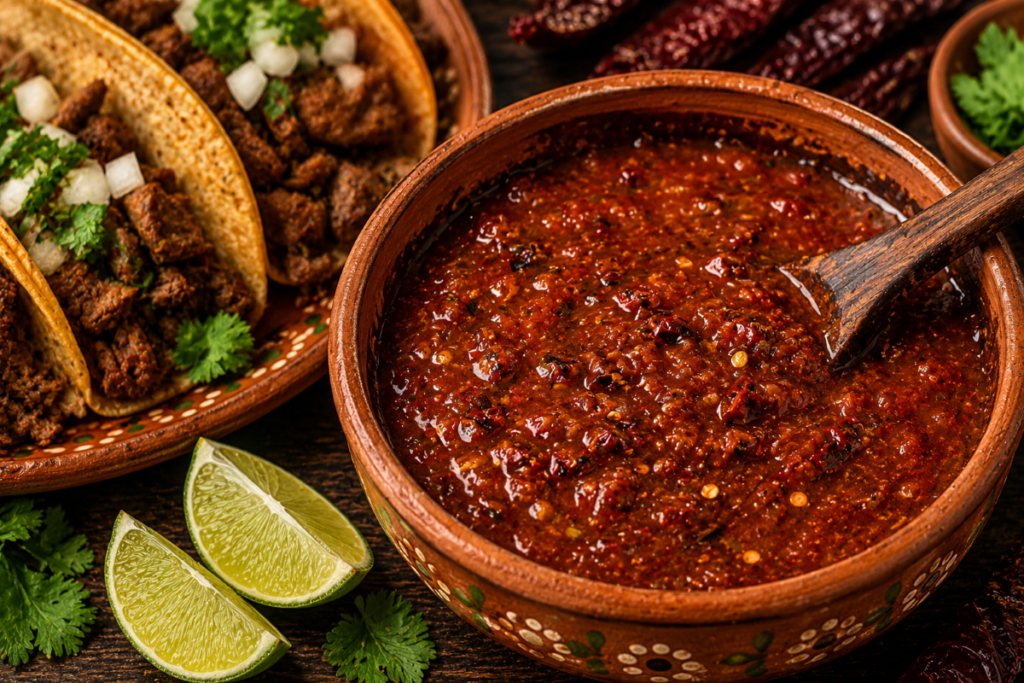
Chile de árbol gives Salsa Roja Taquera its signature heat, making it the perfect companion for tacos, grilled meats, and street food favorites
When you want heat, this is usually where the conversation begins.
Chile de árbol is small, thin, bright red, and surprisingly powerful.
A handful can completely change a salsa.
Unlike some chiles that bring sweetness or smokiness, árbol delivers a clean, direct heat.
That’s why it’s so common in taquería-style salsa.
It wakes everything up.
Best Uses
- Salsa Roja Taquera
- Salsa Macha
- Chile Oil
- Taco Salsa
- Hot Sauce
👉 Make it at home: Salsa Roja Taquera
Morita Chile
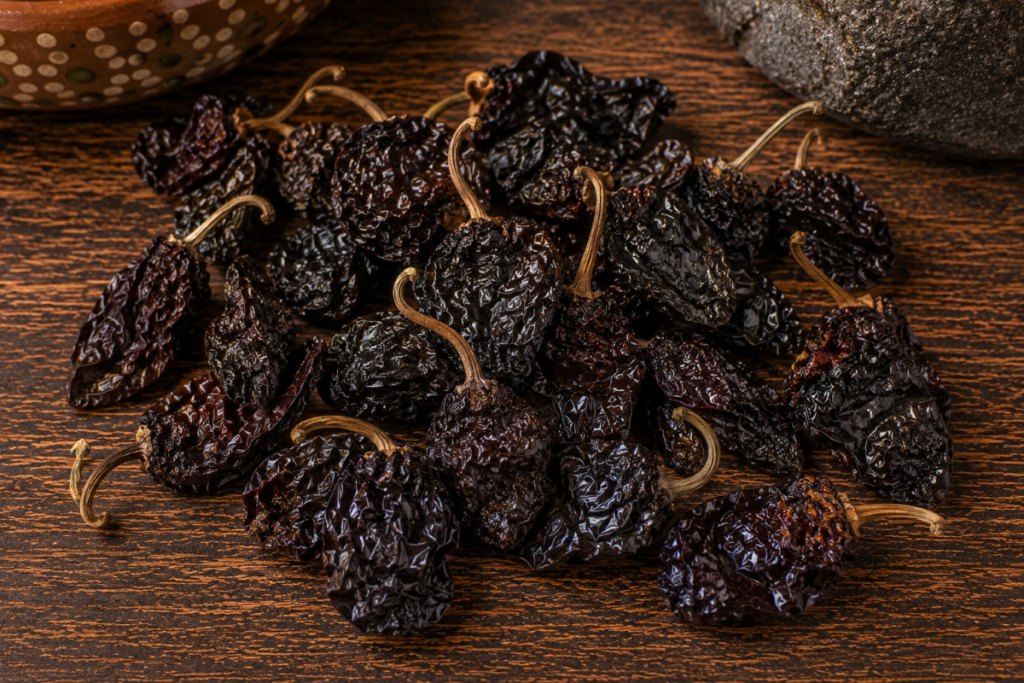
Morita chiles are smoked and dried jalapeños known for their rich smoky flavor, subtle sweetness, and medium heat
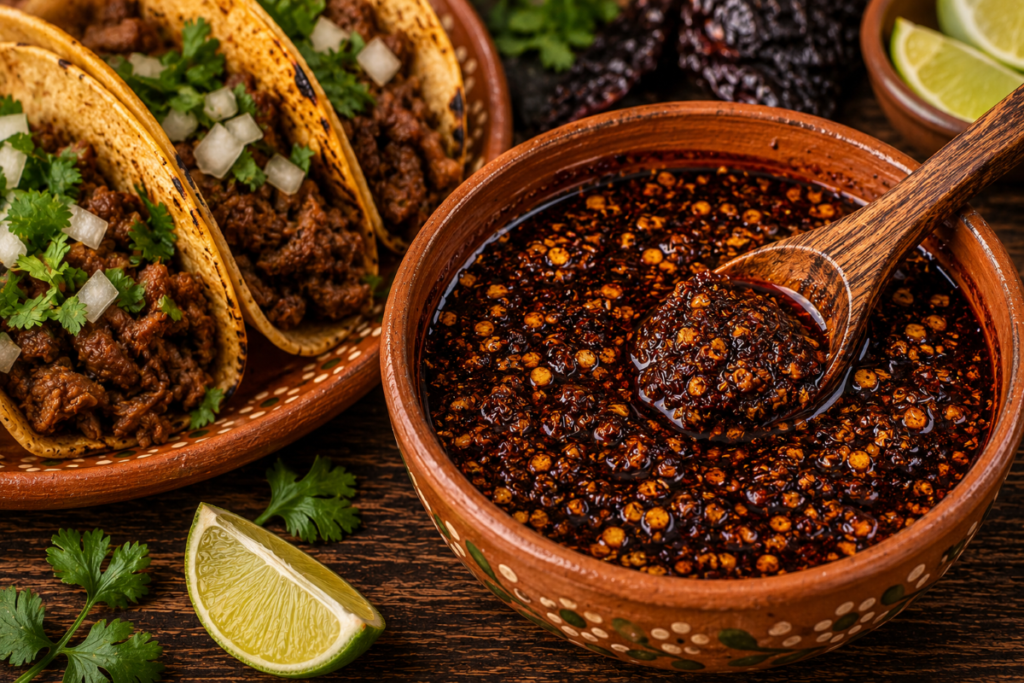
Morita chiles give Salsa Macha its signature smoky depth, making them a favorite for tacos, grilled meats, and bold Mexican sauces
Morita chiles are one of my personal favorites.
They’re smoked and dried like chipotles, but they often have a slightly fruitier, sweeter flavor.
The smoke is there.
But so is complexity.
Morita-based salsa has a deep, almost mysterious quality that works beautifully with tacos, grilled meats, and roasted vegetables.
Best Uses
- Salsa Macha
- Taco Salsa
- Beans
- Marinades
- Pork
- Grilled Meats
👉 Make it at home: Salsa Macha
Chipotle Chile
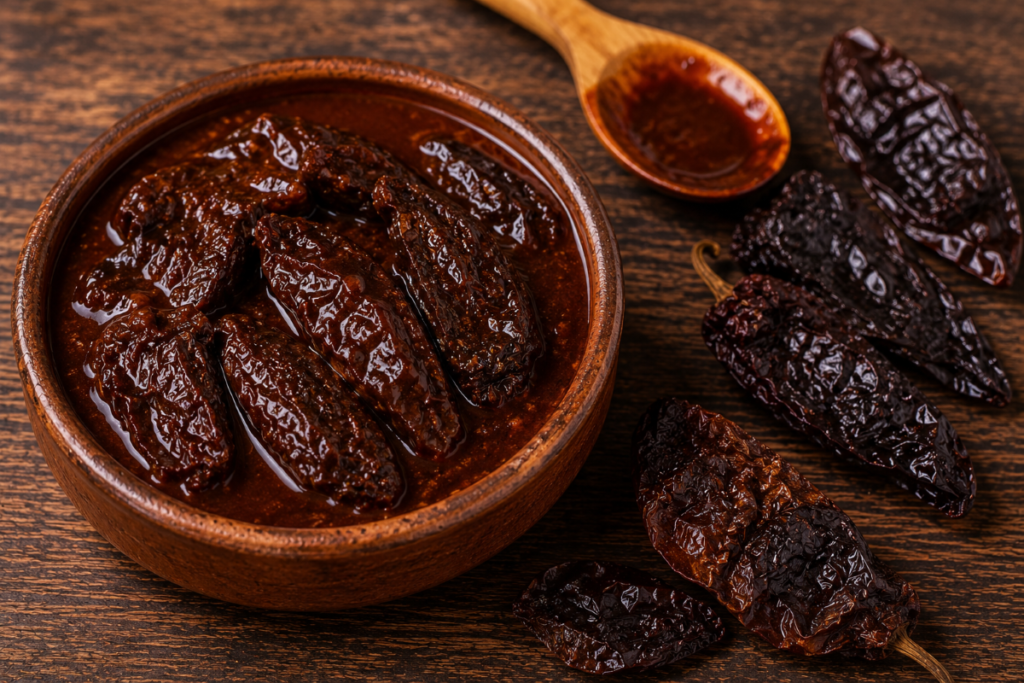
Chipotle chiles are smoked and dried jalapeños that bring rich smoky flavor and moderate heat to sauces, stews, and marinades
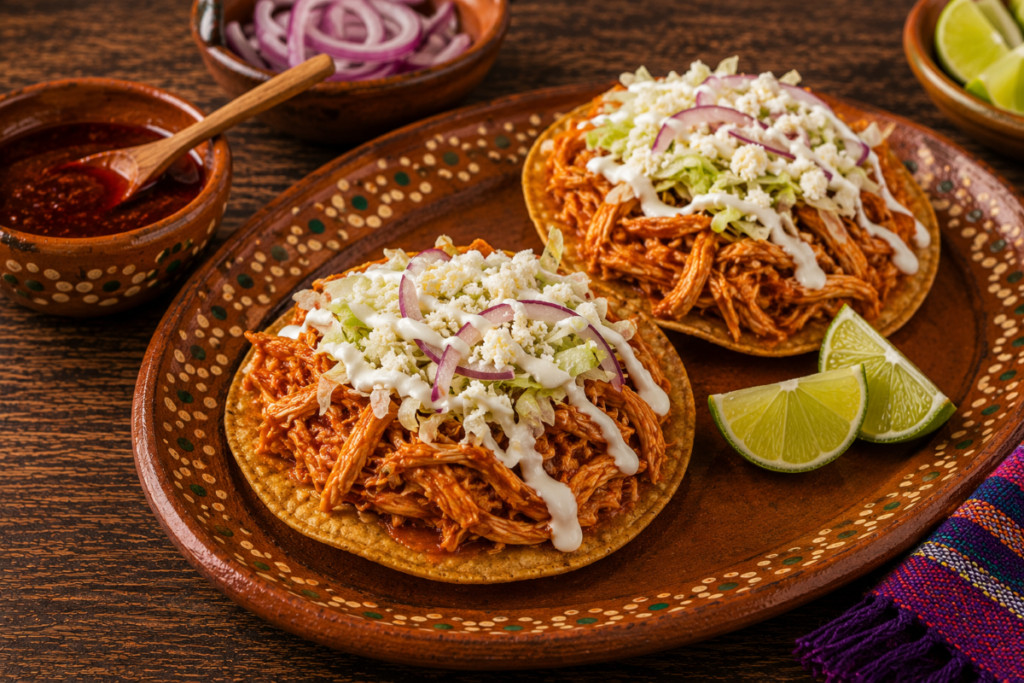
Chipotle chiles give Tostadas de Tinga their signature smoky flavor, creating one of the most recognizable tastes in Mexican home cooking
Chipotles begin life as jalapeños.
Then they are smoked and dried.
The result is one of the most recognizable flavors in Mexican cooking.
Smoky.
Rich.
Warm.
Comforting.
Few ingredients can add depth as quickly as chipotle.
Best Uses
- Tinga
- Beans
- Soups
- Marinades
- Salsa
- Adobo
👉 Make it at home: Tostadas de Tinga
How to Toast Dried Chiles
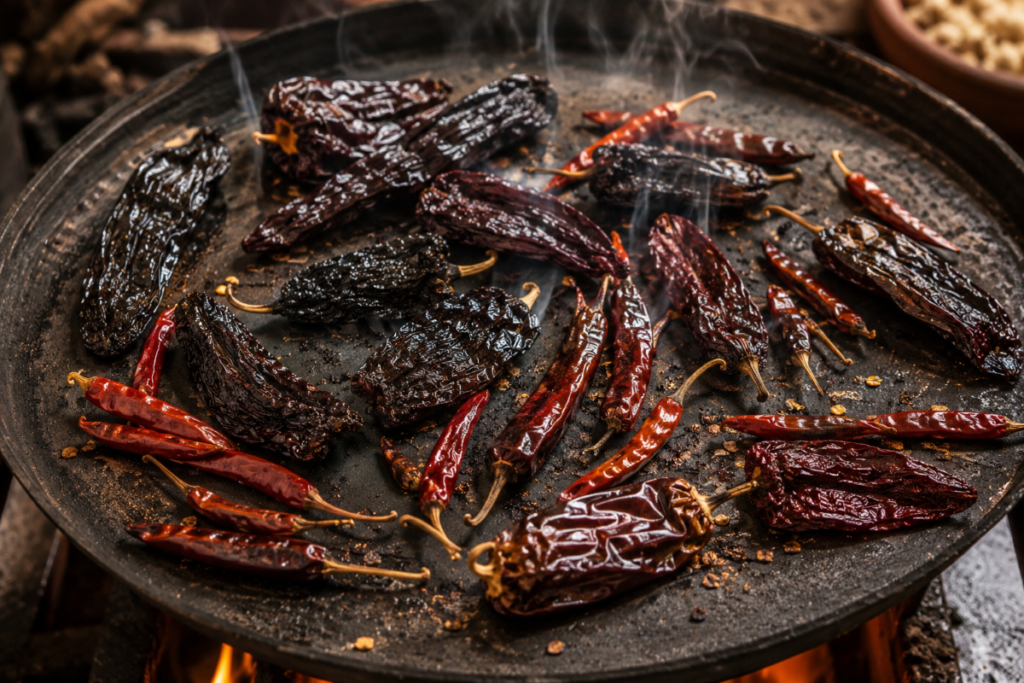
Toasting dried chiles awakens their aroma and deepens their flavor, making this one of the most important steps in Mexican cooking
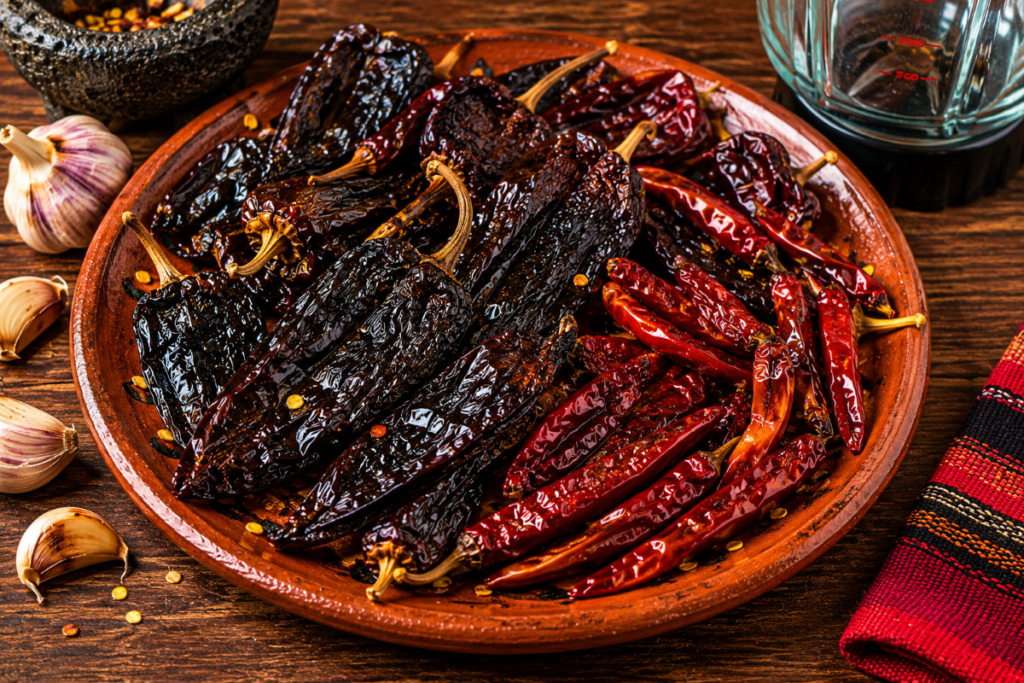
Properly toasted chiles should smell fragrant and slightly smoky, creating the rich foundation for salsas, adobos, moles, and marinades
Toasting is one of the most important steps in Mexican cooking.
Done properly, it wakes the chile up.
Done poorly, it ruins the entire batch.
Toast dried chiles over medium heat for only a few seconds per side.
The goal is fragrance.
Not burning.
If the chile turns black, you’ve gone too far.
A burned chile can make an entire salsa bitter.
How to Rehydrate Dried Chiles
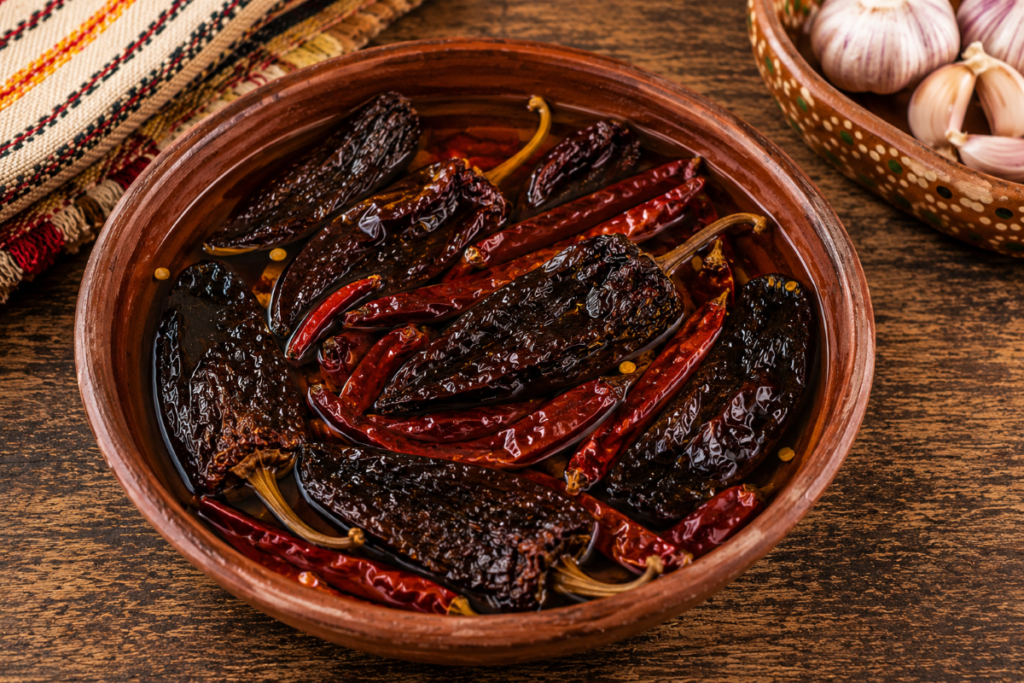
Soaking rehydrates dried chiles, restoring their texture and making them easier to blend into smooth, flavorful Mexican sauces
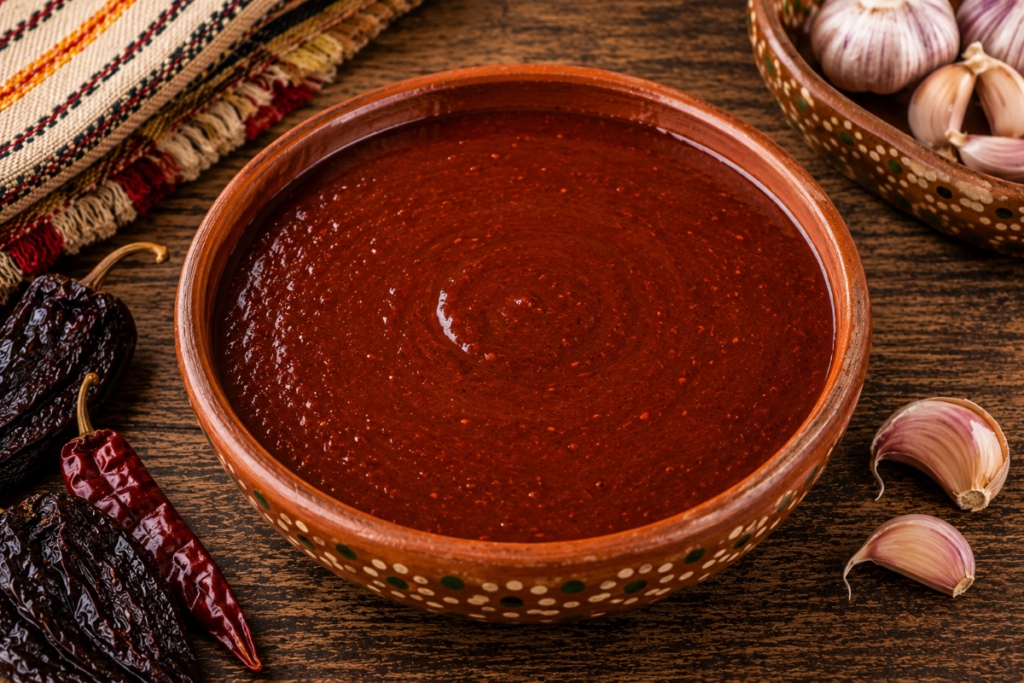
Once rehydrated, dried chiles blend into rich sauces that provide the foundation for birria, adobos, enchiladas, and countless traditional Mexican dishes
After toasting, most dried chiles need to be softened before blending.
Place them in hot water for 15–20 minutes.
Once softened, they can be blended into salsas, adobos, marinades, and sauces.
Always taste the soaking liquid before using it.
Sometimes it’s delicious.
Sometimes it’s bitter.
Trust your taste buds.
How to Store Mexican Chiles
Fresh chiles:
- Refrigerate in a produce drawer.
- Use within 1–2 weeks.
Dried chiles:
- Store in airtight containers.
- Keep away from sunlight.
- Freeze for long-term storage.
Good dried chiles should still feel slightly flexible.
If they’re brittle, dusty, and faded, they’re probably past their prime.
Where to Buy Mexican Chiles
- Mexican markets
- Latin grocery stores
- Online retailers
- What to look for (flexible, fragrant, not dusty)
My Pantry Chiles
If I could only keep five chiles in my kitchen, I’d choose:
- Guajillo
- Ancho
- Chile de Árbol
- Jalapeño
- Poblano
With those five alone, you can build hundreds of Mexican recipes.
Salsa.
Birria.
Enchiladas.
Beans.
Soups.
Tacos.
Breakfast.
That’s a pretty powerful pantry.
My Go-To Tools for Mexican Cooking
This post contains affiliate links. As an Amazon Associate, I earn from qualifying purchases at no extra cost to you.
These are the tools I personally recommend for building real Mexican flavor at home — the kind that gets stained with salsa, smells like toasted chiles, and earns a permanent spot in your kitchen.
- Cast Iron Tortilla Press — Fresh tortillas make every salsa and taco better.
- Cast Iron Skillet (Comal Alternative) — Perfect for toasting dried chiles and roasting vegetables for salsa.
- Tortilla Warmer — Keeps tortillas soft and warm while you finish cooking.
- Non-Stick Comal — One of the best tools for roasting tomatoes, tomatillos, garlic, onions, and chiles.
- Ninja Professional Blender (1000W) — Essential for smooth salsa verde, salsa roja, adobos, and chile sauces.
- Granite Molcajete — The traditional way to make salsa with incredible texture and flavor.
- Wooden Rolling Pin — A versatile kitchen staple that always earns its keep.
- Lodge 6-Quart Enameled Dutch Oven — Perfect for chile-based soups, stews, braises, pozole, and birria.
Best Chiles for Salsa
Salsa Verde
- Serrano
- Jalapeño
Salsa Roja
- Guajillo
- Árbol
Smoky Salsa
- Morita
- Chipotle
Mild Salsa
- Ancho
- Guajillo
Spicy Salsa
- Árbol
- Habanero
Best Chiles for Tacos
Beef Tacos
- Guajillo
- Árbol
- Morita
Seafood Tacos
- Serrano
- Jalapeño
- Habanero
Breakfast Tacos
- Jalapeño
- Poblano
- Serrano
Birria
- Guajillo
- Ancho
- Árbol
Frequently Asked Questions
What is the most common chile in Mexican cooking?
Guajillo is one of the most widely used dried chiles in Mexican cooking.
What’s the difference between ancho and guajillo?
Guajillo is brighter and fruitier. Ancho is sweeter, richer, and more raisin-like.
Is chipotle just a jalapeño?
Yes. Chipotles are smoked and dried jalapeños.
Which chile is best for salsa?
For beginners, guajillo and serrano are excellent choices.
Which chile is hottest?
Of the chiles covered here, habanero is generally the hottest.
Can dried chiles go bad?
Yes. They gradually lose flavor and aroma over time.
Do I remove the seeds?
Usually yes, especially when making sauces.
Can I substitute guajillo for ancho?
You can, but the flavor will change. Guajillo is brighter while ancho is richer.
What chile should beginners start with?
Jalapeño, poblano, guajillo, and ancho are great starting points.
What’s the difference between fresh and dried chiles?
Fresh chiles tend to be brighter and greener, while dried chiles develop deeper, sweeter, and more concentrated flavors. Many Mexican recipes combine both to balance freshness and depth.
Why are my sauces bitter?
The most common reason is burned dried chiles.
More From The Half Jalapeño
Now that you know the difference between fresh and dried chiles, it’s time to put them to work. These recipes show how Mexican cooks use chiles to build flavor, color, heat, and depth in everyday cooking.
- Salsa Roja Taquera — the taco shop classic built on dried chiles.
- Salsa Verde Asada — roasted green salsa powered by serranos and tomatillos.
- Salsa Macha — smoky chile oil packed with flavor.
- Birria Tacos — one of the best examples of guajillo and ancho working together.
- Quesabirria Tacos — crispy, cheesy tacos served with rich chile consommé.
- Barbacoa Tacos — slow-cooked beef that loves a good red salsa.
- Cecina Tacos — smoky Central Mexican tacos paired with fresh salsa.
- Tostadas de Tinga — chipotle flavor at its finest.
- Taco Series Hub — follow the Taco Train from start to finish.
- Salsa Series Hub — explore the growing library of Mexican salsas.
- Street Food & Antojitos Hub — the snacks, tacos, and market foods that define Mexican street food.
- Mexican Breakfast Hub — start the day with real Mexican flavor.
The Final Bite
The moment you stop asking, “How spicy is it?” and start asking, “What flavor does it bring?” is the moment Mexican cooking starts to make sense.
Chiles are more than heat.
They’re sweetness.
Smoke.
Fruit.
Earth.
Depth.
They’re one of the ingredients that make Mexican food one of the world’s great cuisines.
Learn a handful of them well, and suddenly dozens of recipes become easier to understand.
That’s the beauty of chiles.
They’re not just ingredients.
They’re the vocabulary of Mexican cooking.
Buen provecho,
Join the Comal Crew
Ready for more? Join the Comal Crew and get Hot Off the Comal every Tuesday at 9 a.m. — new recipes, deep-dive stories, kitchen tips, and the flavor-first Mexican cooking you won’t find anywhere else. 👊🌶️